


It’s that time of the year again – when nature photo competition winners are announced and we get to look at some amazing images that remind us that the world is made up of more than AI slop. For now, anyway.
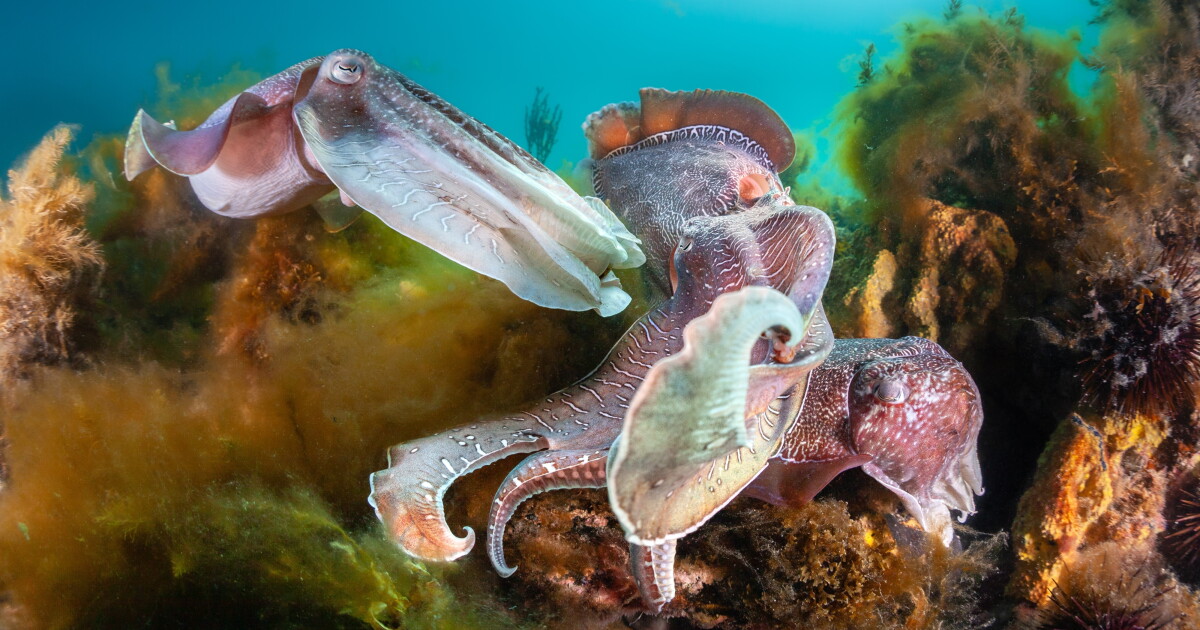
The 2026 BMC Ecology and Evolution and BMC Zoology image competition has revealed its best snaps of the year, and there are some beauties here – including a rare glimpse at the dramatic high-stakes breeding season of giant cuttlefish (Ascarosepion apama).
These color-changing beauties only mate once in their entire lives, so the pressure is on to fend off the competition to find a female. The photo shows two males fighting for dominance off the coast of South Australia, where traditionally around 100,000 individuals converge each winter. Sadly, this year they didn’t return en masse, which is a troubling sign for these intelligent and short-lived giants.
Whether they recover in 2027 is anyone’s guess, but it underlines how fleeting and fragile many lives are. Nature photography is a poignant reminder of this – and the dazzling shot, titled “Giant Cuttlefish in Breeding Battle” from James Cook University student Victor Huertas, captures this well. For it, he earned top prize in the Relationships in Nature category.
The annual contest highlights nature’s beauty and celebrates the scientists who work tirelessly to protect it.
We’ve highlighted our standouts.
Overall winner: “Window to the Wetlands” – Sritam Kumar Sethy
Sritam Kumar Sethy took out top honors with his striking image of an orange-tailed marsh dart damselfly (Ceriagrion cerinorubellum) peeking through a leaf in an Odisha, India, freshwater wetland.
The snapper, a student at Berhampur University, says his photograph “offers a glimpse into the often-overlooked world of freshwater biodiversity.”
Like a canary in a coal mine, if you will, damselflies are a critical species for assessing the health of a wetlands ecosystem. Despite being predators, these individuals are sadly no match for humans. They’re heavily impacted by pollution, habitat loss and climate change.
“It is hard not to smile at this beautifully composed and vivid image, in which the damselfly seems to display a remarkable sense of character and presence,” adds BMC Ecology and Evolution Senior Editorial Board Member David Ferrier.
Protecting Our Planet runner-up: “Tide, Turtle, and Trust!” – Abhijeet Bayani

This is a particularly fascinating image, capturing without words our mismatched relationship with a majority of the species we share Earth with.
It earned photographer Abhijeet Bayani, of MES Abasaheb Garware College in India, the runner-up prize in the “Protecting Our Planet” category.
The striking photo was taken along India’s west coast where locals give sea turtle hatchlings (Lepidochelys olivacea) a fighting chance by escorting them from their nests to the water.
The statistics on how many sea turtles will live to adulthood are grim, so this early stage is critical. The exposed tiny hatchlings are extremely vulnerable to predation as they make the journey of their lives from sand to sea.
Highly commended: “Manatees” – Brandon Güell

Florida International University student Brandon Güell was highly commended for his image of manatees (Trichechus manatus latirostris) having a drink in the Everglades National Park.
These giant, gentle “cows” of the water are extremely vulnerable to habitat loss and bad interactions with humans using their homes for recreation.
The photographer also came in second in the Research in Action category, which depicted researchers in the Everglades as the ecosystem undergoes longterm restoration.
Hopefully this means we’ll always have a planet where manatees can swim freely – because I don’t think I could handle it if we lost this species.
You can find more images in our gallery.
Source: BMC Ecology and Evolution via Scimex

