


Thirty-four days ago, Spain opened their World Cup campaign with a frustrating goalless draw against tournament debutants Cape Verde.
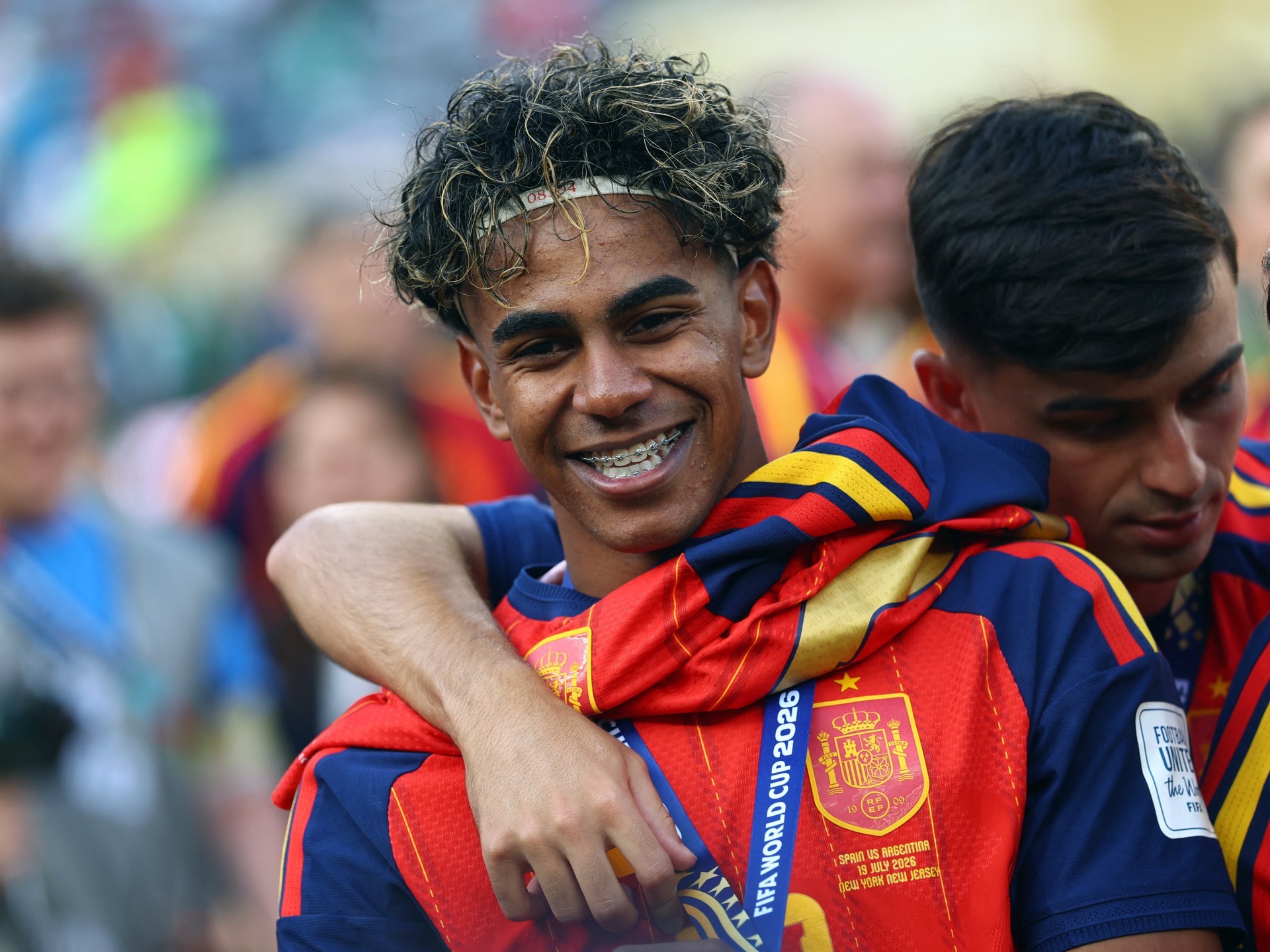
On Sunday, they ended it with the World Cup trophy in their hands, defeating holders Argentina in the final in New Jersey.
Recommended Stories
list of 4 itemsend of list
Luis de la Fuente’s young side improved by leaps and bounds as the tournament wore on, slowly shifting up the gears as they headed through the knockout stages before finally emerging as winners in the biggest game.
Spain conceded just one goal all tournament and maintained an unbeaten record, which has now stretched to an incredible 38 games.
It all culminated in a dominant final performance by La Roja, who controlled the match and nullified Argentina’s attacking threats.
Here’s a look at how Spain secured their second World Cup.
The kids will be all right
Spain went into this tournament with the sixth-youngest squad of the 48 teams competing, with an average age of 26.19 and just six players over 30.
Compare that with Brazil, for example, who had 11 players over the age of 30 and an average age of 28.65.
La Roja certainly opted for youth over experience, and it was the right call. Some of their best players are teenagers, with Pau Cubarsi and Lamine Yamal both 19.
Nico Williams, who assisted the winning goal in the final, is 24, while Barcelona midfielder Pedri is 23.
Slow starters
Spain began their World Cup campaign in Atlanta, taking on debutants Cape Verde back in mid-June.
The European champions failed to find a way past the African side and their star goalkeeper Vozinha, with the teams playing out a goalless draw.
It was one of the most astonishing results in World Cup history, and left many asking questions about Spain’s chances at this tournament.
Despite all the talk, Spain strolled past Saudi Arabia in their next group game before defeating Uruguay 1-0 in Guadalajara.
The eventual champions eased past Austria in their last-32 match, but then required some real grit and determination to make it through the next two knockout matches.
Super-sub Mikel Merino came off the bench against both Portugal and Belgium to score late winners for La Roja and book their slot in the final four.

No need to rely on Yamal
Spain’s 2-1 victory over Belgium in the quarterfinals was yet another game at this tournament where Yamal failed to fire in front of goal.
The teenager was asked about this after the match and said that “no one will remember whether I scored goals” if Spain lifted the trophy.
He was right.
Mikel Oyarzabal led the way with five goals for Spain in North America, with the rest of the squad also chipping in.
Mikel Merino and Pedro Porro both scored twice, and Ferran Torres scored the crucial goal that won Spain the World Cup.
Despite just one goal and no assists, Yamal has still been a key player for La Roja in North America.
He has featured in every game and was awarded player of the match for his performance against Belgium in the last eight.
He then won a penalty as Spain opened the scoring against France in their semifinal in Dallas.
Spain step up in the semifinals
After cruising through their first three knockout matches, France were strong favourites to go all the way at this tournament, but Spain had other ideas.
Coach de la Fuente produced a tactical masterclass in the semifinal against Les Bleus, nullifying the threat of one of the strongest attacking teams in world football in a fine 2-0 victory.
Spain’s midfield three of Dani Olmo, Rodri and Fabian Ruiz dictated possession and controlled the tempo of the game from the kickoff.
Their dominance in midfield ensured that France could not feed their feared attacking stars, including Kylian Mbappe and Michael Olise.
La Roja also rattled their opponents by taking the lead midway through the first half and continuing to push forward for a second.
They never allowed France to get a foothold in the game, restricting them to potshots from well outside the penalty area.

Dominating the final
Spain stuck with the same starting lineup for Sunday’s final, and who can blame them? They followed the same playbook as the semifinal, controlling possession and frustrating their opponents.
Argentina were restricted to just two shots in 120 minutes of football, with none of those efforts on target.
Spain enjoyed 65 percent possession and wore the South Americans down both mentally and physically.
Argentina’s frustration boiled over in second-half stoppage time as Enzo Fernandez went in late on Cubarsi, sending his opponent high into the air and earning a second yellow card.
Spain, who had brought the likes of Pedri, Williams and Torres off the bench, continued to dominate and finally made the breakthrough in the 106th minute, as Torres smashed the ball into the roof of the net.

A bright future for Spain?
The world and European champions have a young squad and look set to dominate international football in the coming years.
Many of their players are yet to hit their peak and will certainly be eyeing up more tournament success, including a home World Cup in four years’ time.
Stars like Yamal, Cubarsi, Pedri and Williams will all be in their prime in 2030, and Spain’s possession-based play will certainly be beneficial in hot conditions during the European summer.
They will also be confident about retaining their European Championship in two years’ time, with the United Kingdom and the Republic of Ireland hosting the tournament.
De la Fuente has extended his contract until 2028, and the Spanish manager looks set for more success on the international stage.

