


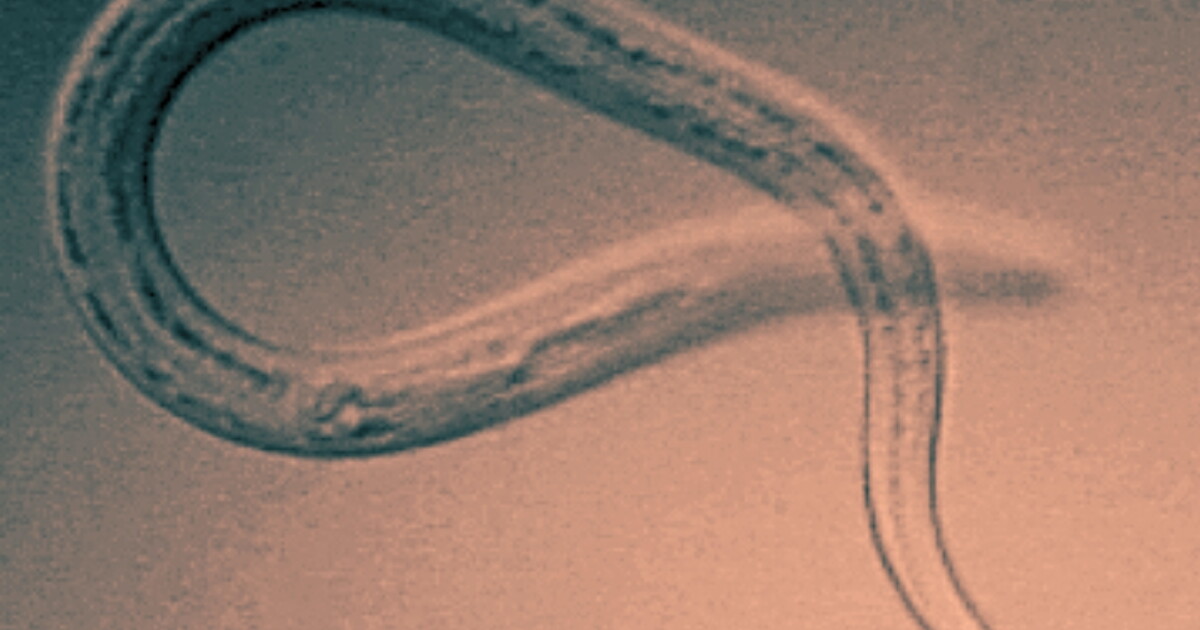
Hookworms are freeloaders that live at the host’s expense inside their gut, drinking about two drops of blood per day. This parasite could soon pay its way with engineered hookworms serving as living medicine factories.
Using CRISPR/Cas9 gene editing technology, researchers genetically modified the human hookworm Ancylostoma ceylanicum to produce and release a therapeutic antibody into the host that partially neutralizes tetrodotoxin – a potent neurotoxin found in pufferfish.
“This was a technically ambitious project because no one had previously achieved stable genetic modification of a human hookworm,” the co-author of the study, Makedonka Mitreva at the Washington University School of Medicine, told Refractor. “It was a remarkable moment for the entire team.”
Once the hookworms enter the human body, they migrate to the small intestine, mature there, and can live for several years. These hookworms maintain a healthy balance of drinking blood, just enough to not cause an infection. During this time, they release proteins into their surroundings, which scientists think may benefit the host.
Mitreva told us that hookworms have evolved several characteristics that make them potentially valuable for long-term drug delivery. Since hookworms naturally secrete hundreds of proteins into the host, the researchers sought to redirect this existing secretion system so that the engineered worms also produce the therapeutic antibody.
To achieve this stable genetic modification, Mitreva and her colleagues first had to determine how to deliver the CRISPR components into the hookworm eggs. They had to identify a safe place in the genome for the therapeutic gene that wouldn’t interfere with the worm’s own genes.
After identifying the genomic safe harbors, the researchers applied short bursts of electricity to those eggs. This technique, called electroporation, creates temporary, tiny pores in a cell’s outer membrane, allowing genetic material to enter and integrate into the hookworm eggs.
Here, the genetic material is CRISPR/Cas9 instructions that instruct the hookworm to synthesize a specific protein, s16-HuScFv, which can neutralize tetrodotoxin.
After zapping the eggs, they were left to hatch. About 80 to 100 transgenic larvae were delivered into the Syrian golden hamsters’ stomachs. In a control group, hamsters were infected with wild-type worms.
The blood drawn from the hamsters infected with the engineered hookworms had detectable levels of antibodies that remained biologically active. These antibodies later neutralized about 16% of tetrodotoxin in laboratory tests.
“By precise engineering, we can include a therapeutic protein without disrupting the other secreted molecules, and we could potentially achieve sustained medicine production without repeated injections,” says Mitreva.
Mitreva told us that hookworms cannot multiply inside the host, as part of their reproductive cycle must occur outside the human body. Therefore, the number of initially administered hookworms may remain relatively stable, with no possibility of increasing.
“This could allow a defined population of engineered worms to function as long-lived biological pumps,” she adds. Once the treatment is done, the worms can be easily eliminated with an antiparasitic medication.
“However, the concept of delivering therapeutic levels for years still requires direct testing, optimization and rigorous safety evaluation before it could be considered for human use,” Mitreva told us.
The researchers also found that the eggs collected from the hamster droppings carried the inserted gene. The team confirmed that those eggs developed into infective third-stage larvae. This means that the genetically modified hookworms had reproduced and passed the change on to their offspring.
“The idea of using a parasite as a living pharmaceutical factory is no longer simply a concept. We had demonstrated that the process could work from beginning to end,” Mitreva concludes.
The study has been published in Nature Communications.
Fact-checked by Mike McRae.

