


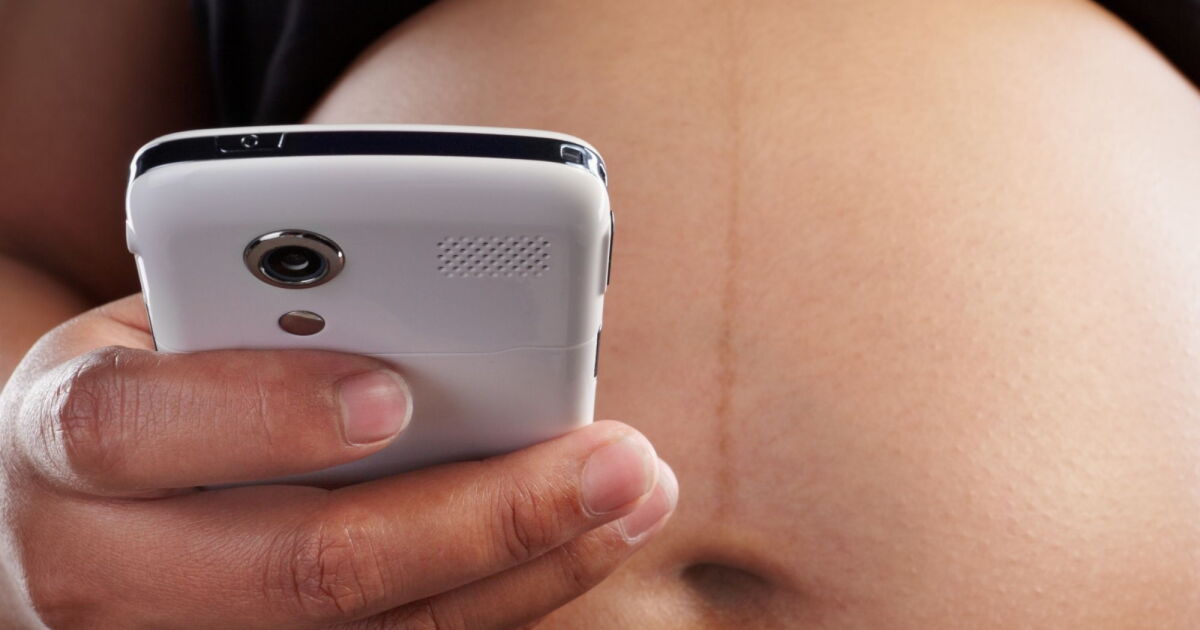
Decades of studies on the health impacts of cell phones have consistently found little cause for concern for most of us. Yet one demographic may still have some reason to restrict their doom-scrolling and YouTube watching – pregnant mothers.
A systematic review of the evidence has delivered mixed results, making it hard to rule out a risk to fetal heart function and a slightly higher chance of earlier delivery.
This isn’t to imply pregnancy demands nine months of abstinence from uploading baby-bump pics on Instagram. Rather, the researchers behind the study argue their findings should prompt further investigation.
“Future research should prioritize well-designed cohort studies with standardized exposure assessments to clarify these associations. Given the rapid evolution of mobile phone technology and the increasing frequency and duration of mobile phone use, understanding the long-term effects of RF-EMF [radio frequency electromagnetic radiation] exposure on maternal and fetal health remains critical,” says co-author Norman Kleiman, an environmental health scientist from Columbia University.
Radiation comes in many forms, from the energetic kinds that ionize our biochemistry and increase our risk of cancer to the infrared form that warms our skin, to the gentle rhythms of radio and microwaves we barely notice.
The radiation emitted by our phones sits towards the lowest end of the spectrum, making it too weak to rip into our DNA or heat our bodies. Still, thanks to the prevalence of cellular technology and time spent with it in our hands or pressed against our heads, it’s wise to keep an open mind on potential risks.
A handful of studies leave the door open for potential links between phone use and brain cancers, so the World Health Organization’s International Agency for Research on Cancer keeps RF-EMF in the “possibly carcinogenic” category, just to be safe.
One group of people who have received surprisingly little attention in cellular technology health studies includes those who are rapidly developing inside other humans.
Not only are fetuses unique in terms of growth and tissue differentiation, but their bodies’ proximity to cell phones is quite unlike that of an adult’s. Could their biology prove to be an edge case for radio frequency electromagnetic radiation?
To determine whether there was a reason to look further, researchers searched digital archives for existing investigations, finding 20 studies that qualified as suitable.
Nine of those looked at maternal cell phone use and developmental outcomes in their child. Of those, several found modest associations linking the mother’s use of her phone with adverse measures of fetal growth. On the other hand, two large studies found no link.
A further four studies evaluated by the team looked at cell phone use and cardiovascular functions. One experimental study on 90 mothers determined that just ten minutes of phone exposure later in pregnancy could reduce cardiac output in their child. Another investigation on 141 mothers found that an active cell phone placed in a box 20 centimeters (about 6 inches) from their abdomen for 10 minutes could affect their fetus’s heart rate. Other studies found no sign of an effect.
One concerning cross-sectional study on 600 women found that cell phone use was linked to a spontaneous loss of their pregnancy, particularly among mothers who engaged in longer call times and used their phone for more applications.
Interpreting the sum of information from this small pool of research is a challenge. For one thing, it’s difficult to determine whether the phone itself is to blame or whether factors related to increased cell phone usage are a significant cause.
“Notably, mobile phone use may serve as a proxy for a sedentary lifestyle rather than strictly reflect radiation exposure,” says Kleiman.
Rather than the radio waves affecting biological functions, the mere act of holding a warm object close to the skin for long periods could have an indirect effect on underlying tissues.
The studies leave us with more questions than answers, but the researchers claim our rising reliance on smartphones and mobile devices makes continued study an imperative.
As for concerned mothers, there are fortunately simple changes that can ease any concerns. Use speakers or headsets where possible, enable airplane mode whenever the phone isn’t in use, or, at the very least, consider where cell phones are positioned while scrolling Pinterest for tips on how to paint the nursery.
This research was published in Nature’s Journal of Exposure Science & Environmental Epidemiology.
Source: Columbia University’s Mailman School of Public Health via MedicalXpress

