


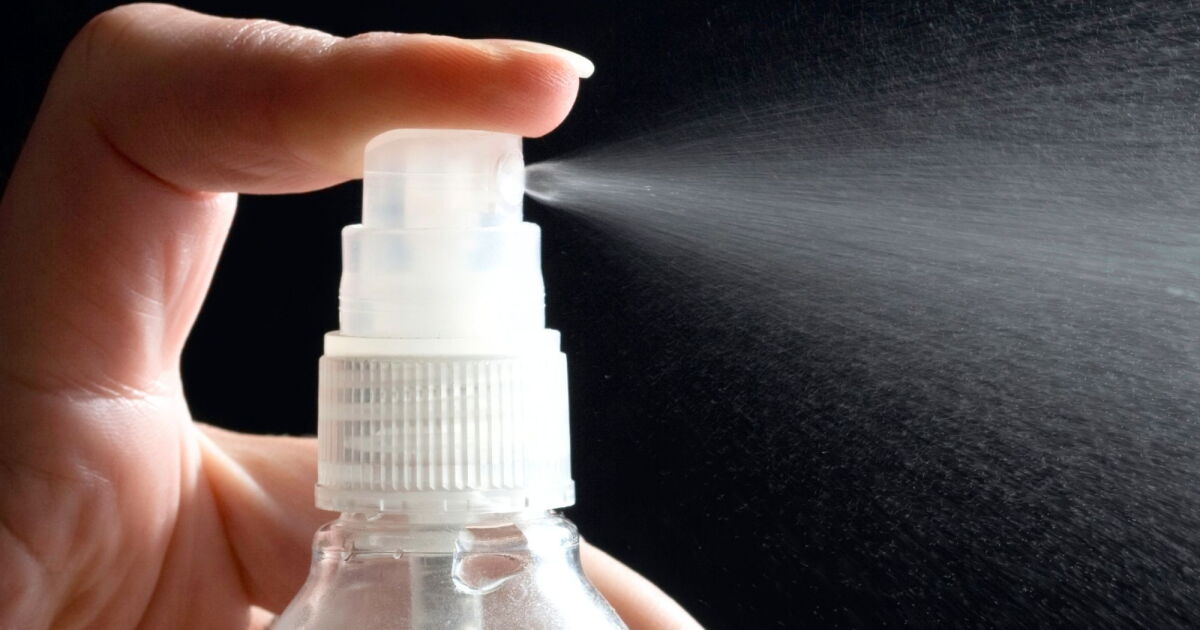
With promises of killing 99 percent of germs and leaving our bathroom sink smelling like a Nordic fjord (minus the bears), modern cleaning products have left us with the impression that they make our homes squeaky clean.
Yet the very compounds that we associate with hygiene may actually be contributing to a very different kind of health hazard.
A presentation at the recent American Chemical Society (ACS) fall symposium by Purdue University engineer Brendan Boor claims that indoor surface cleaning and disinfection products are key drivers of nanoparticle formation, contributing significantly to levels of air pollution we might expect from downtown traffic.
“We showed that indoor ozone reactions with fragrances from cleaning produce nanoparticles that carry a respiratory dose comparable to, or greater than, what you would experience from standing outside along a busy road,” says Boor, who led a team of students in investigating the transformation of compounds in cleaning agents.
There’s no argument that respiratory viruses and gastrointestinal bacteria ought to be unwelcome guests in our living spaces. Just as we add mint to toothpaste and mouthwash to fool our brains into thinking our teeth are as clean as they are fresh, companies will often add essential oils smelling of citrus and pine trees to their cleaning solutions for a perfume of sanitation.
Yet the compounds that give lemon, pine, thyme, and lavender their scents aren’t produced by plants to make nature smell clean. They’re often made for their biological effects, serving as distress signals or to ward off pests and predators.
Known as terpenes, they are typically considered fairly safe, or even healthy when ingested in relatively small doses. Lemons wouldn’t smell so lemony without limonene.
But what if there is a fog of them hanging in our kitchen?
To determine the risk, Boor and his team took high-resolution measurements of volatile organic compounds like terpenes in a purpose-built tiny house at Purdue. They compared these across different environments, including outdoors.
Giving your bench a spray and wipe can elevate terpene compounds to levels outside of what we’d find in a forest.
What we don’t have in abundance in a typical forest is ozone – a three-atom molecule of oxygen generated by ionizing reactions common in photocopiers and (ironically) UV lamps and HEPA purifiers.
Transformed by oxidising processes in our homes and offices, the terpenes in our cleaning products condense into nanoparticles large enough to survive the journey deep into our lungs, where they can settle and slide into our bloodstream.
“By the time you finish cleaning up an indoor space, you’ve already formed a lot of nanoparticles and inhaled them,” says Boor.
Nanoparticle concentrations can climb to levels comparable with traffic emissions, the researchers claim.
Nobody is saying the health risks from a terpene smog in our kitchen are equivalent to a picnic by a city intersection. Yet given that these nanoparticles can irritate the airways and promote inflammation, it pays to ask whether they are essential.
“The particles are different in terms of their composition, but the total dose can be higher. You’re not seeing smoke, dust, or haze in the air. Instead, you think the air smells great, so it must be clean,” says Boor.
The key may be to open a few windows, find low-fragrance cleaning agents, and get used to your home’s natural scents.
This research was presented at the ACS Healthy Indoor Spaces: Bridging the Microbiome and Chemistry
Source: ACS

