


A protein thought to play a critical role in the progression of Alzheimer’s disease may not originate where scientists thought, according to a recent study out of Columbia University.
The discovery challenges assumptions about the development of the most common form of dementia, potentially revealing new points of intervention that could slow the onset or reduce the impact of neurodegeneration.
Alzheimer’s disease is characterized by potentially harmful accumulations of two proteins.
One, known as amyloid, is a misfolded fragment of a larger protein that can clump together into plaques in the spaces between nerve cells.
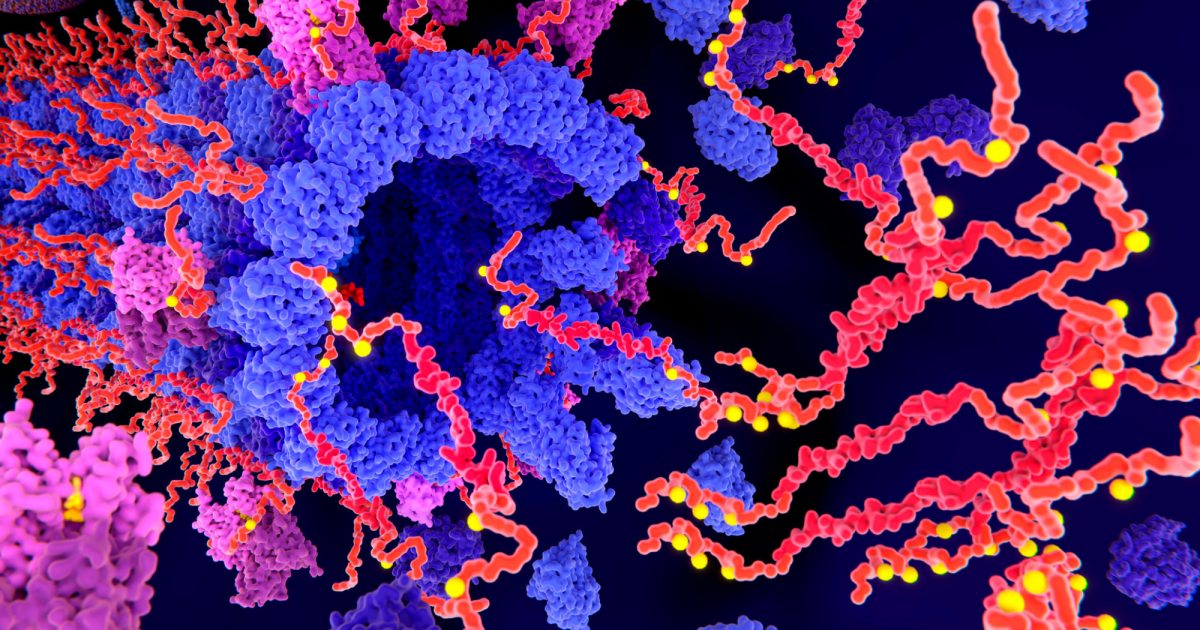
The other, called tau, takes on a configuration that creates sticky knots inside the neuron, particularly in the body and branches known as dendrites.
In a healthy cell, tau concentrates in the cell’s “trunk”, or axon, where it helps support the scaffolding that shapes the surrounding membrane. It’s long been assumed that abnormal configurations of the protein detach from the scaffold and drift into the dendrites, where they become a tangled nuisance.
Now, scientists aren’t so sure.
“It gives us a completely different picture of the cell biology of tau proteins and how they transform into aggregates,“ says neurologist and senior author Kapil Ramachandran, whose team developed a new method for mapping the locations where messenger RNA is translated into chains of amino acids.
They call their process STARFISH – a novel visualization tool that uses tailor-designed probes to pinpoint where a specific RNA template is being read within a cell. Existing mapping tools modify proteins as they are being generated, running the risk of changing their distributions. STARFISH focuses on the act of translation at a sensitivity of individual codons, providing a more accurate reading of the protein manufacturing process.
Applying the process to neurons taken from mice, the researchers found that although the mRNA strands encoding tau proteins were found throughout the cell, they were only read inside the dendrites – and not the axons.
“The field has largely focused on tau moving to the wrong place. Instead, we found that a vulnerable pool of tau is being made in dendrites all along,” says Ramachandran.
“The question becomes what normally keeps that pool safe, and what changes when that protection fails.”
The researchers suspect the twisted forms of tau are being made right from the start, where they tangle together and resist being transported elsewhere. Instead of an alteration to mature, functional tau, quality control oversight at the site of production may be going awry in Alzheimer’s brains.
Previous work conducted by Ramachandran’s team identified a structure called a neuroproteasome among the translation machinery, which is speculated to weed out misfolded proteins.
Why the process fails in some cases is an open question, one that future investigations could now explore to open new avenues in dementia prediction and treatment.
“If we can understand these pathways and triage systems, we may find new ways to ensure that tau folds properly and prevent it from taking a pathological turn,” says Ramachandran.
This research was published in Nature Neuroscience.
Source: Columbia University

