


Contact lens technology has come a long way. Early lenses were made from glass, and were uncomfortable to wear for an entire day. Today, lenses are made from soft materials such as silicone hydrogel and they are barely noticeable on the eye.
Modern manufacturers cover a wide range of sizes and shapes, but finding a perfect pair can still be a struggle for people with irregularly shaped corneas. Using standard lenses usually means a compromise between comfort and clear vision. The solution to this often comes with a high bill for multiple fitting appointments and custom-made lenses (at least a few hundred dollars per pair), not to mention how time-consuming it is.
Finding a more affordable and faster alternative was the goal for a group of researchers from the Department of Chemistry at Canada’s University of Waterloo. Their proposed solution was using 3D printing technology to create personalized contact lenses.
The process is pretty similar to the 3D printing of any plastic or metal objects, and uses specialized software to create a digital model of the lens. The inner surface is designed to match the unique shape of the patient’s cornea, while the outer surface provides the required vision correction. The entire process is expected to take about 20 minutes and can be completed in just one appointment. As simple as it may sound, turning this idea into reality definitely came with a few challenges.
The first and the most significant one was the material. Silicone is considered perfect for contact lenses: it’s soft, oxygen-permeable, and biocompatible. Its only weakness is that it isn’t very compatible with 3D printing technology. To overcome this limitation, the researchers developed a new hydrophilic (water-attracting) silicone formula that can be used for building objects layer by layer.
Another challenge came from the nature of 3D printing itself. When objects are printed in layers, the surface develops stair-step-like imperfections. If you look closely at any 3D-printed plastic object, those imperfections are pretty easy to spot. On something tiny like contact lenses, that texture may not seem to be visually noticeable, but can significantly affect comfort and optical clarity. The researchers addressed this issue by applying a special ultra-thin coating that smooths the surface without changing the customized shape of the lens.
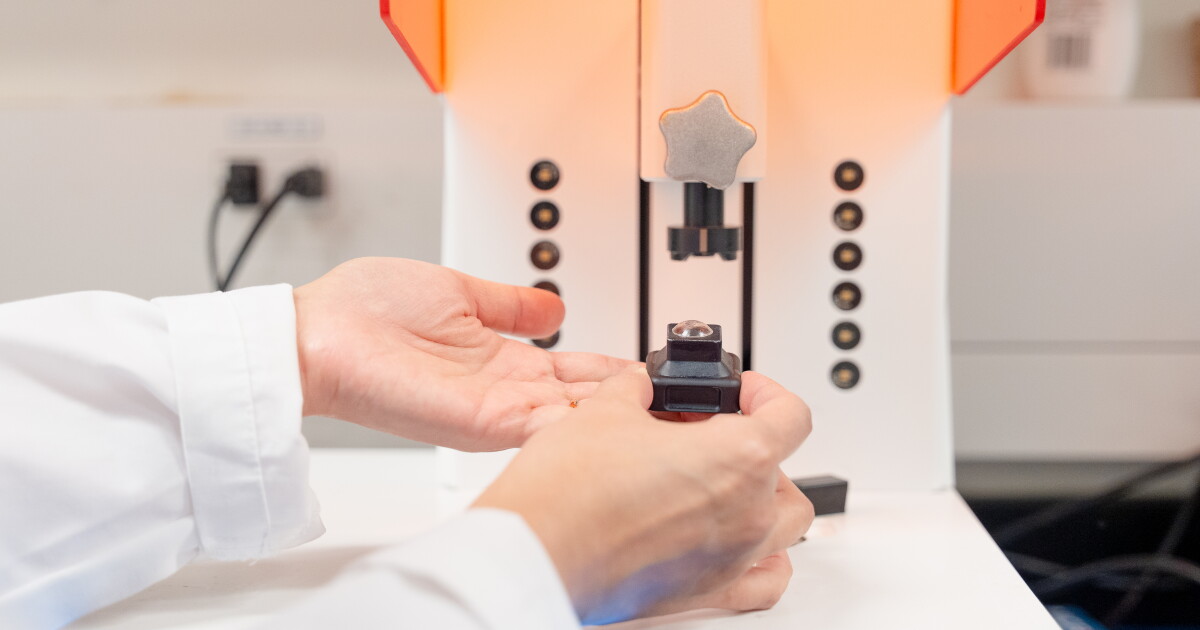
Jay Mielke/University of Waterloo
“The novel hydrophilic silicone material we created, combined with our manufacturing process, produces smooth, transparent lenses that are comfortable to wear,” said Dr. Sayan Ganguly, Chemistry research associate at the University of Waterloo.
Recent laboratory testing proved that the lenses are biocompatible, meaning they are safe for interaction with eye tissue. The researchers also claim that the 3D-printed lenses deliver optical clarity and mechanical performance comparable to commercial contact lenses. The next steps include preparing for real-world testing and also completing the patent process, bringing the technology a few steps closer to commercial use.
Source: University of Waterloo

