


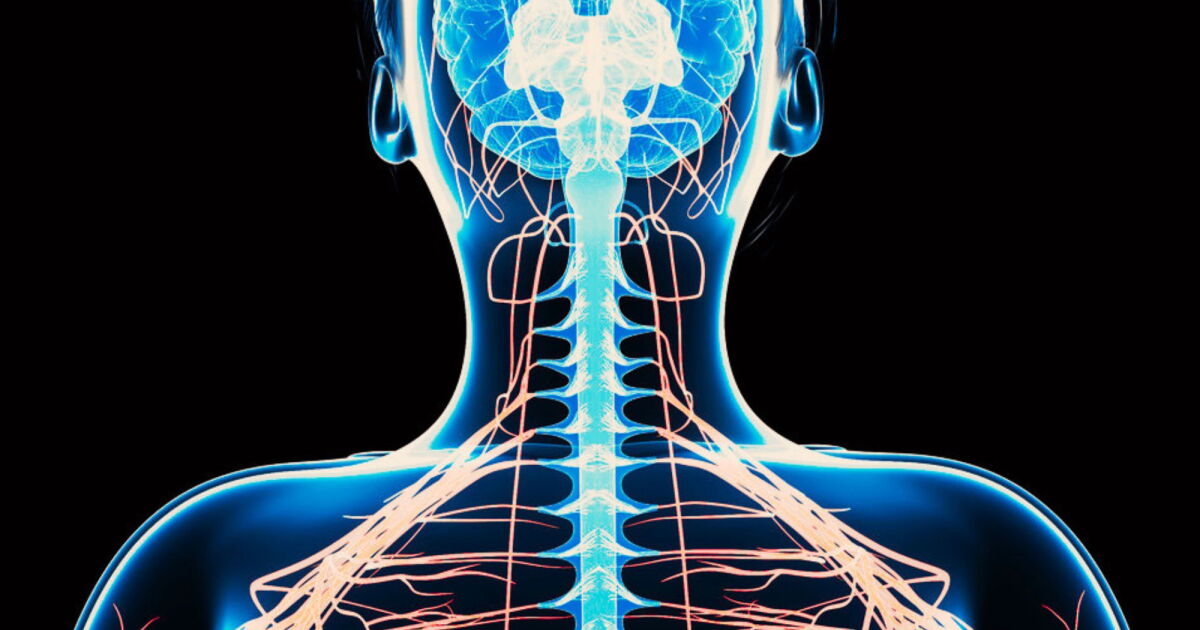
Replacing damaged spinal cord with healthy donor tissue sounds like a straightforward solution to paralysis. Getting those tissues to exchange meaningful messages is another matter entirely, one that has challenged researchers for decades.
A surgeon says his team has now attempted this extraordinary feat in Russia, transplanting a section of spinal cord from a brain-dead donor into an adult who had suffered an injury three years earlier.
If confirmed, the procedure would represent a remarkable landmark in medical science. Whether it helps the recipient regain any function remains an unanswered question.
Dr. Xiaoping Ren, a surgeon at China’s Second Affiliated Hospital of Guangxi University of Chinese Medicine, told New Scientist’s Helen Thomson the operation took place last week at Moscow’s Sklifosovsky Institute for Emergency Medicine.
According to Ren, surgeons removed damaged tissue and used microsurgery and polyethylene glycol (PEG), a substance capable of helping cell membranes fuse, to join the donor segment to the recipient’s spinal cord.
The recipient reportedly had sustained a complete spinal cord injury. The injury’s location, detailed neurological assessments, and evidence of any improvement haven’t been disclosed in any available reporting.
“We have informed the patient of every potential risk and surgical outcome, and the patient’s current condition is good,” Ren told Thomson.
A statement on the hospital’s website, citing Moscow mayor Sergei Sobyanin, describes a 12-hour spinal cord transplant involving Chinese colleagues. With no clinical results, the publicly available account rests heavily on statements from those involved and official announcements. No peer-reviewed observations of this patient’s operation or outcomes have yet been reported. Ren says documentation will follow.
Which leaves us with little but speculation. Nonetheless, the report itself is an opportunity to reflect on why this very procedure is such a big deal.
Since ancient times, injury to the spinal cord has been seen as something of a life sentence. Where most body parts can recover from trauma to some degree, damage to our nerves isn’t granted the same latitude. Putting it simply, our brain and spinal cord just don’t have the mechanisms to recover from severe trauma.
In some ways, it’s even worse than a lack of healing. Damaged tissues pump out nitric oxide to call in immune responses and aid repair. Unfortunately, the compound is neurotoxic, only furthering damage to our nervous system.
Even if this wasn’t the case, a damaged spinal cord isn’t like a broken bone, which can regain even limited functionality when roughly realigned. Slow regrowth of nerve cells can mean other body systems have altered their functions – or even broken down entirely – while waiting for disrupted signals.
Not that there hasn’t been great effort to find ways to facilitate healing of our nervous highways in the hope that those paralyzed by injury may feel, function, or even move as they once did.
In a 2021 editorial, Ren, together with Italian neurosurgeon Sergio Canavero and Korean neurologist C-Yoon Kim, outlined a proposed donor spinal cord transplant, identifying challenges including reconnecting nervous tissue, restoring its blood supply, and managing immune rejection.
If Canavero’s name sounds familiar, it could be thanks to the headlines he made around the world a decade ago for another moonshot proposal to transplant the head of a patient with an incurable wasting disease onto a brain-dead donor’s body.
A proposal, however, is a considerable distance from a demonstration, which in the case of the so-called head transplant never transpired.
Could a spinal cord transplant be a more reasonable stepping stone?
PEG-based repair of nervous tissue does have clinical support in animal experiments. A study published in PLOS One just a few months ago tested a PEG–chitosan gel in five pigs whose spinal cords had been completely cut. Three received the gel; two served as controls.
After 60 days, the researchers reported that treated pigs could stand and walk on all four limbs, while controls remained paralyzed. Tissue analyses also suggested nerve fibers crossed the injury.
As promising as it sounds, these results come from a tiny experiment involving freshly severed cords, rather than transplantation of donor tissue into an established injury where surrounding systems have adapted to the trauma.
Even if success is a long shot, human experimentation poses significant ethical questions over risks and benefits. University of Southampton neuroscientist Melissa Andrews told New Scientist she questioned the rigor of the animal evidence and feared the recipient could face substantial surgical burdens and a high chance of infection.
With other approaches on the table, using a donor’s tissue may already be an unnecessarily risky strategy. Stem cell therapies are showing promise in early clinical trials, using a patient’s own tissues to safely assist in spinal cord injury treatment. Though it’s far from capable of reconnecting a severed spinal cord, stem cell and organoid technology is advancing rapidly enough to expand the nature of injuries it could one day treat.
In the meantime, solutions based on digital technology are demonstrating true success. In 2023, a brain-spine interface reportedly helped a man with a chronic spinal cord injury stand, walk, and climb stairs. Implanted devices translated brain activity into stimulation below the injury, creating a digital bridge around disrupted pathways.
A 2024 Nature Medicine trial explored a less invasive approach: electrical stimulation through the skin during rehabilitation. Among the 60 participants who completed the protocol, 72% showed improvements that exceeded the study’s thresholds in strength and functional performance.
This isn’t to say these options are comparable to the potential benefits of a successful spinal cord transplant. Even a failure of the procedure could provide valuable insights… if details are made available for critical peer review.
Time will tell. Science loves to eat its words like a plate of healthy vegetables, after all.
For now, the Moscow operation is a reported attempt at an exceptionally difficult repair. Calling it a successful treatment would require evidence that has yet to be made available.
Source: New Scientist

