


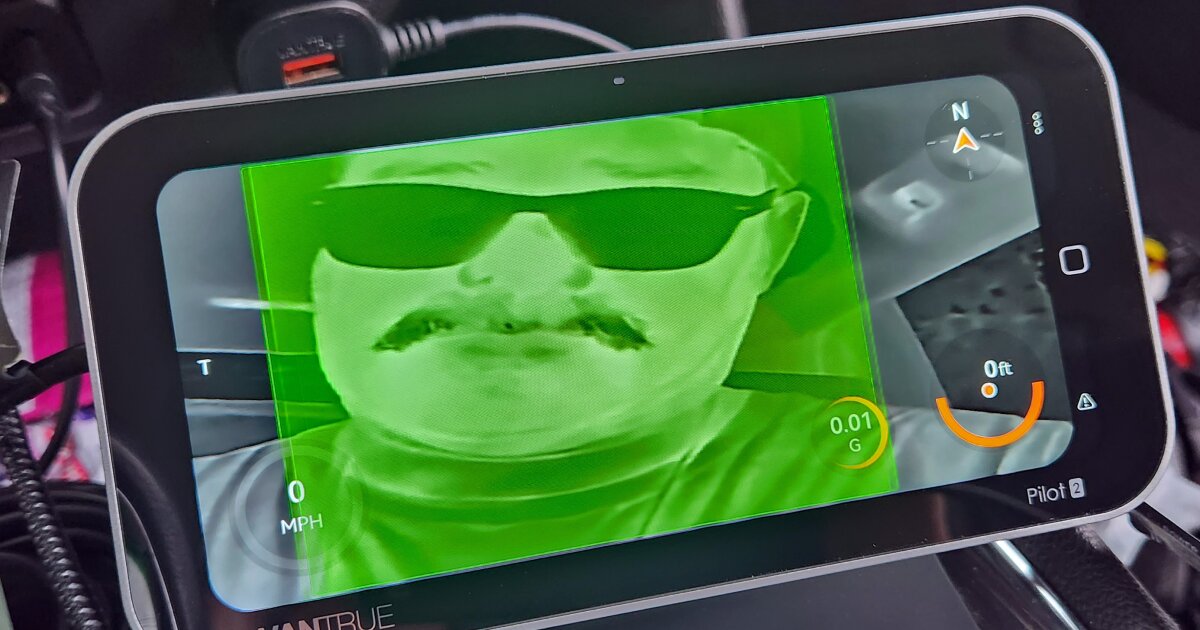
First of all, I want to point out that I’ve been testing a preproduction unit. The final is going to be slightly different, but the premise remains the same: now Vantrue’s dashcam has thermal!
This isn’t the first thermal “dashcam” I’ve reviewed. Back in late 2024, I had a chance to test out a ThermalMaster behemoth that was far more work than it was worth before it eventually failed altogether after just a few months.
Having reviewed Vantrue’s flagship Nexus 5S before (and making it my primary unit that stays in the family car to this day), I already knew the Pilot 2 was going to be a high-quality piece of equipment. The cabin camera (1080p) and the rear-facing camera (1440p) both have the same specs as the 5S. The forward-facing cam does get a slight downgrade from the 5S version, however, going from 1944p down to 1440p.
Because this wasn’t my first thermal rodeo, I went in knowing it wasn’t going to be just a simple set-it-and-forget-it, slap-it-to-your-windshield, badda-bing badda-boom type install.
It may seem obvious to many of you, but I imagine the majority does not realize that thermal cameras can’t see through glass. Honestly, it never even occurred to me my first time. I was puzzled for about 60 seconds why the image was black when trying to put the thermal camera on my dashboard before it hit me … I was looking at the thermal signature of the windshield … ohh, right … duh ... Thermal cameras must be mounted to the exterior.
JS @ New Atlas
Anyhow, I opted for the easiest installation route that wasn’t going to be permanent – mostly because the preproduction unit lacks quite a few features that the final product has, nor will I ever be able to update it because there’s slight hardware differences too. I skipped the hardwire kit in favor of the cigarette lighter plug (does anyone else still call it that besides me?), and I skipped the rear-facing camera, as I’ve already got rear-facing footage in the Nexus 5S review.
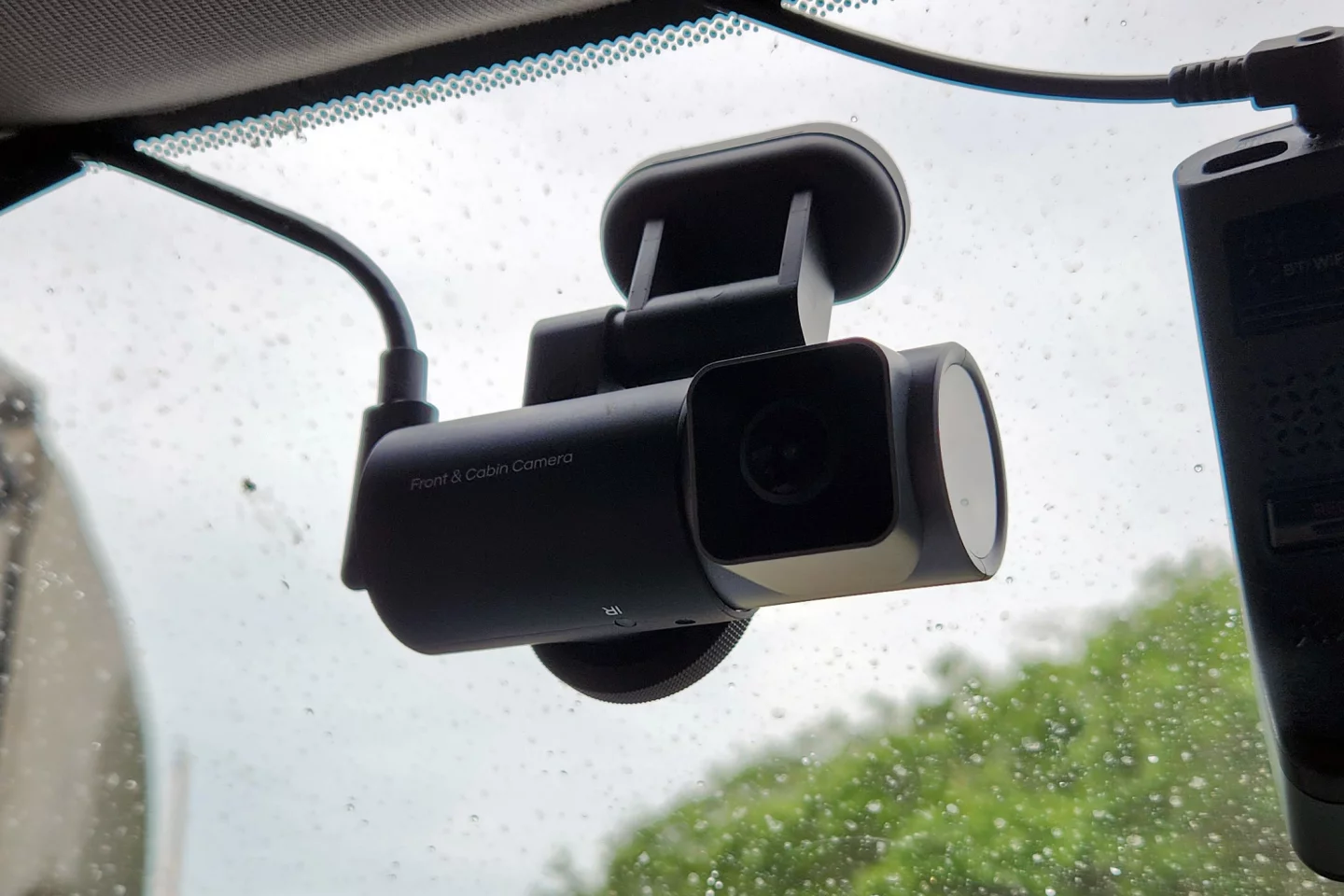
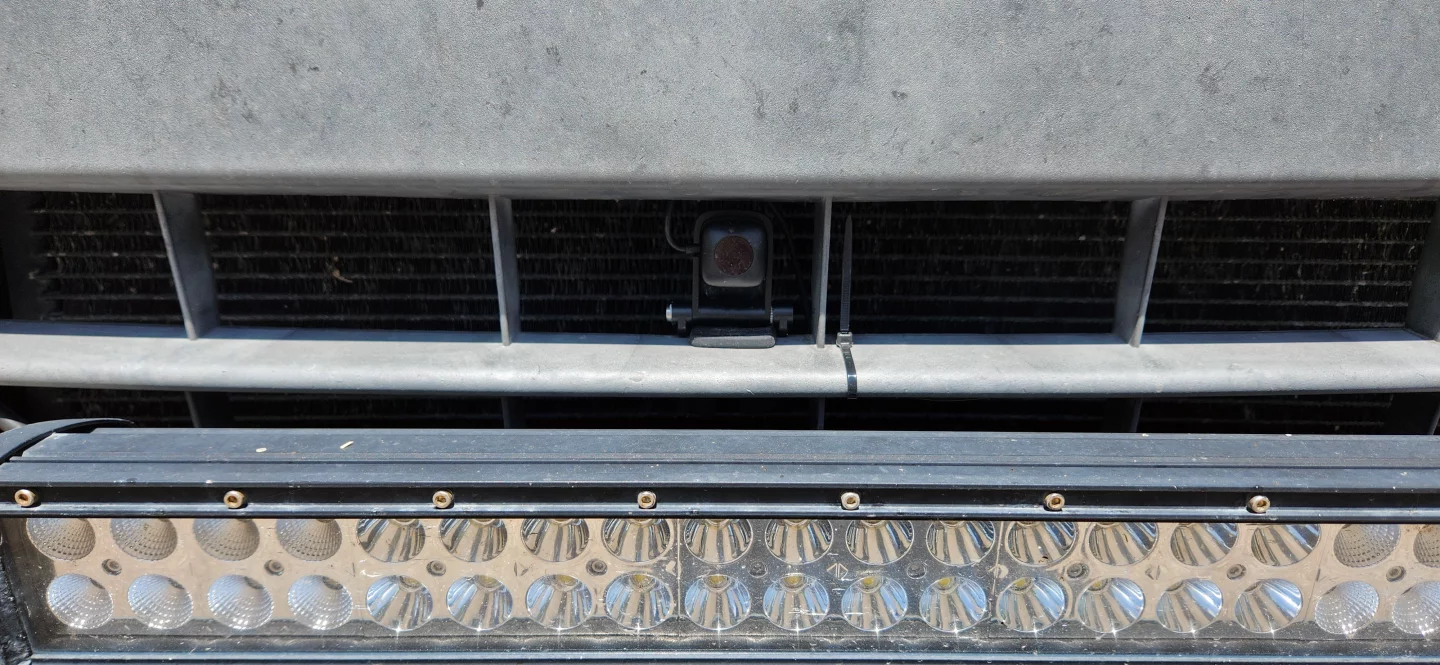
Vantrue provides plenty of cabling for the thermal camera. The mount is designed in such a way that it can be clamped to the hood, just in front of the windshield, but I opted to tuck it away, hidden in my grille. The forward-facing camera + cabin camera combo went in the usual place, just next to the rear-view mirror.
JS @ New Atlas
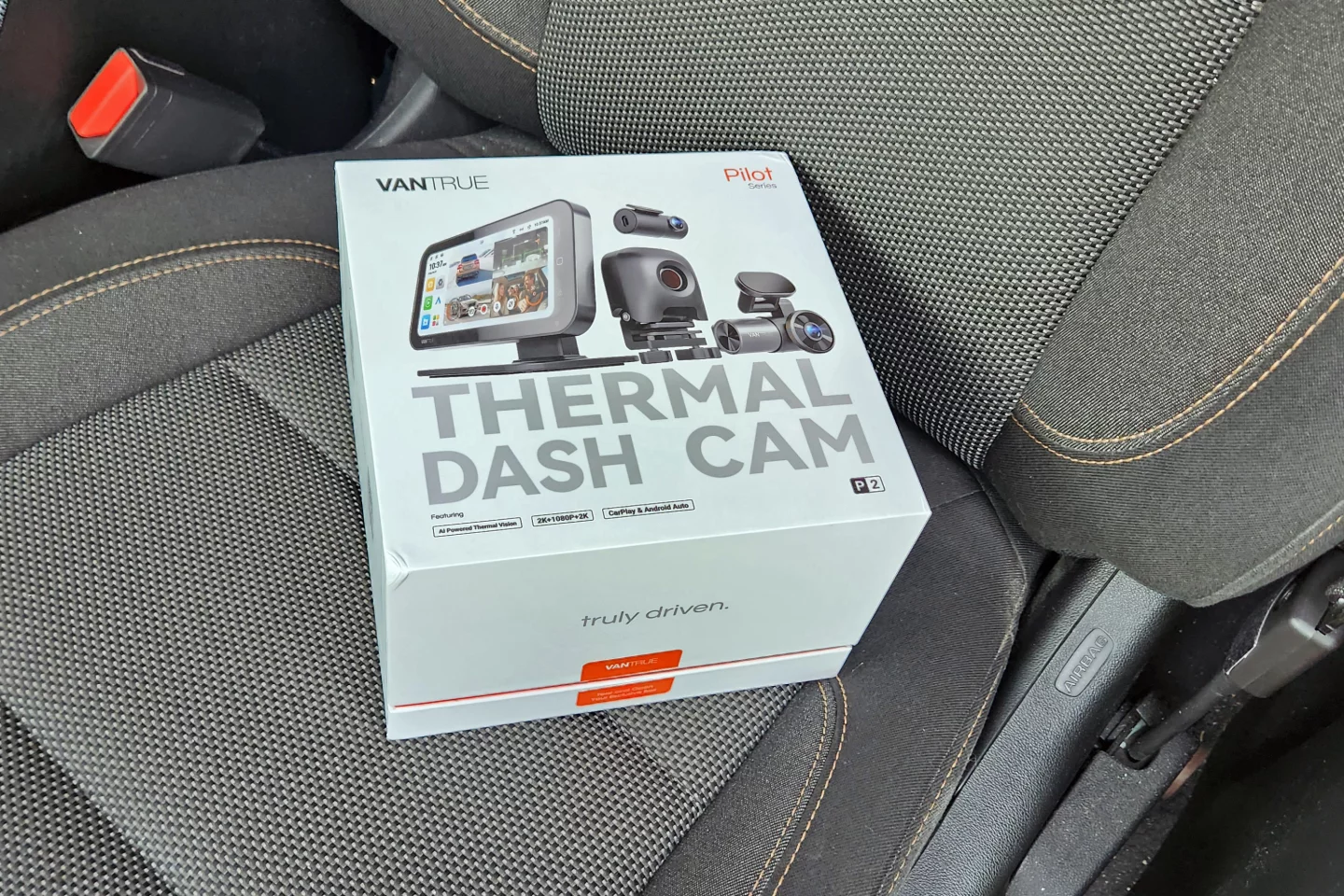
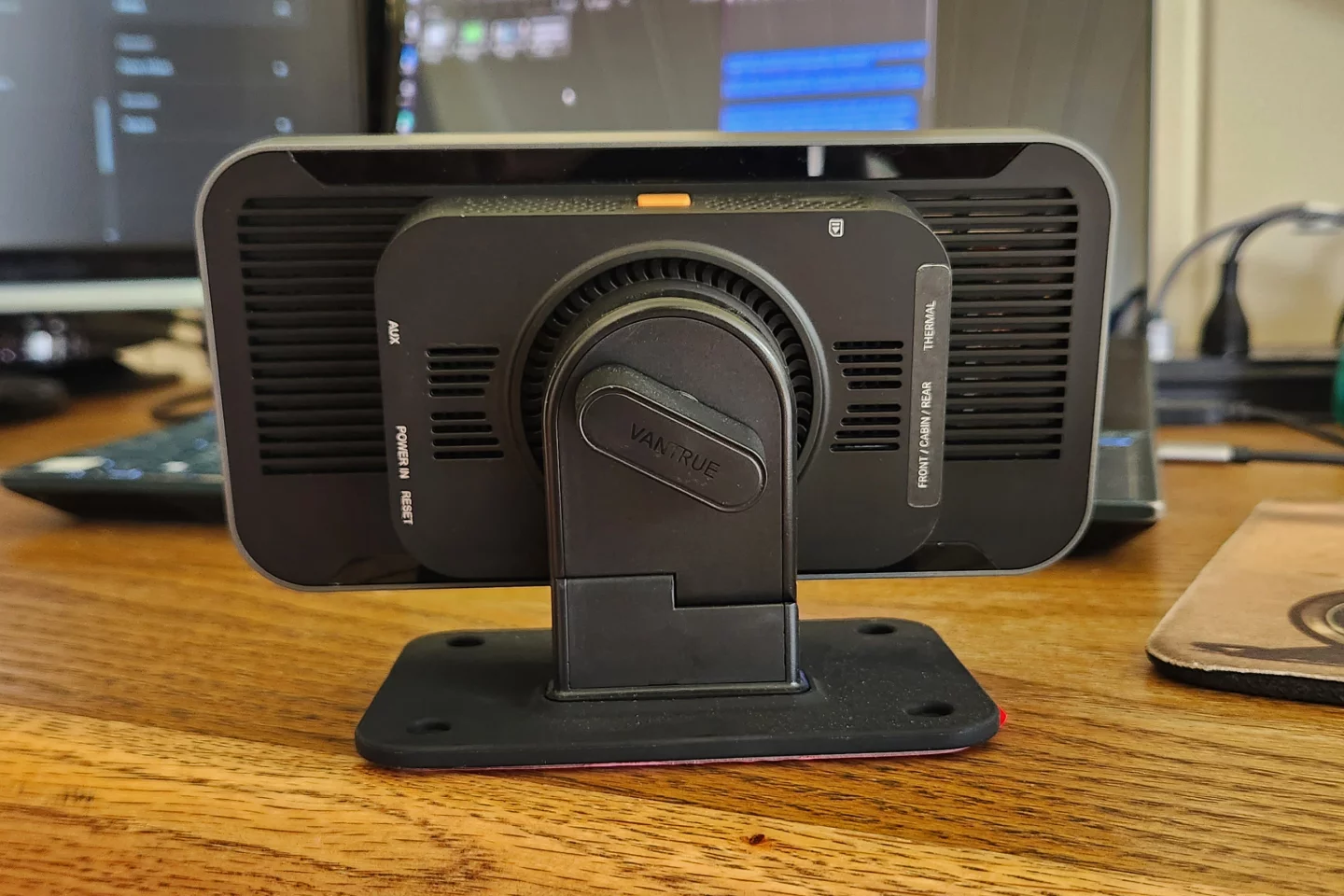
Rather than the screen and controls being on the front-facing cam like nearly every other system ever made, Vantrue uses a separate dash with its own 6.25-in IPS, 1560 × 720 touch screen, where all the cameras connect. It’s the brain of the whole system.
Honestly, it ends up being a whole lotta wires. Between the 20-ft (6.1-m) rear cam run, the long thermal camera cable, the front/cabin camera lead, and power cable for the display unit, the full kit comes with well over 30 ft (9.1 m) of cabling once all is said and done. I hope you have a deep headliner in your rig.
JS @ New Atlas
First impressions:
Thermal is cooool. Pairing HD RGB video with thermal is even cooler. Chuck in an AI detection overlay onto the thermal? Now we’re really talking. I just wish I could throw it in Yautja mode instead of always “white hot.”
What makes thermal cameras awesome is that they can sometimes see what your eyes can’t, like the heat signature from a deer standing in the middle of the road just beyond your headlights’ reach. The dash gives you a sort of heads-up display in your peripheral, and when it detects that deer, the AI overlay will light it up in a green detection box, warning you of impending doom before you ever even knew there was a threat.
JS @ New Atlas
That is, if all works according to plan. The resolution on the average consumer-grade thermal camera is a measly 256 × 192 pixels, while the field of view is a very narrow 60 degrees (which is what’s in Pilot 2). Vantrue stretches the pixels out a bit on the display for better human readability. However, the fact remains that stuff simply gets missed sometimes, be it outside of the camera’s FOV or because the camera can only detect heat signatures out to 200 ft (61 m) – even though Vantrue claims up to 330 ft (100 m) on paper. But something is better than nothing, right? When you think about it, 60 mph (97 km/h) is 88 feet (26.8 m) per second … that’s a solid 2-seconds-and-some-change heads-up warning. I’ll take a 2-second warning over no warning at all any day.
The last thermal cam I tested threw false positives at me constantly. It lit up fire hydrants, traffic cones, and I kid you not, even a lighthouse in the distance once, all as people. So far, false positives have been pretty few and far between with the P2 system. It’s also not laggy like the ThermalMaster was.
Check out the footage below. I overlaid the thermal camera over top the forward facing footage, synched to the same time code so you can kind of see the difference in FOV.
Vantrue Pilot 2 Thermal Dashcam Raw Footage
Thermal aside, the clarity on the forward- and rear-facing cameras is great. Sharp and with readable license plates, should you ever need that kind of information in a police report (hopefully never). The cabin camera still makes me a little weirded out. I imagine if you’re an Uber driver, you absolutely want a cabin camera … but for a guy like me, who picks his nose a lot, the cabin cam makes me a little self-conscious. Though there have been a few times where the cabin cam has really helped me out when the wife says “I TOLD you already while we were driving!” to which I say “No, you didn’t … let’s check the replay.” No, that didn’t actually happen, but it could. The microphone in the system is solid.
I’m a bit sad that I couldn’t test the Android Auto features, as they hadn’t yet been fully built on the preproduction unit. I’m always trying to find that perfect solution that doesn’t involve me buying an entirely new head unit for my nearly half-a-million-mile Honda Element with an over-a-decade-old Pioneer deck in it. The Pilot 2 could very well be the solution, but I can’t attest to it.
As with the Nexus 5S, the P2 has parking mode too, where it draws less power while always watching when your vehicle is parked. Should it get bumped in the night, the camera will save the 10 seconds before the bump and continue to record after, so you’ll be able to identify which neighborhood cat it was leaving little bean prints on your hood. If you hardwire it, be sure you have a good battery! It will constantly sip juice. I had to jump-start my rig after it sat for about 10 days, but that might be just because I need a new battery anyway. Good thing I’ve got a Vantrue JS3 as well, eh?
JS @ New Atlas
I’ve had the P2 in my car for the last two months or so, and I live on the Gulf in Texas. It almost never gets hot here … it stays hot here. Vantrue says the operating temp is -4°F to 140°F (-20°C to 60°C), and I know it gets hotter than that in my dark colored vehicle while it bakes in the sun every day, and so far I’ve not had any issues with the P2.
At the time of writing, it looks like the MSRP is a pretty staggering US$899.99, but it’s on pre-sale for $649.99. Is it worth that much? I’d have to qualify that answer, to be honest.
If you live in the city – and I’m going to go out on a limb to say this – the thermal aspect of it might not be all that useful for you. It will just become a constant stream of green “threat” boxes to the point where you’ll likely simply learn to ignore it entirely. That’s my guess, at least. You’ll be better off just getting the Nexus 5S or something to that effect.
But if you live in the country and/or drive a fair amount at night, this is where the Pilot 2 will shine, and where you might find it to be a useful tool for helping to keep your bull bar on the front of your F250 guts-free.
Either way, you’ll still get the rest of the dashcam features, like peace of mind knowing that you’re covering your own butt in case someone or something does something silly and you need proof of it. Or high-res video of meteorites lighting up the sky.
Product page: Vantrue Pilot 2
New Atlas may receive commission if you purchase through our links. This does not influence our reviews, as our opinions remain our own.

