


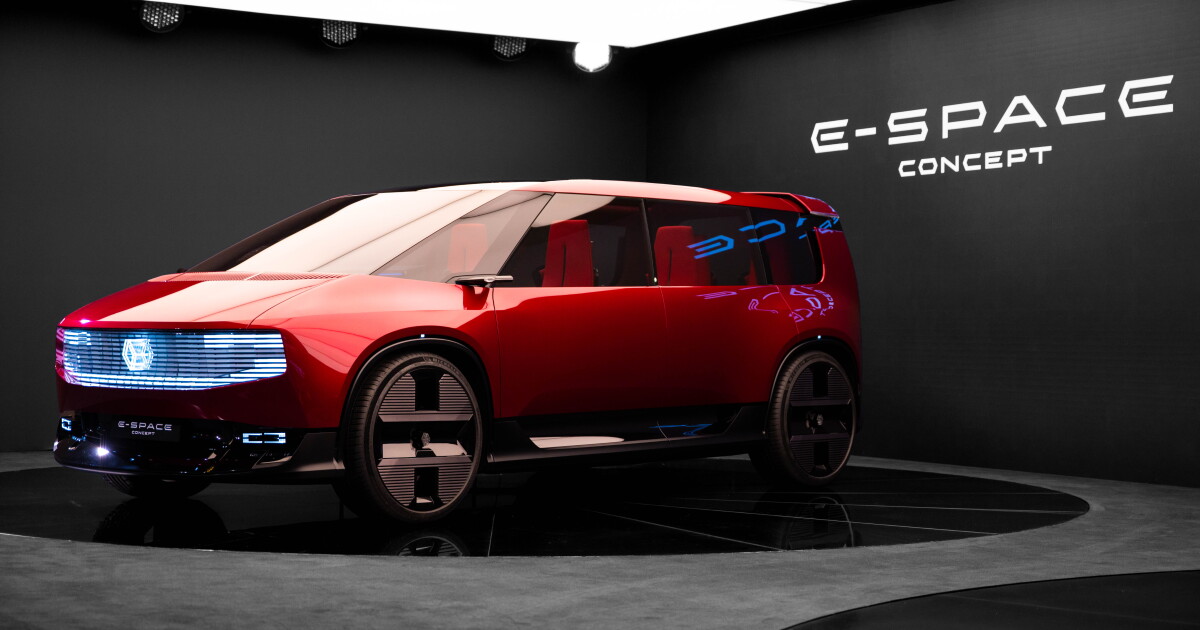
How is the venerable European car industry responding to the current aggressive wave of Chinese electric vehicle imports? By loudly trumpeting its long-standing sense of style, innovation and heritage of course.
That’s why this week’s Paris Motor Show has been a parade of exciting ideas from the big established European carmakers. Amid this high-stakes backdrop, French automaker Renault used its home turf to launch one of the stars of the show: the E-Space Concept.
ADDITIVE, Renault Design
Potentially this could be a revolutionary vehicle that reclaims the multi-purpose vehicle segment for France in the battery-electric era. Renault CEO Fabrice Cambolive took the stage to announce that Renault is attempting to make the family van undeniably cool again. The E-Space certainly does that.
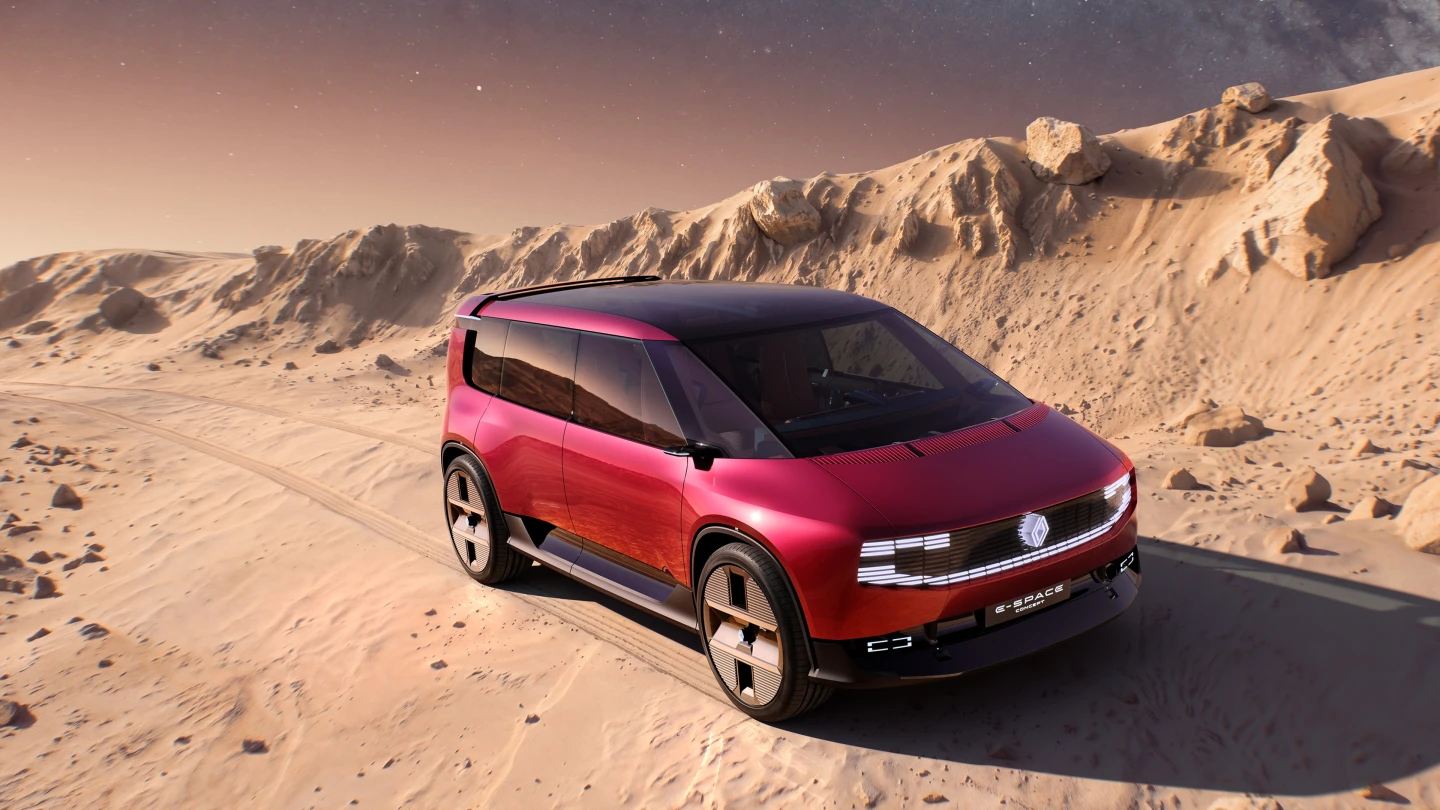
For an American audience accustomed to massive three-row crossovers and premium haulers, the E-Space dumps the faux-off-road aesthetic of modern SUVs. Instead, it presents an ultra-clean, aerodynamic, single-volume silhouette, albeit one that stretches 15.4 feet in length, 6.6 feet in width and 5.5 feet tall (4.7 x 2.02 x 1.67 m).
Pushing its massive wheels to the absolute corners of the chassis, the vehicle optimizes its footprint for unparalleled interior room. It seems huge inside, in a way that’s reminiscent of its spiritual predecessor, the 1984 Renault Espace.
ADDITIVE, Renault Design
America’s 1936 Stout Scarab introduced modular seating and 1950s station wagons gave space to the suburbs, while iconic 1960s Ford Econoline and Dodge A100 remained truck-based halfhearted passenger conversions. The breakthrough came when Chrysler launched car-based minivans, primarily the Plymouth Voyager, in late 1983. Months later, the Renault Espace perfected and popularized the formula. The Espace was something new: a dedicated, car-like living room on wheels. It sold 1.3 million units and sparked a global MPV revolution that went on to dominate the family market for decades.
More than 40 years later, the E-Space Concept is breaking design conventions in a similar way. It’s full of details like a sweeping U-shaped LED light strips tracing the front and rear contours and a pixelated, illuminated diamond corporate logo that appears to float seamlessly in space.
Beneath the architectural exterior lies a heavy dose of advanced engineering that is likely to serve as the launchpad for much of the brand’s next generation, most importantly moving rapidly toward the standardization of Lithium Iron Phosphate battery tech.
This technology trades raw density for practicality. By ditching expensive cobalt and nickel for cheap, abundant iron, automakers lower costs while creating a battery that is safer and less prone to fire. LFP cells also endure thousands of charge cycles, thriving on regular 100% daily charging without degradation. The trade-off is weight: LFP batteries are heavier. Renault’s structural cell-to-pack engineering mitigates this by omitting internal packaging, slipping more power directly into the vehicle floor.
ADDITIVE, Renault Design
The company kept E-Space electric range figures close to its chest during the launch. As a clue, the updated Megane E-Tech displayed alongside it on the Paris floor, features a 67-kWh LFP pack yielding more than 300 miles (500 km) of WLTP range. A 15% to 80% charge takes just 24 minutes.
What we did learn is that the new platform will integrate sophistications like a One-Pedal driving system and Google Gemini artificial intelligence. This means over-the-air updates to handle natural language navigation, real-time cabin adjustments and predictive scheduling for busy families.
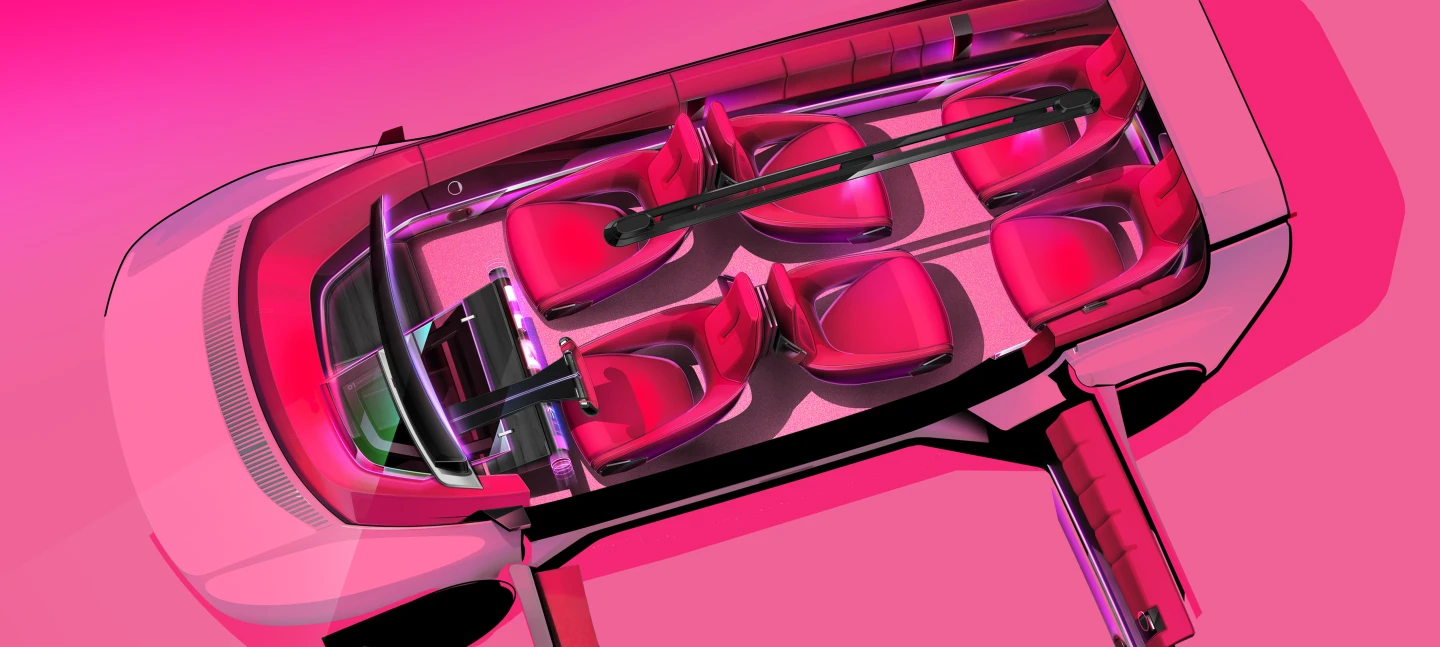
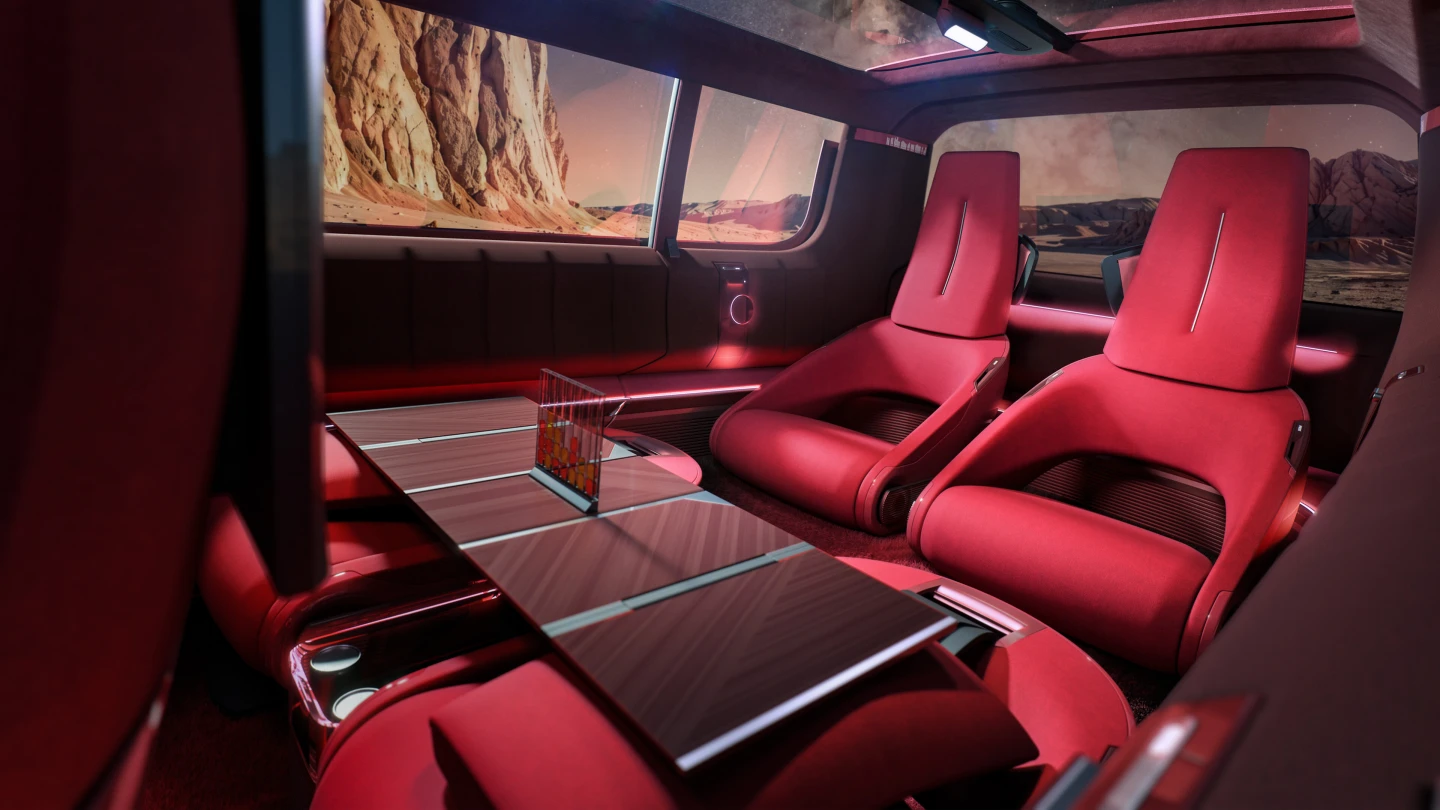
Stepping inside the cabin shows Renault focused on the interior space before even sketching the bodywork. It looks like designers used premium furniture catalogs rather than traditional automotive packaging, creating a pillarless entryway that opens into a lounge-like sanctuary. Six individual seats are ‘floating’ on hidden pedestals to keep the floor space clear. They are engineered to swivel seamlessly and create a cozy, face-to-face conversational layout when the vehicle is stationary.
ADDITIVE, Renault Design
The interior is bathed in natural light from a massive panoramic glass roof. There are warm, sustainable door textiles and a high-tech command center for drivers, who are greeted by a sprawling 3.7-ft (1,130-mm) panoramic digital display to handle all telemetry and infotainment.
The strategic significance of this launch extends far beyond automotive nostalgia. Headquartered just outside Paris, the 128-year-old French giant is using this platform to prove that traditional European brands can out-innovate the incoming tide of Asian competitors. Its E-Space hopes modern families are tired of riding in identical, high-riding crossovers that sacrifice true interior utility for rugged styling. Its plush, left-field alternative prioritizes passenger comfort, emotional appeal and versatility.
Renault design boss Laurens van den Acker confirmed that production is already being considered. If the rapturous reception on the Paris show floor is any indication, the classic family van is poised to make a triumphant, high-tech comeback.
Source: Renault

