


SpaceX has once again set the record for flying the largest and most powerful rocket in history. It’s also on the verge of launching more satellites than the rest of the world combined since Sputnik. Are we witnessing the beginning of a new Space Age?
In many ways, SpaceX’s Starship rocket is a metaphor for the company as a whole. It’s an impressive piece of space hardware but it’s also deceptive when it comes to scale. You can go online and buy a desktop model of the vehicle and when you set it up away from any context of size you fail to grasp just how big and powerful this machine is.
You don’t realize that the Starship Version 3 (V3) is the height of a 40-story skyscraper. At 408 ft (124 m), it dwarfs the Apollo Saturn V that only measured 363 ft (110 m). The Starship also has almost twice the thrust of the Moon rocket. Add in a payload of over 100 tonnes and Starship is a monster by any standard. Yet, unless you’re standing next to it, it can be hard to truly gauge its size.
David Szondy/New Atlas
It’s the same with SpaceX itself. When it was founded in 2002, it looked like a vanity project of a billionaire electric car maker. Many people still see the company as that, but the truth is that SpaceX went from nothing to the leading orbital launch provider on the planet in a remarkably short time. And the scale of this achievement is much, much larger than popular perception.
Since the first Sputnik went into space in November 1957, all of the governments and private companies on Earth have launched an estimated 15,062 payloads into orbit. Starting a tad later in 2008, SpaceX has managed to shoot 14,844 payloads into space – almost equal to the total of the rest of the world combined. By the time you read this, the company may well have exceeded it.

SpaceX
To this can be added technological innovations that the aerospace field now takes for granted. SpaceX was the first privately funded company to send a liquid-fueled rocket into orbit in 2008. It sent the first private spacecraft to dock with the International Space Station in 2012. Then there was the first powered landing of an orbital rocket first-stage booster in 2015. And in 2017 we saw the first reflight of an orbital rocket stage. Then in 2020, SpaceX sent the first private astronaut mission into space.
Now, all of this is not to parade SpaceX’s achievements, though they are impressive. What is important is that the company isn’t some anomaly that could fade away tomorrow. It’s the harbinger of what could be a second Space Age – one that could make the first look like a 100-tonne, 15th-century carrack compared to a nuclear-powered, 70,000-tonne, Ro-Ro container ship the size of a small town.
What has happened is that SpaceX is the first of a growing number of companies that are overturning and replacing the business models that have dominated the space sector since the beginning. Up until about 20 years ago, space launches were the reserve of national space agencies, the military, and a handful of large businesses. The pace of launches was at a steady cadence, averaging 95 per year worldwide at their height in the 1970s and ’80s.

By the 1990s, it looked as if the exploitation of space would remain with national agencies like NASA, the Russian Space Agency, and the US Air Force; state consortia like Arianespace, China Great Wall Industry Corporation, and International Launch Services; or private companies Being Commercial Launch Services, and Lockheed Martin. It was a neat, stable model, with global launch numbers falling to just 55 per year by 2004.
Today, the worldwide launch rate has risen to roughly 125 launches annually, with the number exploding in 2018.
This dramatic increase isn’t due to just new technologies, but new business models that reject the assumptions of the first Space Age. Without going into too much detail, the fundamental shift was to stop treating every rocket launch as a dramatic one-off experiment built from scratch by teams of specialists. Rockets also ceased to be viewed as enormously expensive expendable vehicles destined either to smash into the ocean or remain abandoned in orbit forever.

The new model involved making rockets simpler and simpler by changing the designs to include 3D-printed parts and other innovations to reduce the number of components, and then streamline the whole thing to make the vehicles more or less mass-producible. The other side of this was to aim toward making the entire launcher, ideally, fully reusable so it could be quickly refurbished and used again and again.
After SpaceX introduced this concept, it was eventually able to reduce the launch costs to US$67 million per mission for commercial contracts and $150 million for NASA and the US Department of Defense. That’s an improvement over previous rates that could be as high as $1.5 billion per launch of the Space Shuttle.
To this model was added other ideas, like vertical integration so that as much of the rocket-making process was in-house rather than dependent on outside vendors. Another was to diversify revenue beyond just shooting payloads into orbit. For example, many people believe that SpaceX gets most of its income from US government contracts. In fact, this makes up only 20% of its revenue. Most comes from the company’s Starlink data/communications services, with a constellation of over 7,000 active satellites and over 10 million subscribers in markets that were previously dominated by a handful of satcom companies providing limited coverage for astronomical rates.

Rocket Lab
It’s an extremely successful model that other companies are imitating in their own ways, and one that will have far-reaching consequences in the next decade.
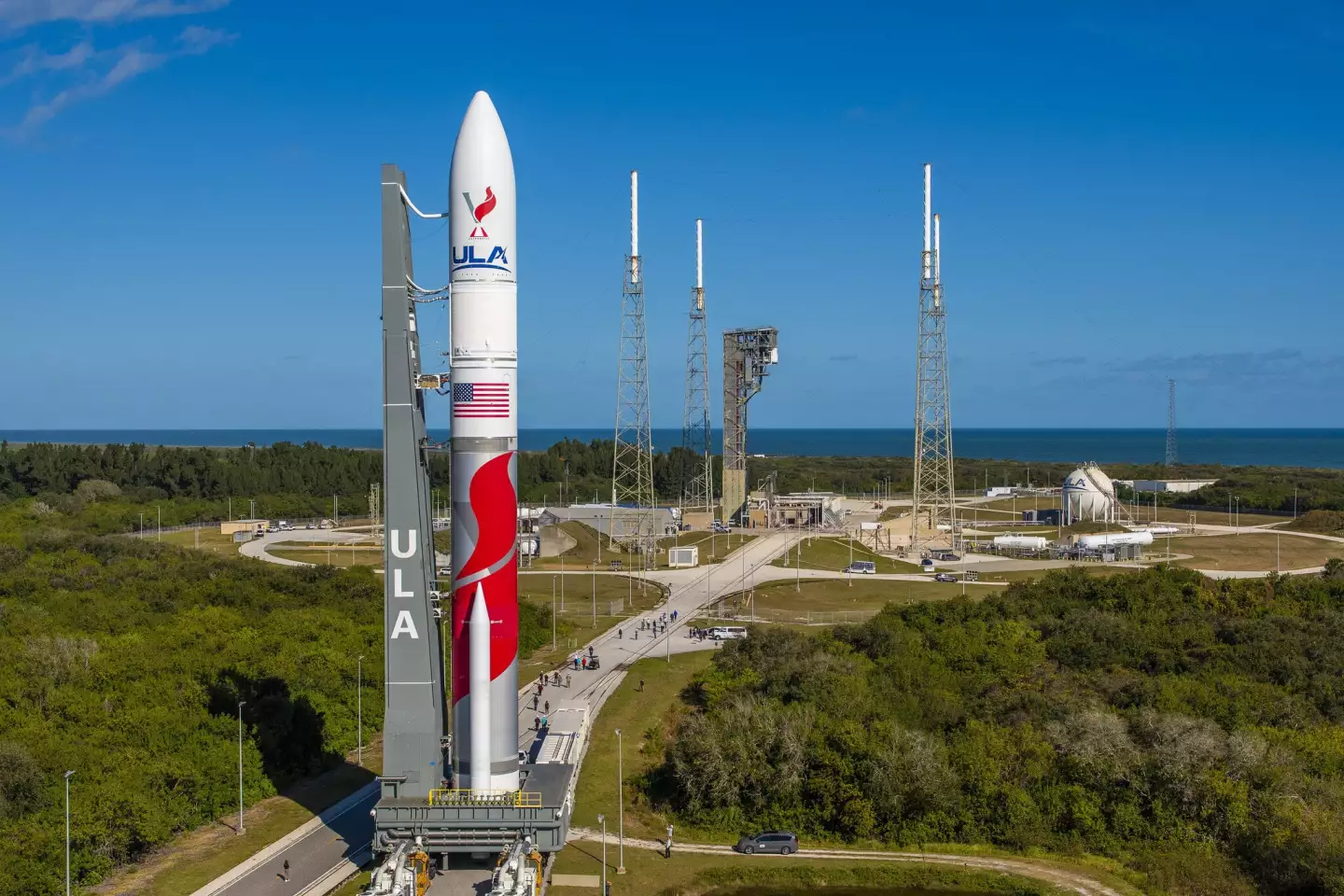
One likely outcome is the erosion of the near-monopoly on US government national security launch contracts long held by United Launch Alliance, a joint venture between Lockheed Martin and Boeing. This partnership has decades of experience in orbital launches with a near-flawless success record, strong relationships with the US defense establishment, and deeply entrenched infrastructure.
Unfortunately, ULA also has weaknesses in common with many of the legacy players, including much higher launch costs, a very slow launch rate, a high reliance on outside vendors for things like engines and other components, and supply chain vulnerabilities when launches do go wrong.
In comparison, the new players have their own advantages and disadvantages. One of the more direct imitators of the SpaceX model is Blue Origin. Founded and financed by Amazon founder Jeff Bezos, the new company enjoys massive capital backing, so it isn’t under pressure to make quick profits. It’s also dedicated to building heavy-lift vehicles like New Glenn, which has a first stage that is reusable and reported to be able to exceed the payload capacity of the SpaceX Falcon Heavy.
This is made possible by one of Blue Origin’s most significant advances, the BE-4 engine. This liquid oxygen/liquid methane propulsion technology not only powers the company’s own rockets, but it supplies significant income from customers like ULA, which uses it to lift their Vulcan launcher.
Though Blue Origin has suffered from engineering and operational delays and has almost no record in terms of orbital flights, there is the potential that if this limited orbital track record can be overcome, it could become a major rival to SpaceX.

ISRO
Aside from these new big punchers, the new space age is seeing a plethora of new companies seeking to cut themselves a slice of the market for lifting small payloads, often in multi-satellite deployments, into low Earth orbit.
These constellations are another part of the new paradigm. In the first Space Age, the emphasis was on building large satellites that could deliver services like monitoring or linking communications to a third of the world. Today, the next big thing is building constellations of thousands of small satellites that skim the atmosphere. This results in low per-unit costs, economies of scale, massive redundancy, and the ability to launch and replace entire constellations at relatively short notice.
This is something that SpaceX and Amazon are doing, but the smaller companies want to get a piece of that pie – or whatever other baked goods are applicable. Probably a flan or something.
The current front runners in this tier include the American/New Zealand Rocket Lab, which launches its vehicles from both countries. Using launchers that are made out of composites and 3D-printed, electric-pump-fed Rutherford engines, along with the Curie kick stage for delivering precise, multi-satellite payloads of up to 662 lb (300 kg) to low orbit at a relatively rapid rate.

Blue Origin
Other players are Firefly Aerospace, which launches 2,200-lb (1,000-kg) payloads from Vandenberg Space Force Base, California using its Alpha launcher as a bridge between the small payload and medium payload markets. Meanwhile, in China, Galactic Energy launches variants of its Ceres-1 rocket running on solid propellants to send up 771-lb (350-kg) payloads on very short notice – something liquid-fueled rockets have a problem with.
Along with these, China, India, and Germany have their own state players for small satellite launches. Following behind are new entries, including Astra Space, Rocket Family Augsburg, PLD Space, and Skyroot Aerospace that have yet to go online. At the other end of the spectrum are failed ventures like Virgin Orbit, SpaceRyde, and Masten Space Systems, which have fallen by the wayside, suggesting that the new Space Age will have something of the flavor of the dotcom bubble in its progress, with some competitors going out of business before the pastries in the break room have time to go stale.
Beyond all this, the new Space Age is remarkable in that what seemed like a neat compartment between Earth and space is breaking down. Payloads aren’t being sent up and treated like so many takeaway lunch cartons. DARPA and companies like Northrop Grumman are developing satellites that can maneuver to refuel and service other satellites that would otherwise be abandoned. There have even been experiments in salvaging parts from existing satellites to be used to build or repair others.
But the most significant blurring may come in the realm of data infrastructure. In 2026, SpaceX and xAI announced plans to explore vast orbital data-center constellations designed to sidestep terrestrial grid limitations by using space-based solar arrays to power AI computing hardware, bypassing Earth’s atmosphere to radiate hardware heat directly into the cosmic sink of space.
On a smaller scale, Starcloud has similar ambitions, with a plan for a mere 88,000-satellite constellation kitted out with NVIDIA Blackwell architecture alongside integrated Amazon Web Services (AWS) Outposts hardware. To this you can throw in Cowboy Space Corp’s plan to form a launch-and-compute model for a one-megawatt orbital data unit, and Google’s Project Suncatcher and Axiom’s Orbital Data Centre (ODC) modules concept. And there are more in the wings.
Beyond all of this is the unrealized potential of creating an infrastructure dedicated to space launches occurring hours apart instead of months, hosting a payload of hundreds of tonnes in one go at costs estimated at $60 per pound by 2035. That isn’t just a paradigm shift, it’s a revolution that hasn’t been seen since James Watt sorted out the steam engine. Couple that to a highly competitive world market and the results will be impossible to predict.
More to the point, it’s a revolution that goes beyond technology. SpaceX is currently on its way to offering an IPO worth an estimated $2 trillion dollars. That’s a trillion with a “t.” This isn’t just a measure of how much revenue is flowing through the space sector. It shows that the space economy has broken a long-standing barrier by attracting private investors like any other industry.
That means money can now flow into space ventures at a scale previously unheard of. With enough capital and the necessary technology, the possibilities really open up.
I’m not going to pretend to be able to predict what is to come. That’s the prerogative of prophets and Shakespeare on a bad day sucking up to James I in his worst play – assuming he wrote it. However, we can at least acknowledge that things will be very different as the ability to travel more easily and cheaply in space begins to assert itself.
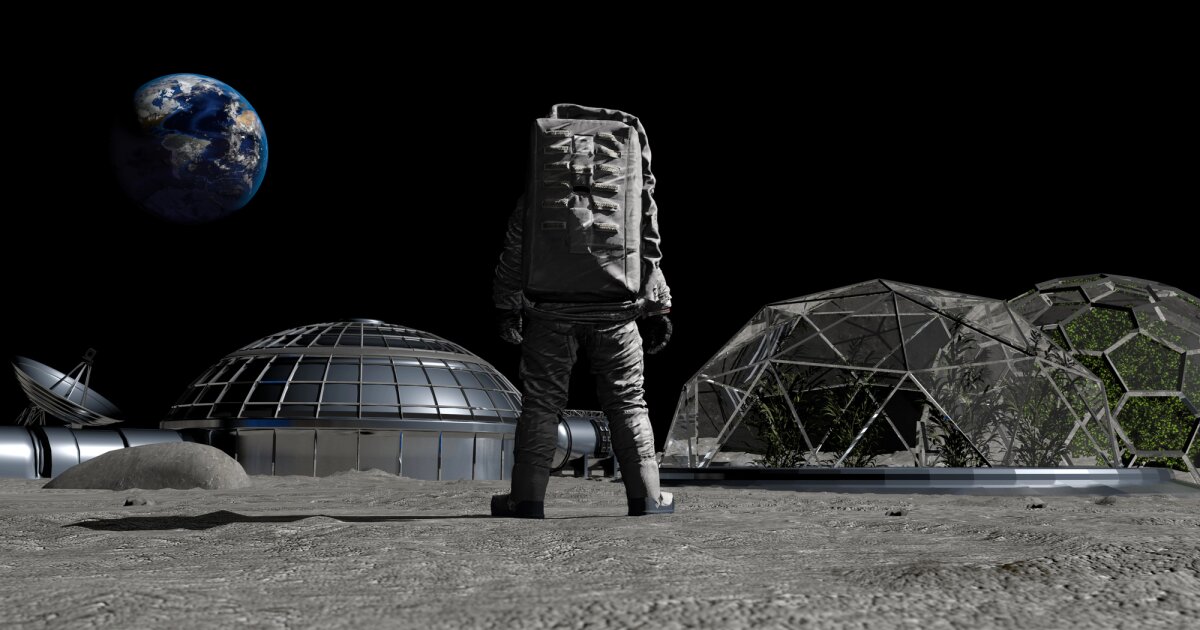
How? Let’s take a few possible examples. NASA has just outlined its plans to establish a permanent outpost on the Moon. It’s impressive compared to the old Apollo days and it already reflects the new Space Age in that these plans depend heavily on companies like SpaceX and Blue Origin to achieve their goals.
But how long will such plans survive in a world where giant rockets launch every morning and afternoon carrying hundreds of tonnes at bargain basement rates? Perhaps by the time NASA has its Moonbase up and running to pursue whatever purpose it ultimately will have, a private consortium might be setting up data centers in the cryogenic cold of a lunar polar crater – a spot that’s not only ideal from a technical perspective, but one a quarter of a million miles away beyond most conventional regulatory frameworks.
There are already plans to replace the International Space Station with an array of smaller private ones. It may be that economics will allow companies to build constellations of these, including ones that will look like something out of a Stanley Kubrick film. That vision implies all sorts of other things, like solar power stations to beam energy back to Earth, real space manufacturing, and a whole infrastructure to support a full-blown Earth/Cislunar/Moon economy.
Of course, none of this involves repealing the laws of physics. Liquid fuel rockets will always have their inherent limitations, as will any systems that hope to augment or replace them. Until someone figures out how to build atomic-powered space liners as Heinlein intended, those won’t be overcome. What will happen is that the economic barriers will likely collapse in the near future and that’s a huge step.
Think of it as being similar to the transition over the centuries where global trade began as a few painfully small caravans pacing across deserts that gave way to small ships carrying treasures like gold, spices, and tea, before making the big jump to the freighters with vast bulk cargoes that our world is utterly dependent upon. It may be that by 2050 we may be living in a world that’s undergone a comparable transformation.
If nothing else, it will be interesting.

