


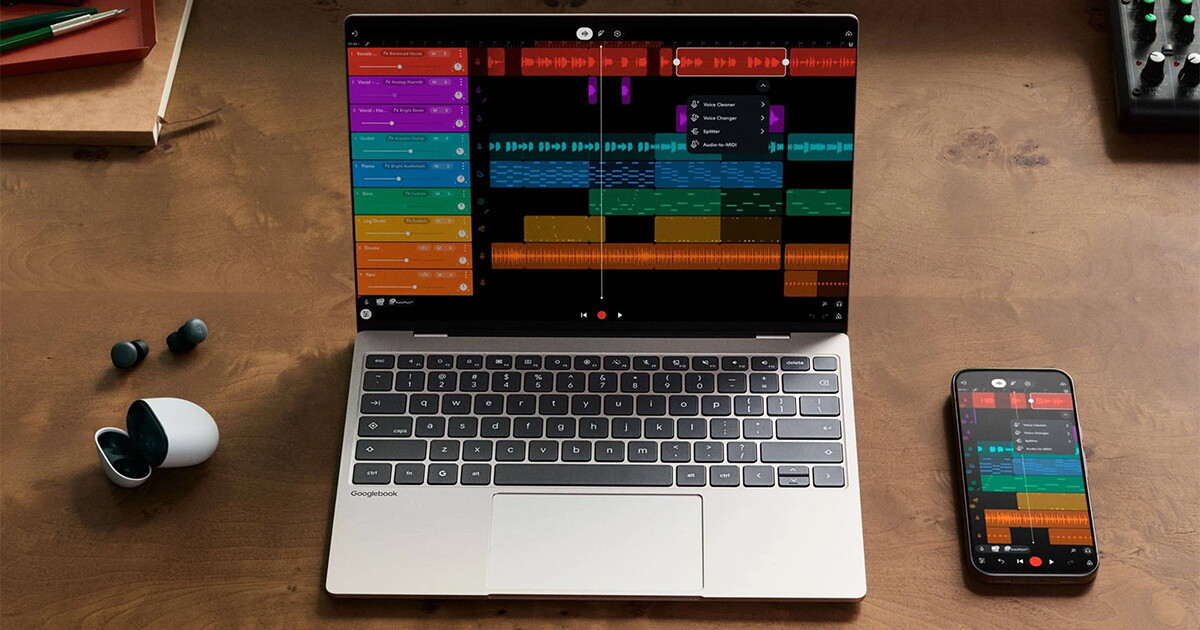
After first revealing the concept in May, Google’s just unveiled a lineup of Googlebooks – premium laptops that are designed to pair nicely with your Android phone, and make it easy to access the company’s AI-powered services while you work and browse the web.
There are five models you can choose from right away, and more will arrive later on. But are any of these worth considering as your next laptop? Let’s walk through what’s on offer, and whether it’ll make sense for you. Spoiler alert: for most folks, there are better options out there.
I’ve heard of Chromebooks – what’s a Googlebook?
Unlike Chromebooks that are generally built for low cost and run Google’s browser-forward ChromeOS, Googlebooks run an Android-based OS the company is calling Googlebook OS. It’s centered around Google’s Gemini AI, supports all your Android apps, and works especially well with Android phones.
Meet Googlebook
There are some neat features on here. Jiggle the mouse cursor and you’ll instantly invoke Gemini so you can chat with it or ask about anything on your screen. Start working on an app on your phone – like building a vacation itinerary – and continue with the same app on your Googlebook without having to install it first. Browse all your phone’s files, such as screenshots and downloads, on your laptop like anything else on your local hard drive.
Can I run my preferred apps on this thing?
If your preferred apps are Android-based, yes. You can download and run anything from the Play Store, and also interact with apps installed on your phone instantly by casting them to your laptop.
What you can’t do, of course, is run apps built for Windows or MacOS.
The interface will feel familiar to folks who have used a Chromebook before. Chrome OS already supported Android apps; this range takes things up a notch with more capable hardware, and with the different ways you can bring over your running apps and files from your phone wirelessly.
Does the AI functionality justify a whole new device?
Googlebooks come with a 12-month subscription to Google AI Pro, so you get its fastest and most powerful AI models for questions, work, and image and video generation. That includes 5 TB of cloud storage.
If you’re all in on AI, you’ll likely enjoy being able to access it quickly across your apps using the aforementioned Magic Pointer feature, dictating messages and having the Rambler feature clean it up automatically, and seeing suggestions for actions like adding a calendar event based on the contents of your screen.
So it really comes down to whether you use AI a lot in your day-to-day computing, and if you’re happy with Gemini for all of that. Windows and Mac devices can also do a lot of this stuff, with Copilot and Siri respectively – but Google might have them beat on these specific integrations that enable quick access.
What about the hardware?
The first batch of Googlebooks comes from third-party name brands. They’re all made of metal, they all come with a minimum of 512 GB storage, 16 GB RAM, and high-resolution touchscreens, and promise double-digit hours of battery life.

These machines feature performant and efficient current-gen processors from Intel and Qualcomm’s Snapdragon series. Prices start from US$899 for Acer’s Googlebook 14, and go up to $1,299 for similarly named models from Asus and HP.
All of them look neat, feature a nifty light bar on the lid that can display charging status, and will get feature updates over 10 years.
If you get one, you can reasonably expect to enjoy a well-built device that looks and feels good to use on the daily, and should run most Android apps and games smoothly. That includes everything from video editing tools, productivity apps, and the GeForce Now service for streaming graphics-intensive games made for PC.
So, who should buy one?
It might be too early to pass a clear verdict here. Google just announced these laptops, and journalists including myself haven’t had time with them for an in-depth review.
That said, just going by the specs and early impressions, I reckon these Googlebooks will mostly appeal to hardcore Android fans – the sort who like high-end phones for photography, or the expensive folding models that can be delightful to watch videos on.
You’ll notice there aren’t budget Googlebooks on offer yet. That’s another factor that pushes these into the gadget enthusiast category. Sure, you’re getting a metal laptop with decently specced internals, but you could likely get this kind of performance – and similar functionality – for less if you opt for a Windows or MacOS-powered laptop.
If you’re in the market for a laptop right now, this range is a bit difficult to recommend just now. That’s because we haven’t yet spent a lot of time with them, and because a lot of compelling alternatives exist.

I’m talking about the $699 MacBook Neo, which offers serious bang for your buck in terms of performance and battery life. For most folks who don’t specifically need high-end hardware, that’s the one to measure everything else against.
On the Windows side of things, you’ve got the current-gen Dell XPS 13 at the $800 mark, and the cheaper Asus Vivobook 14, among others. Both promise solid battery life and snappy performance for everyday tasks.
I’ve been using Android phones for ages, so I’ll happily try a Googlebook and I expect I’ll like it. However, they can’t run better software than what’s available on Android right now, and that feels limiting.

When it comes time to do some serious photo editing, color grade videos, record compositions on guitar, I reach for the powerful, flexible, and familiar software for these workflows on Windows and MacOS. Sure, there are options and versions of well-loved apps for these on Android, but they don’t stack up quite as well at the moment.
To recap, Googlebooks are worth a look if:
- You’re big into Android and want that connected ecosystem experience where your devices play nice with each other
- You look forward to using AI more than you already do
Check out the range of Googlebooks on Google’s site. They’re available via the company’s store, and some are additionally on Best Buy. Orders will begin shipping next month.
Source: Google

