


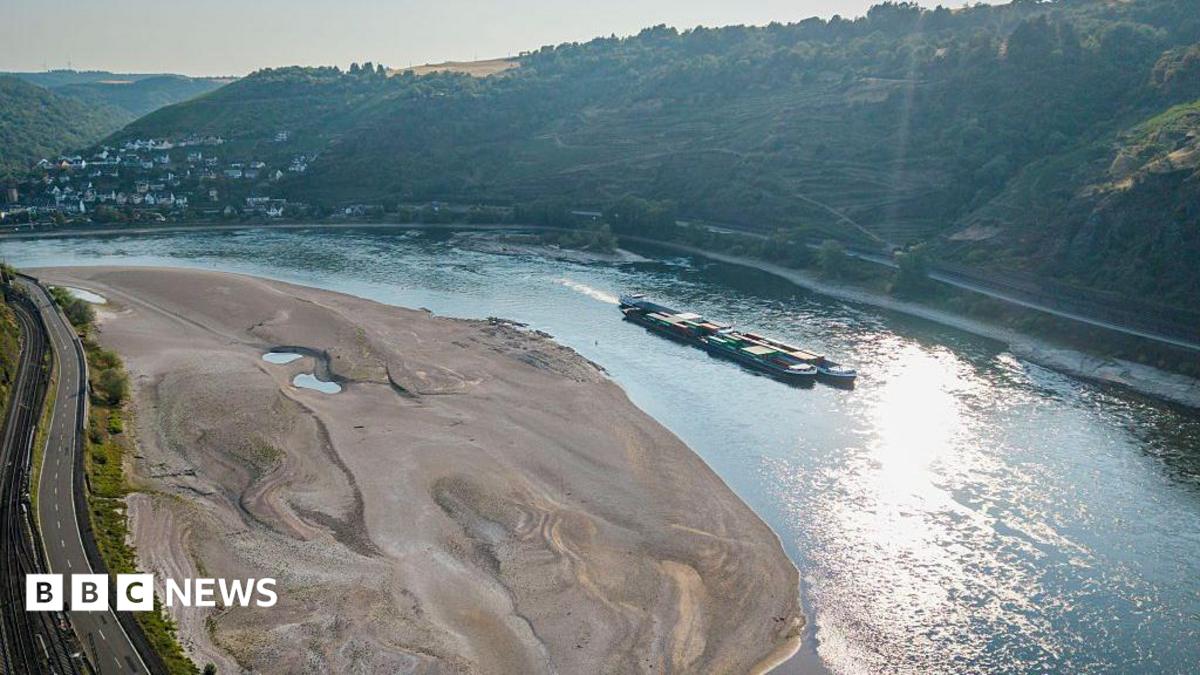
Serbia cut output at its coal-fired power plants due to the lack of water disrupting cooling systems, while Romania carried out a controlled explosion on a large rock on the banks of the Danube to increase waterflow to the Cernavoda nuclear power plant.
Two car plants in Romania run by Dacia and Ford have agreed to halt production for more than a fortnight to reduce electricity consumption.
Italy’s longest river, the Po, hit a historic low near the northern city of Cremona in late July. Authorities raised the drought alert level to “high” across the entire Po Valley, while experts have issued warnings about potential disruption to the drinking water supply.
Lower river flows at the mouth of the Po have also pushed saltwater from the sea into the riverbed, disrupting the ecosystem and causing serious issues for farmers who use water from the Po to irrigate their crops.
A recent study by scientists at the World Weather Attribution group found that there had been no clear long-term trend towards lower rainfall across much of Europe.
But the researchers said that human-caused climate change was increasing evaporation of moisture through higher temperatures, making drought conditions more likely.
The hot, dry weather also increased the demand for water for household, agricultural and industrial use.
Prolonged periods of drought can also affect the water levels of lakes, impacting availability of freshwater resources.
The EU’s Copernicus climate service said the 2022 drought in Europe contributed to increased wildfire activity – which in turn drove higher than average carbon emissions.
Additional reporting by Mark Poynting

