


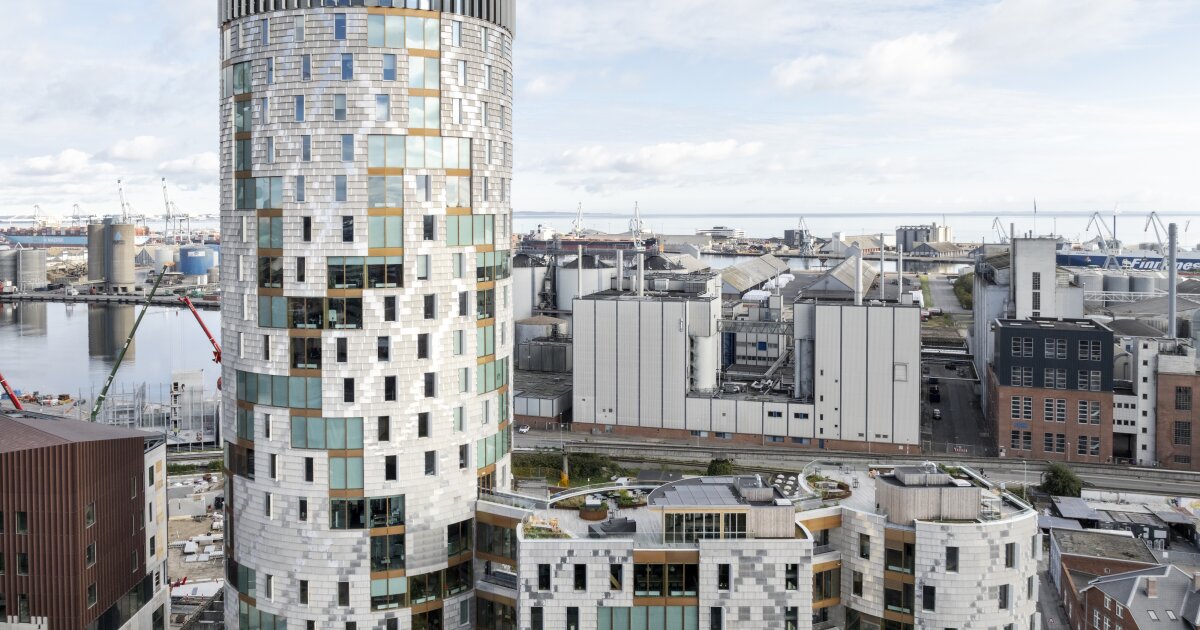
Rising to a height of 78 m (256 ft), this extraordinary tower sets a new record as Denmark’s tallest wooden building – and is one of the tallest in the world too. More than just its scale, though, the project impresses with its use of recycled materials, including everything from wind turbine blades to old windows.
Described as the world’s first upcycled timber skyscraper, TRÆ is located in Aarhus. It’s designed by Lendager Arkitekter and developed by Kilden & Hindby and PFA Ejendom. Its height places it at around the fifth-tallest modern timber tower currently, with the world’s tallest, Milwaukee’s Ascent, roughly 6 m (20 ft) taller.
Rasmus Hjortshøj
Its name means tree, timber, and three – the latter a nod to the project’s three-building layout. Two smaller structures rise to six floors each, alongside the 20-story main tower. They mostly host office space, plus a restaurant and some shared facilities, and the decor leans heavily on the natural beauty of the wood used.
Like most timber high-rises nowadays, it’s actually a hybrid structure made up of engineered wood, with concrete cores, and even some steel in key places, while a variety of recycled materials are used in the facade. The original concept was to use only wind turbine blades for the exterior, since they are plentiful in the area and usually end up in landfills – which is also the idea behind the Niels Bohr parking garage. However, this turned into a headache for the architects as the blades turned out to be flammable, which is clearly not something you want in a timber tower.
To tackle this, the turbine blades were heavily processed, treated, and tested, and then used for sun shading elements rather than for the whole facade. Other notable uses of recycled materials include a mixture of reclaimed wood and offcuts for flooring, while interior glass walls are made from discarded windows. Even the lighting fixtures are recycled, and reclaimed bricks were used to build a bar on the rooftop terrace.
“TRÆ combines glulam columns and CLT floor slabs, with low-carbon concrete cores ensuring stability and fire safety,” explains Lendager. “Nearly all visible surfaces are reused, upcycled, or biobased. Timber cassettes form the facade, clad with aluminum sheets salvaged from industrial and farm roofs and water-damaged post boxes. Wind turbine blades provide solar shading, while reused windows, waste textiles, and PET felt form acoustic surfaces. Interior finishes include reclaimed timber flooring and panels, while mature trees relocated from municipal sites reinforce the ‘tree’ concept and create an immediate green setting.”

Rasmus Hjortshøj
Lendager Arkitekter says that compared to a similar building made from concrete, TRÆ achieved a 26% reduction in CO2 emissions. High-rise timber construction continues to grow in popularity worldwide, with Australia’s incredible Atlassian Central wooden skyscraper due to smash all records once completed.
Source: Lendager Arkitekter

