


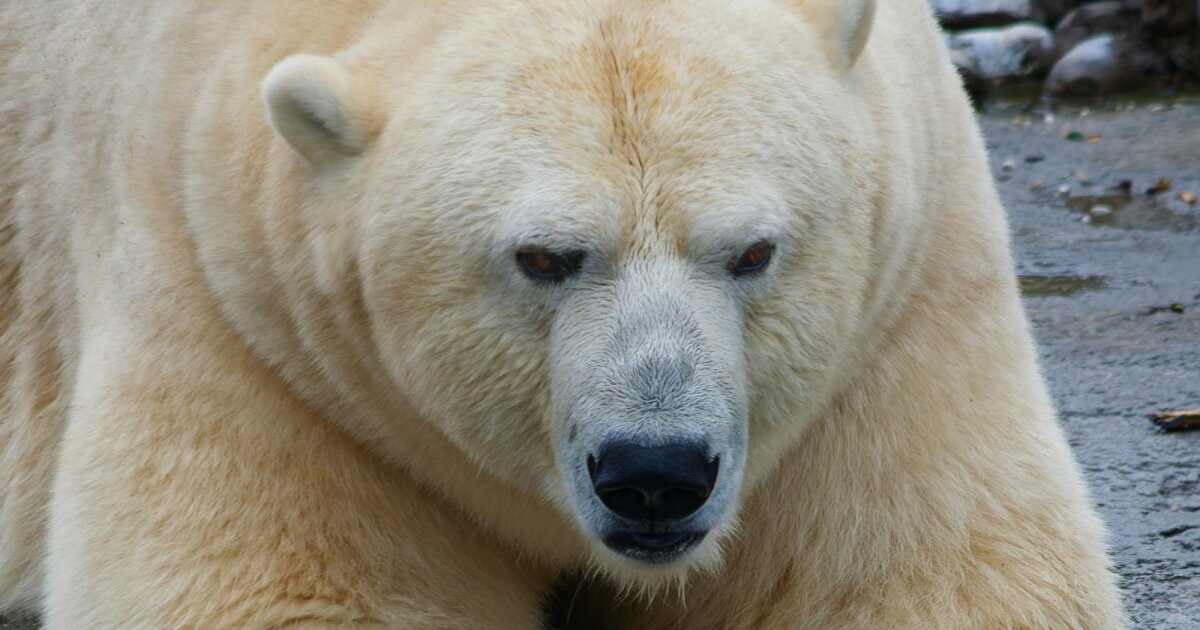
Last month, tour guides in the remote Norwegian archipelago of Svalbard made a grisly discovery, chancing upon the carcasses of a young male polar bear and an adult walrus in an advanced state of decay. They alerted the authorities, who dispatched experts to collect samples.
“It was clear that the carcasses had been lying around for some time before they were found,” the Norwegian Veterinary Institute wrote. “But the findings of the [H5N5] highly pathogenic avian influenza virus in the brains of both animals are consistent with this being the most likely cause of death.”
The tour guides found the carcasses on northern Spitsbergen, the main island of Svalbard, which sits about halfway between the tip of Norway and the North Pole. They also spotted two bears that showed signs of lameness or paralysis in their hind legs – a possible indication of neurological damage. Subsequent efforts to locate them proved fruitless.
This was the first confirmed detection of H5N5, a Highly Pathogenic Avian Influenza (HPAI), in Svalbard’s walrus and polar bear population – and the first confirmed kill in its polar bear population. In mid-2022, the Norwegian Veterinary Institute reported H5N1 and H5N5 had been detected for the first time in the archipelago’s wild birds. In 2024, the first H5N1 walrus and Arctic fox deaths were recorded.
Globally, this is the second recorded polar bear death from an HPAI: a young male polar bear was found dead from H5N1 in Alaska in August 2023.
Polar bears are found in 19 discrete subpopulations around the world, the majority of which are in Canada. The Svalbard population numbers no more than 300, but is considered part of a broader Barents Region subpopulation. The species as a whole is IUCN Red-Listed as Vulnerable.
“Dead polar bears are found annually in Svalbard,” Jon Ars, a research scientist with the Norwegian Polar Institute (NPI) who oversees polar bear monitoring in Svalbard, told Refractor over email. “Most of them die of starvation, usually the young and old bears.”
He notes that it’s possible that some dead polar bears, as well as walruses and other wildlife, could also test positive for bird flu – the most recent cases were just the first official detections.
Knut Madslien, a wildlife veterinarian with the Norwegian Veterinary Institute, told Refractor that the two bears observed exhibiting hind-leg lameness could be down to several triggers.
“Neurological symptoms, including balance problems, have been seen in a number of other carnivores infected with [HPAI] virus.” He notes that hind limb paralysis was observed in Canada when the first-ever case of rabies in polar bears was recorded. He and his team tested for and ruled out rabies in the Spitsbergen walrus and bear.
Polar bear tourism has long been a source of controversy in Svalbard, and new regulations governing the distance tour groups must keep from bears are commencing this month. In this instance, however, it appears tour guides have served an important monitoring function.
“Detection of dead wildlife is generally challenging, and especially difficult in remote areas such as Svalbard, with very few people in the area,” Madslien said. “In remote areas, such as Svalbard, it is a crucial success factor that the human population, including tourists, permanent residents and researchers, report findings of sick and dead animals.”
Permanent NPI-run research projects on polar bears and walruses entail population monitoring, so “any mass deaths will most likely be observed in the population data over time for these species, as well as during their annual fieldwork,” Madslien said.
However, he notes there is no official health monitoring of wildlife on Svalbard, as there is on the Norwegian mainland. As such, the NVI recommends that the Norwegian authorities establish one “to be better equipped to detect and handle new health threats to both wildlife and humans” in the future.
Ars says polar bears seem “not to be very vulnerable” to epidemics – so far – in the high Arctic.
What would be a concern for the population, he says, is if adult females began dying off at a significant rate, whether from bird flu or any other diseases.
“Our data suggest that is not the case, we have not seen signs of this happening after the bird flu came to Svalbard and had large effects on some other species,” he said.
HPAIs have caused large-scale die-offs in other species elsewhere in the world. H5N1 has laid waste to seal and sea lion populations in Peru and Chile, where more than 30,000 are estimated to have died between 2022 and 2023. In Argentina, on the Patagonia coast, around 1300 sea lions and fur seals were killed. Studies on these mass deaths in South America indicate mammal-to-mammal transmission.
Dr John Whiteman, Chief Research Scientist at Polar Bears International and Associate Professor of Biology at Old Dominion University, told Refractor that he’s “not specifically concerned about polar bears losing access to prey because of bird flu-related pinniped [a group that includes seals, sea lions and walruses] declines.” However, he notes “we should acknowledge that it would not necessarily be impossible.”
“Polar bear survival and reproduction can be related to the abundance and body condition of their prey, so it is important for polar bears to have a large, healthy prey base,” he said.
While the two polar bear HPAI fatalities recorded globally so far are concerning, Whiteman says it is “difficult to draw broad conclusions.”
“The two cases are not linked as they are separated in time by several years and in space by over 3000 km of distance. Neither case provides evidence for transmission between polar bears,” Whiteman said. “However, the two cases clearly indicate that polar bears can be susceptible to lethal effects of different strains of bird flu – H5N1 in Alaska, H5N5 in this new case in Svalbard – both of which have spread globally.”
Little is known about the transmission of bird flu in polar bears, he says. “It is my understanding that intimate contact with an infected animal – whether by predation, incidental ingestion, or even something like closely sniffing and investigating a carcass – can be enough for transmission.”
Whiteman says the fatalities in Alaska and Svalbard highlight the importance of monitoring work.
“Polar bears spend almost their entire lives on the sea ice, so chance encounters of their carcasses are rare,” he said. “However, we know enough about their basic biology and behaviors to design sampling strategies [including capturing bears for blood sampling, or obtaining samples from carcasses] that can maximize our ability to detect long-term changes in their health and physiology, potentially including the emergence of zoonotic threats like bird flu.”
The fact that polar bears occur in “fairly discrete subpopulations” means something like disease prevalence “can be viewed as 20 related but distinct case studies.”
While disease is a concern, the main threat to polar bears globally continues to be sea ice loss from human-driven climate warming. However, the two are intertwined.
“Disease monitoring is important, and polar bears are being exposed to new pathogens as their habitat warms and as they spend more time on land,” Whiteman said. “But while disease monitoring evaluates the potential for pending threats, sea ice loss is already a clear and immediate threat.”
Source: Governor of Svalbard
Fact-checked by Mike McRae

