


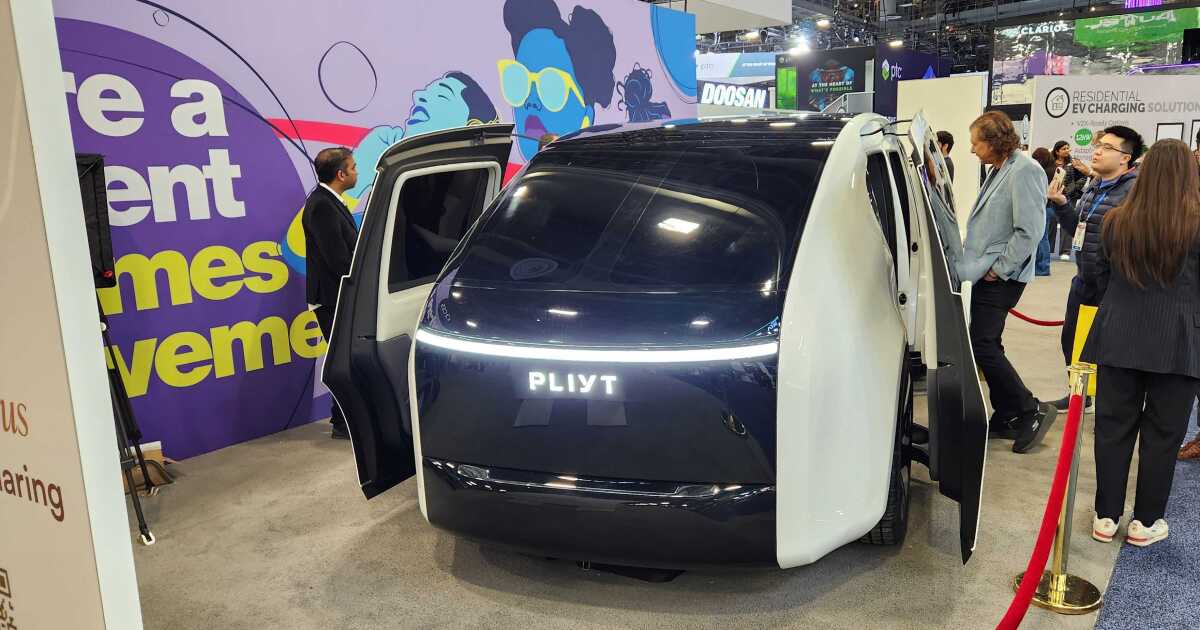
California-based startup Pliyt believes the future of ridesharing means sharing the ride as little as possible.
Unlike similar services, where passengers squeeze into a single cabin and awkwardly rub elbows with strangers, Pliyt’s design divides the vehicle’s interior into four completely independent pods. Each capsule creates a private sanctuary on wheels where passengers can go from point A to B in a comfortable, personal space that respects boundaries.
Joe Salas/New Atlas
Autonomous pods aren’t an entirely new idea of course. Models like Amazon’s Zoox and Waymo’s Zeekr RT are already out there. But Pliyt’s prototype, revealed at CES just days ago, aims to differentiate itself by turning introverts’ dreams into reality.
“The vehicle is designed from the inside out, prioritizing personal space, modular privacy, and social choice – rather than retrofitting autonomy onto a conventional cabin,” Pliyt’s team told me via email. “The experience allows passengers to control how private or social their journey is, which resonated strongly with CES attendees.”
Joe Salas/New Atlas
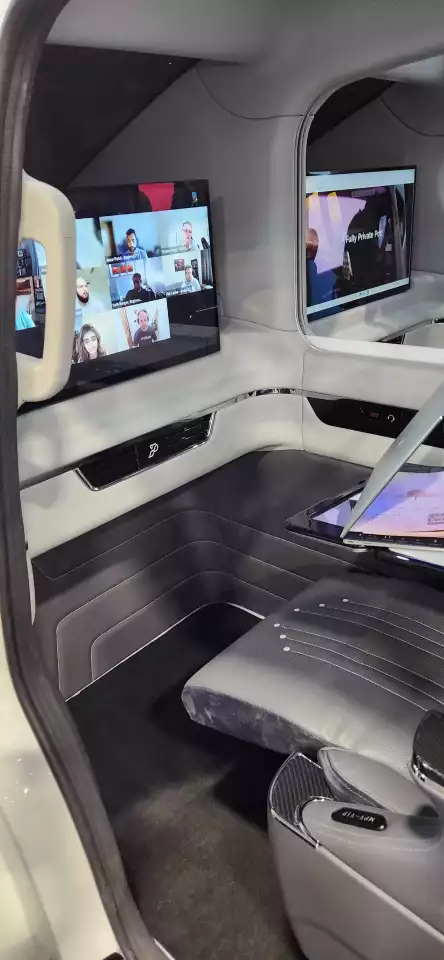
To guarantee complete anonymity, Pliyt equips each pod with one-way glass that prevents both you and your fellow travelers from being observed. You can see out, but nobody can see in. If you’re not interested in what’s happening outside, the setup includes personalized entertainment for gaming, streaming content or projecting media on the integrated screen.
For those who’d rather work than relax, each capsule includes a retractable workstation with a large screen and side table, allowing you to remain productive while moving around the city.
However, the system isn’t completely antisocial. Each pod has independent controls allowing passengers to adjust their level of privacy. Traveling with a companion? The interior dividing window can be lowered so you can share the space with whoever is next to you.

Pliyt
Pliyt is committed to comfort beyond just isolation. The seats feature what the company calls zero-gravity seating technology – which won’t see passengers float like astronauts aboard the International Space Station, but rather aims to make you feel more comfortable and rested during your journey.
The startup doesn’t have its own autonomous driving system but plans to seek partners to provide that service once the project solidifies. The company is currently looking for investors to help develop a pilot vehicle by 2028.

Pliyt
“Our focus over the next 12-18 months is on engineering validation, regulatory alignment, and strategic partnerships,” Pliyt’s team revealed. “The 2028 pilot mentioned reflects a realistic timeline for scaled, public-facing deployment, following phased testing, partner integration, and city-level pilots.”
The video below has more.
Introducing Pliyt
Source: Pliyt

