


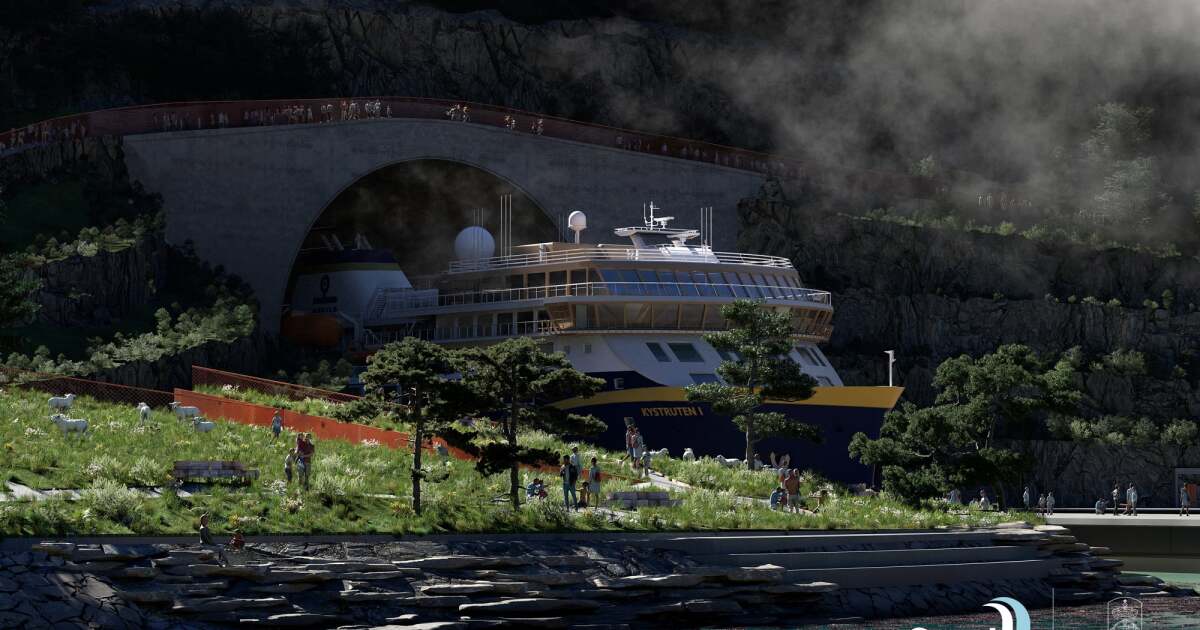
One for the “why hasn’t this been done before?” department: Norway has greenlit construction of the world’s first ocean ship tunnel. If the final budget receives parliamentary approval, work on the Stad Ship Tunnel will begin on the country’s west coast.
Tunnels designed to carry watercraft through hills and mountains have existed since 1679, when the Malpas Tunnel opened on France’s Canal du Midi. However, until now, such structures have been limited to inland waterways, serving canal boats or connecting harbors to canal systems.
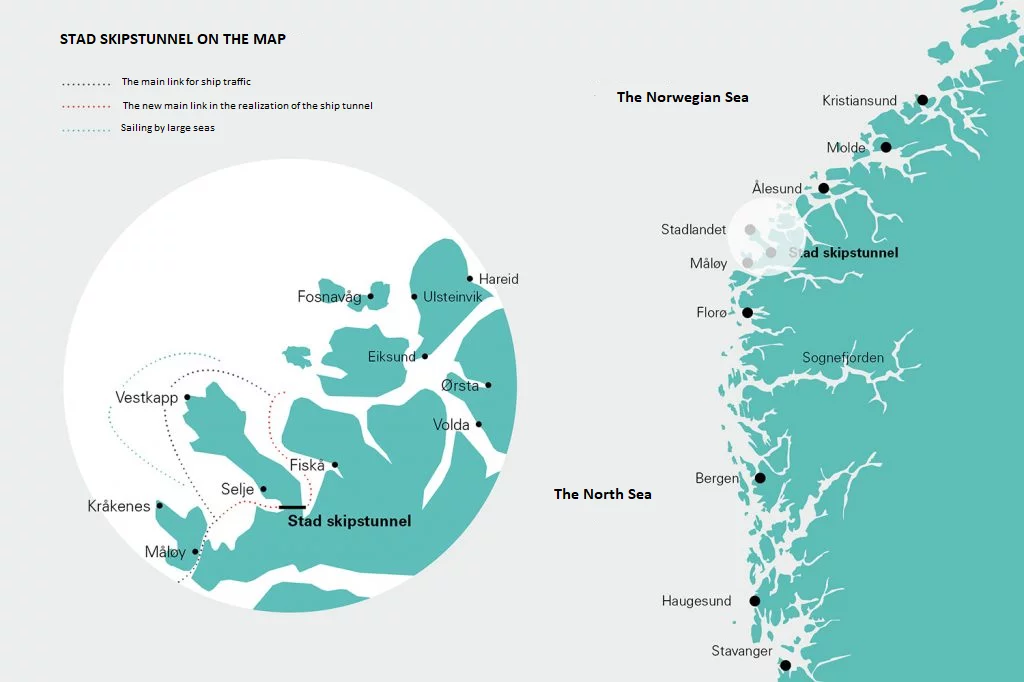
So why is Norway so keen to bore a world-first tunnel through the mountainous rock of the Stadlandet Peninsula? And why spend a staggering NOK 8.6 billion (about US$805 million) to connect two fjords across a distance of just 1.7 km (1.06 miles) – or 2.2 km (1.4 miles) including the entrance structures built out into the water to guide ships safely into the portal? On the surface, it seems like an enormous investment for a relatively short stretch of water.
Norwegian Coastal Administration
In fact, there is some very serious logic behind the decision. The Stadhavet Sea on Norway’s western coast is one of the world’s roughest stretches of water, with storms sweeping across the area for around 100 days each year. As a result, marine traffic is frequently delayed as fishing vessels, cargo ships, salmon-farm transports, and other craft wait out conditions that can generate waves up to 30 m (98 ft) high arriving from multiple directions simultaneously.
The result is that the Stadlandet Peninsula has become a major chokepoint for coastal commerce, causing delays to perishable seafood shipments and placing additional pressure on Norway’s rail network as the only practical alternative.
To address the problem, the Norwegian Coastal Administration (Kystverket), acting on behalf of the Ministry of Trade, Industry and Fisheries, plans to construct a tunnel linking the two sides of the peninsula. The passage would be large enough to handle regular traffic from vessels ranging from fishing boats to ferries and cruise ships.
Norwegian Coastal Administration
It’s an idea that’s been debated in Norway for decades, and the Norwegian Parliament approved the project in 2021. In late 2025, the project was halted by the government due to skyrocketing material costs. The project has now been revived following a series of budget revisions, paving the way for contractor selection and a planned construction start in early 2027. Completion is expected about five years later.
When finished, the tunnel will cut through 1.7 km (1.06 miles) of solid rock. It will have a total height of 50 m (164 ft), a clearance from sea level to the ceiling of 33 m (108 ft), and a width of 36 m (118 ft). This will allow it to accommodate vessels with drafts of up to 12 m (39 ft) and beams of up to 16 m (52 ft), including ferries and cruise ships.
The hope is that the tunnel will boost Norway’s fishing and salmon-farming industries, encourage the movement of goods away from roads and rail, and expand tourism in the region. The government also estimates that the project could reduce fuel consumption and emissions by as much as 60%.
“If we are to export salmon from Trøndelag to the continent, we cannot risk the salmon getting stuck at Stad in bad weather,” said Tore O. Sandvik, country mayor in Trøndelag. “Then it is served as rakfisk [Norwegian Fermented Fish], and not as sushi when it arrives on the continent.”
Source: Norwegian Coastal Administration

