


Over much of the planet, women tend to do more unpaid domestic work than men do – much more. A 2025 Centre for Global Development study reported that across 50 countries, “women spend an average of 29.92 hours weekly on domestic work as a primary activity, while men spend only 9.78.”
While some men might shrug and say, “Division of labor!”, few men opt for such unpaid labor themselves.
That’s because of the massive opportunity cost such dollarless drudgery inflicts. Reduced or zero income means reduced or zero pension security, educational opportunity (including for daughters who generally must assist domestic labor), relocation freedom (to escape poverty, discrimination, violence, or other threats), leisure and personal development time, and general quality of life.
While few social problems can be solved through technology alone, some tools – especially if they’re dependable, easy to repair, available, and inexpensive – can certainly help reduce drudgery, thus freeing time to promote socio-economic advancement and personal liberty.
The Washing Machine Project
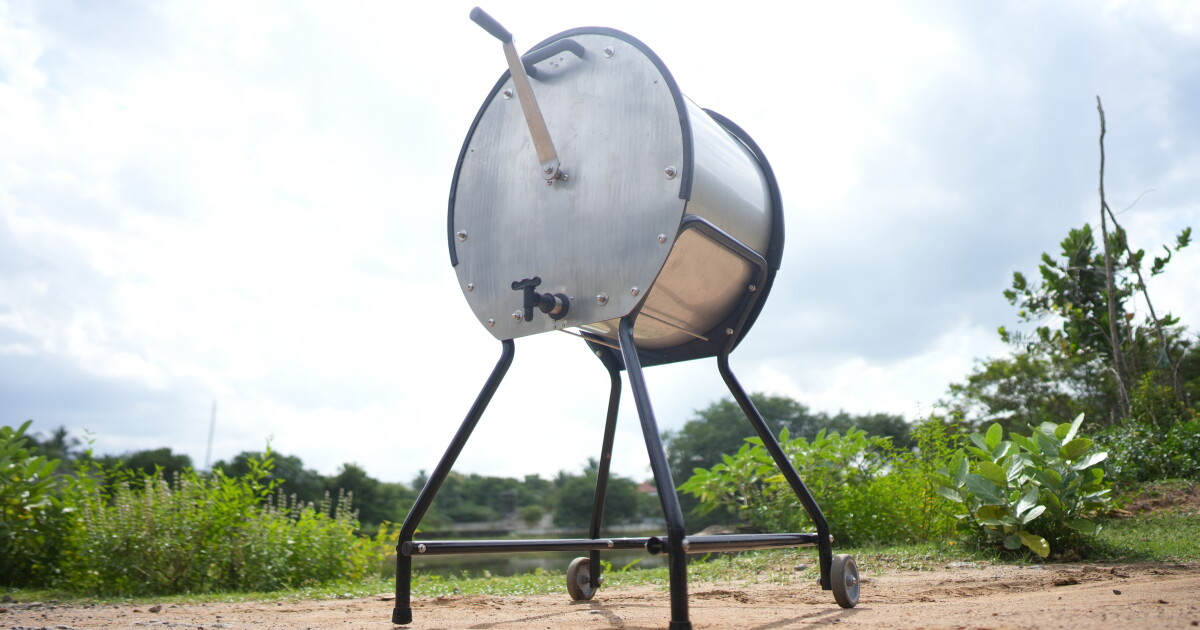
Enter Navjot Sawhney, a trained aerospace engineer who worked for Dyson UK, and inventor of the Divya washing machine. The company he founded, The Washing Machine Project, manufactures the device in India. It’s a zero-electricity, easily repaired, hand-cranked washing drum for clothing, aimed at people who have been expending countless hours hand-washing clothes.
After moving from the UK to a small South Indian village, Sawhney was alarmed to see how his new neighbor Divya spent up to 20 hours per week hand-washing clothes. After he offered to buy her an electric washing machine, she told him she didn’t have a dependable supply of electricity, access to a back-up generator, or even enough water for such a unit to function.
So, eventually Sawhney devised a solution.

The Washing Machine Project
With a capacity of up to 7 kg (15.4 lb) of clothing, his hand-cranked washing machine uses only 30 L (7.93 US gallons) of water, and a user can disassemble it with only two tools. According to the company, the analogue device cuts labor time (compared with manual washing) by 75%, reduces water use by 50%, will work for at least five to 10 years, and arrives partially assembled in a single box with easy-to-follow instructions. To honor the woman who inspired it, Sawhney named it the Divya.
Because the Divya requires no electricity, it’s perfectly suited for impoverished, remote, and/or disaster-stricken regions in which electrical utility is unreliable or non-existent. Therefore, beyond the 105,000 people that the Washing Machine Project has already reached in Iraq, Lebanon, Mexico, Uganda, and the US, the company is planning to reach a million users through development partners such as the UNHCR (United Nations High Commissioner for Refugees), Oxfam, and Plan International by 2030.

The Washing Machine Project
“In our humanitarian and partner-funded programs, the machine is provided free to end users. We also work with organizations procuring machines for their own programs,” Sawhney tells New Atlas. “There is no single retail price for households.”
To ensure that their work met genuine local need, the Washing Machine Project says it has “conducted ethnographic research in 13 countries and interviewed more than 3,000 families in Uganda, Kenya, Iraq, Jordan, Lebanon, Cameroon, Jamaica, Nepal, India and the Philippines to gain insight into [local] clothes-washing tendencies.”
While the Divya hand-cranked unit seems like a more efficient mechanism than a simple foot-crank washing machine such as the Drumi or the Gira Dora, why not attach the Divya to something like a geared bicycle, given that leg-power could rotate a larger drum?
“We wanted an electricity-free machine that remains self-contained and portable, without needing a separate bicycle or pedal frame,” says Sawhney. “Simplicity, repairability and ease of use in households and shared settings have guided the design. A communal pedal-driven system is an interesting different use case, but it is not the current Divya.”

The Washing Machine Project
That said, Sawhney does have some thoughts on future innovations for the device.
“Our immediate development work is making Divya more useful and maintainable, rather than announcing a separate appliance,” he says. Such improvements include “a built-in scrub surface, a wider opening for bulky laundry, faster drainage, and more durable wheels. We are also developing local manufacture, maintenance and shared-access models in India so the benefit lasts beyond delivery of a machine.”
Introducing the Next Generation Divya Washing Machine.
Source: The Washing Machine Project

