


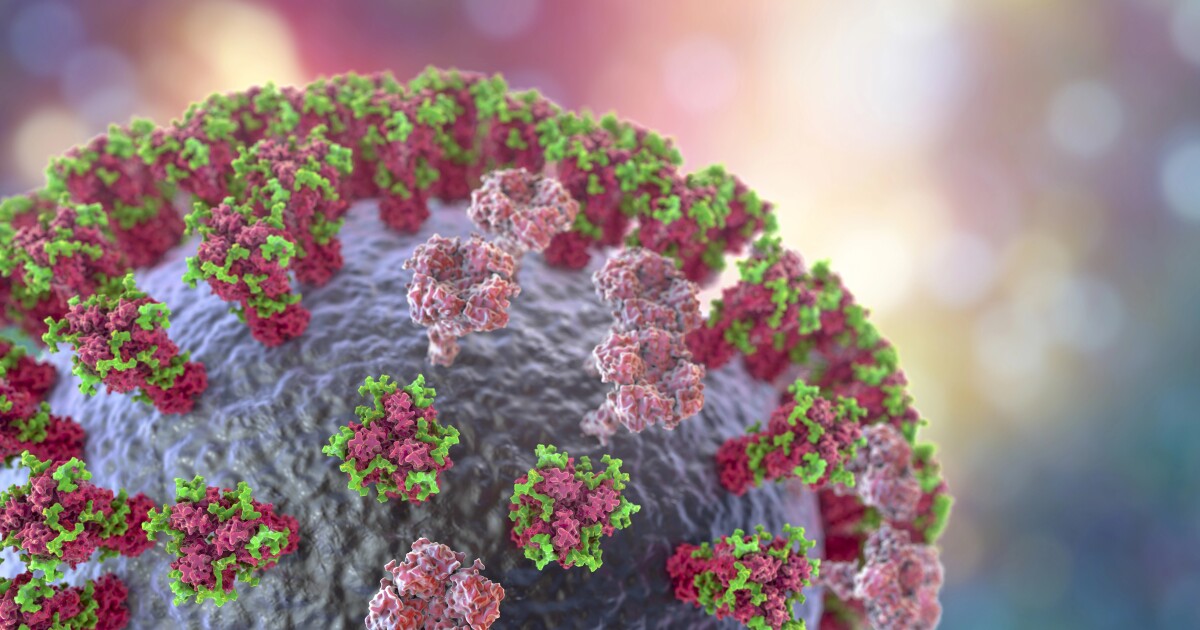
Americans are being urged to be extra vigilant this winter, as a suite of influenza A mutations has created a dominant virus strain that’s spreading more rapidly and evading our natural and therapeutic abilities to fight infection. With more than 120,000 hospitalizations as of January 5, scientists expect this wave to worsen as the season peaks.
It’s also already the highest number of hospitalizations for influenza on record.
The Centers for Disease Control and Prevention (CDC) estimates there have been at least 11 million illnesses – more than double since December 20 – 120,000 hospitalizations and 5,000 deaths from influenza this season as of January 5, as health professionals now brace for the strain that growing infections will place on the system.
So what makes this flu particularly troublesome? Essentially, in the biological arms race of virus versus human, influenza A H3N2 has changed its plan of attack in key genetic areas that can sneak past our defenses. While flu viruses are constantly making small changes to their makeup – a process known as antigenic drift – this year those alterations have occurred in the hemagglutinin surface protein. And with not just one change, but 10 mutations, which has earned the virus its own subclade – K.
“Among 275 influenza A(H3N2) viruses collected since September 28, 2025, that underwent additional genetic characterization at CDC, 89.5% belonged to subclade K,” noted the CDC in its Week 51 data released on December 30.
Those 10 changes are small alterations in the amino-acids in hemagglutinin, the surface protein influenza uses to infect cells and the main target of the immune system and seasonal vaccines. And for influenza, even a couple of changes in hemagglutinin can be a concern, because most immune protection relies on recognizing the precise shape of this protein in order to fight it.
Many of the changes in subclade K occur in exposed regions of hemagglutinin that antibodies typically bind to, altering the protein’s shape and making it harder for existing antibodies to latch onto. But hemagglutinin isn’t just protein; the protein becomes partly covered in sugar molecules borrowed from the host cell (known as glycosylation), which act as a type of camouflage for the virus. Here, subclade K has mixed up the expected arrangement of these sugar molecules to better shield itself from immune system antibodies.
Together, these changes reduce how efficiently antibodies generated by past infections or vaccines can subdue the virus. The immune system still identifies it, but less effectively – which increases the odds of the virus taking hold and advancing.
What’s more, in subclade K, these immune-evasion tweaks appear to be balanced by other changes that help the virus remain stable and transmissible. So it’s not necessarily a virus that’s more severe, but one that can spread far more efficiently through a population that only has partial immunity. This is why subclade K has seen flu seasons in both Europe and the US start earlier and infections rise more sharply than in previous years.
According to the World Health Organization (WHO), Europe’s flu season started a massive four weeks earlier than previous years, with at least 27 of the 38 countries that report data seeing high or very high virus activity.
“The flu comes around every winter, but this year is a little different,” said Dr Hans Henri P. Kluge, WHO Regional Director for Europe. “A new strain – A(H3N2) subclade K – is driving infections, though there is no evidence that it causes more severe disease. This new variant of seasonal flu now accounts for up to 90% of all confirmed influenza cases in the European Region. It shows how even a small genetic variation in the flu virus can place enormous pressure on our health systems because people do not have built-up immunity against it.”
Further complicating matters is how the seasonal flu vaccine is manufactured and distributed. This season has exposed a frustrating reality of where we’re at with influenza vaccination – while the 2025/2026 shot targets the H3N2 strain, which was expected to dominate winter, the virus underwent antigenic drift after design of the vaccine was finalized last year. Yes, this reduces how well vaccination prevents infection, however, the shot still offers meaningful protection against severe illness.
While we only have preliminary data at this point, a new UK report found that the current vaccine is predicted to be 70-75% effective at preventing hospitalization for children aged 2-17 years, and 30-40% effective at keeping adults out of the ER.
However, flu vaccinations have declined this season compared with 2024/2025 – which was down on the previous year, according to the CDC. As of December 13, 42.3% of children had received a vaccination, with about 10.4% of parents saying they definitely plan to vaccinate their child, and 42.2% of adults reported having gotten their seasonal shot (with an additional 7.4% saying they intended to get it). This, of course, varies dramatically across the country, leaving many populations extremely vulnerable to spread of subclade K due to its rapid transmission.
“We’re potentially heading into a flu season that could be quite a doozy, and we know we’re starting it with fewer data and, more crucially, fewer vaccinations,” Jennifer Nuzzo, professor of epidemiology and director of the Pandemic Center at Brown University School of Public Health, told JAMA. “I wish we had better flu vaccines that, if you got it, you’re not going to get the flu.
“That’s not the case,” she added. “But in this vaccine, there will be H3N2, and that can provide some level of protection against severe illness and death, which is frankly the most important thing.”
Health experts also remind people that antivirals are available, and so far there’s no evidence that subclade K reduces their efficacy.
“There’s no indication at this time that subclade K is resistant to the available antiviral medications, which are useful in seasons with a drifted virus as an adjunct to vaccination, especially for those who are at higher risk,” said Anne Zink, MD, a senior fellow at the Yale School of Public Health.
What we do know is that the current estimates of infection, hospitalizations and deaths are far exceeding earlier predictions for the 2025/2026 season. This follows on from trends in the Southern Hemisphere, where Australia experienced its worst flu season on record, with vaccination rates also plateauing ahead of winter 2025. The country had more than 410,000 lab-confirmed cases, beating the previous all-time high of 365,000 cases set the year before.
It’s also timely reminder of the need for a universal mRNA shot that could be tweaked in real time to better protect against viral evolution that comes after traditional medicines have been manufactured.

