


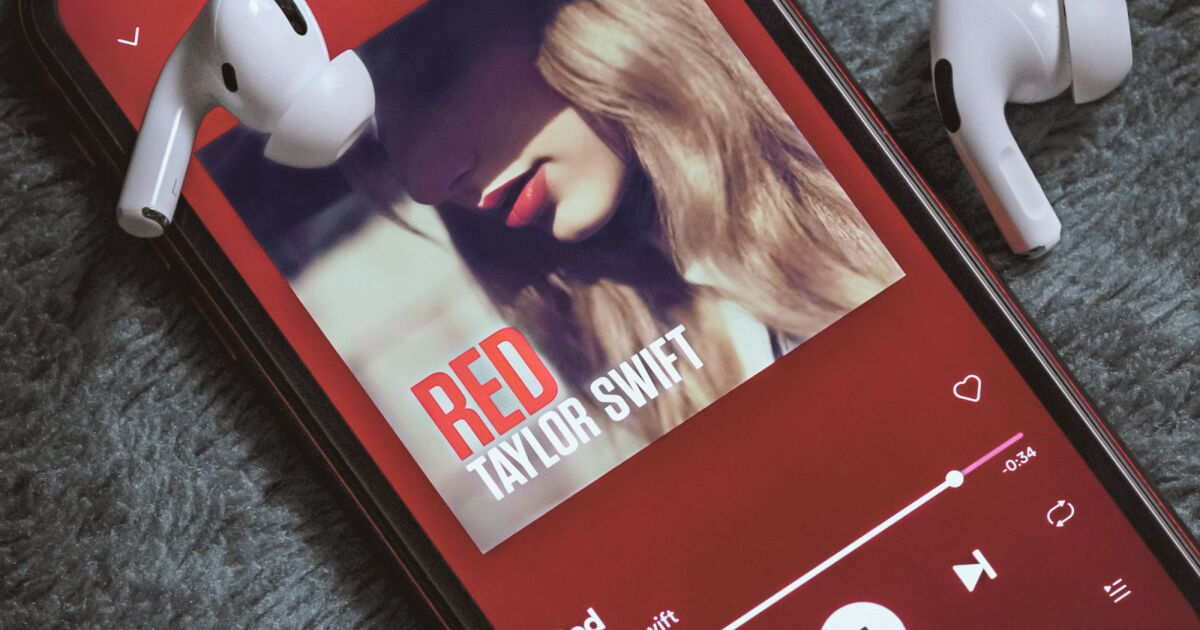
As a fan of old-school ’90s rock and grunge, I can’t say I’m much of a Swifty. Still, it’s hard to ignore the fact that Taylor Swift’s albums are immensely popular, even before the Eras Tour swept the globe.
Now, a cross-sectional study based on a registry of fatal US motor vehicle crashes has found that the love of her albums may have even contributed a statistically significant bump in deadly traffic accidents, presumably by distracting drivers.
To be fair, this isn’t the artist’s fault. Nor is it unique to her brand. No matter what your jam is, managing your music while operating a high-speed vehicle is a recipe for disaster.
Roughly a million people around the world lose their lives on the roads each year. In the US alone, this adds up to around one death every 13 minutes.
While cars are better designed for our safety these days, our brains are yet to get a much-needed upgrade. Distraction continues to be a significant contributing factor in police-reported traffic incidents, with up to half of all crashes thought to be the result of a driver looking at their cell phone.
What has their attention? In many cases, text messages. Yet scrolling through Google Maps for signs of an off-ramp or desperately searching for a banger on Spotify to kick off the next round of car karaoke must surely be contenders.
Determining whether music streaming contributes to crash fatalities is easier said than done. After all, there’s no straightforward (or ethical) way to randomly assign drivers with a phone and tell them to find Meatloaf’s “Paradise by the Dashboard Light” while negotiating traffic at 80 miles an hour (130 km/h).
So the researchers turned to the next best thing – the top 10 most-streamed albums on the streaming platform Spotify from 2017 to 2022. By comparing traffic fatalities on the album’s day of release with those before and after, and adjusting for known influences like public holidays, they had a proxy for randomization.
It just so happens that Swift dominates the list with three of her recent albums (Midnights in 2022, Red (Taylor’s Version) in 2021, and Folklore in 2020). She is joined by Drake, Bad Bunny, Harry Styles, Kendrick Lamar, and Kanye West, who collectively contributed to around 19 more deaths on the road on the day they dropped new music, compared with 10 days prior and 10 days after.
That’s a relative increase of 15.1% on album release days, or an “equivalent to approximately 182 fatalities in the US attributable to the release days of the 10 included albums,” the team concludes in their study.
“Although there are multiple mechanisms that could explain these findings, our results point to smartphone-enabled driver distraction as a likely contributor.”
Tellingly, fatalities were more likely in cars with a single occupant, in older-model vehicles that lacked infotainment systems, and on days with clear weather.
Some demographics were represented more than others. Younger drivers featured highest when it came to absolute numbers of fatalities, for instance. Male drivers were also more likely to be killed.
Keep in mind, the results are a reflection of a small sample of albums on a single streaming service. Fans of artists such as Bad Bunny are likely to be younger and therefore less experienced behind the wheel.
Yet, taken in context, the study emphasizes the risk we face every time we take our eyes off the road, whether it’s to search for a killer track or to quickly tell our beloved that we’ll “be home soon” in a quick text message.
And if you want to read more about how Swift impacts people’s lives, let’s never forget this great story …
On the flip side, the artist’s music has also been suggested as a tool to help save people’s lives.
This research was published in JAMA.
Source: Scimex

