


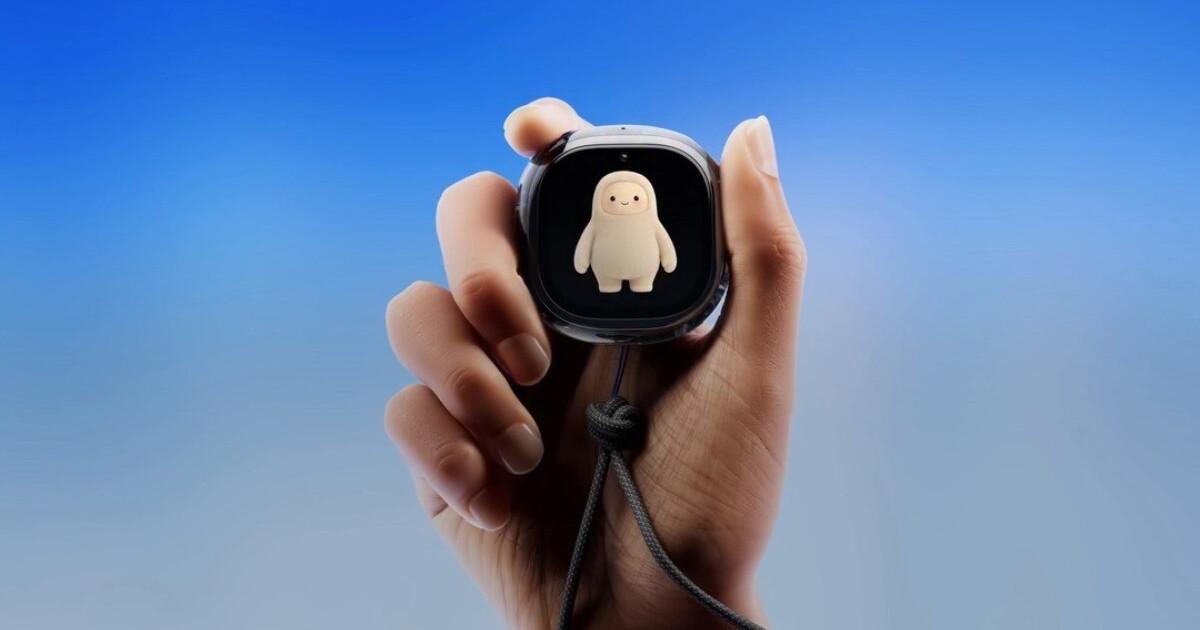
Meta – the parent company behind Facebook, Instagram, and WhatsApp – just wrapped up its Connect event where it showed off everything it’s been working on recently. One product that caught my eye was a little gadget in CEO Mark Zuckerberg’s hand that’s small enough to fit on a keychain.
It’s called the Muse Charm, and it’s a little device with a screen displaying a cutesy animated avatar which embodies Meta’s Muse AI agent.
You press the fingerprint sensor on the side to interact with it; it’s got voice tech that it can use to hear and respond to you. Watch Zuckerberg show it off at the keynote in the video below (segment starts at 53:02):
Meta Connect Keynote 2026
Details on this thing are slim, so we’ll have to back up a bit to understand what’s on offer. An AI agent can be assigned tasks which it can automatically complete on your behalf, such as booking tickets and hotels for a vacation, or replying to a raft of emails.
For its part, Meta’s built Muse so you can grant the agent access to your online accounts, and simply chat to it – like you would with ChatGPT or Claude – so it can complete tasks for you. Muse is available in select countries via a mobile app, browser, and WhatsApp chat.
Meet Muse, your personal AI agent
Meta has partnered with service providers like Google for Gmail and Drive, Shopify for ecommerce, OpenTable for restaurant reservations, Ticketmaster for event bookings, and PayPal and Lync for payments.
If you allow Muse to check your calendar and inbox, it promises to proactively find things it can do for you. That includes buying flowers before your partner returns from a business trip, emailing people to avoid a scheduling conflict, finding things you plan to buy on Facebook Marketplace and negotiating with sellers, and researching activities for your spare time on vacation.
If you grew up in the 90s, your nostalgia might get triggered by this Tamagotchi-like gizmo. For those who missed it, that was a virtual pet you had to look after by pressing buttons on a similar-sized device to feed and water it, so you could watch it grow over time.
The agent service sounds like it could certainly be useful to people who are open to trusting it with their personal stuff. It’s also getting more capabilities bolted on and services integrated to take things off your to-do list.
But does the Muse Charm hardware really need to exist? I think not.
Back in 2024, Santa Monica-based startup Rabbit launched the $199 R1, a palm-sized companion that would run an LLM to basically make a ChatGPT-like service accessible to you via a dedicated device, separate from your phone.
At the time, CEO Jesse Lyu told Fast Company his decision to make the R1 a standalone product was part of a strategy to protect Rabbit’s AI model from being copied, and to help its service stand out from the crowd.
Rabbit
Fast forward to today, and Rabbit’s sold some 100,000 units despite being panned by reviewers. Its latest offering, released earlier this week, is basically an agentic app that can run in your browser, on your phone, and in a Telegram chat – no special hardware required.
Meta isn’t at all in the same position of having to protect its IP from bigger players; it is the bigger player. So it doesn’t need to build a standalone gadget. What it needs is to make Muse ubiquitous, and available to people on all the screens they’re already surrounded by.
A niche product that doesn’t do anything else – and doesn’t work as well for users as Muse will on a phone or desktop – feels like an odd and unnecessary move.
The more we use Muse, the more you’ll want oversight on things it does for you, like bookings, replies to your emails, and delegated payments. That’s best reviewed comfortably on a decent-sized screen in an interface you’re familiar with, not by talking to an animated Yeti.
Plus, Meta is bringing Muse to its smart glasses – including a new model that’s designed to be less creepy thanks to the lack of a camera – and expanding its functionality so it can run actions on your MacOS desktop apps.

Meta
With all that going on, who needs another doodad that does less than the smartphone in already in your pocket and is yet another thing that you need to remember to charge? And why is Meta really bothering with the Charm?
All that said, this might be too strong a critique for what will essentially be a way to simply showcase the approachability of Meta’s agentic service, without an ambitious revenue target tied to the hardware.
While Zuckerberg said to expect this to ship in time for the holidays this December, I don’t foresee the company following this up with a version 2.0 in 2027 or beyond. If you ask me, I’d say you can avoid adding this one to your list of potential gifts.
Source: Meta

