


A new frontier for autonomous flight appears to have been breached as Merlin, Inc. introduces its Merlin Pilot for Commercial Cargo AI-powered flight system that aims to eventually bring pilot-free flight to large cargo aircraft.
In recent years we’ve seen autonomous flight make impressive strides to the point where the problem has shifted away from just making an aircraft that can fly without human supervision toward making them capable of operating safely in real-world airspaces alongside other aircraft and traffic control systems.
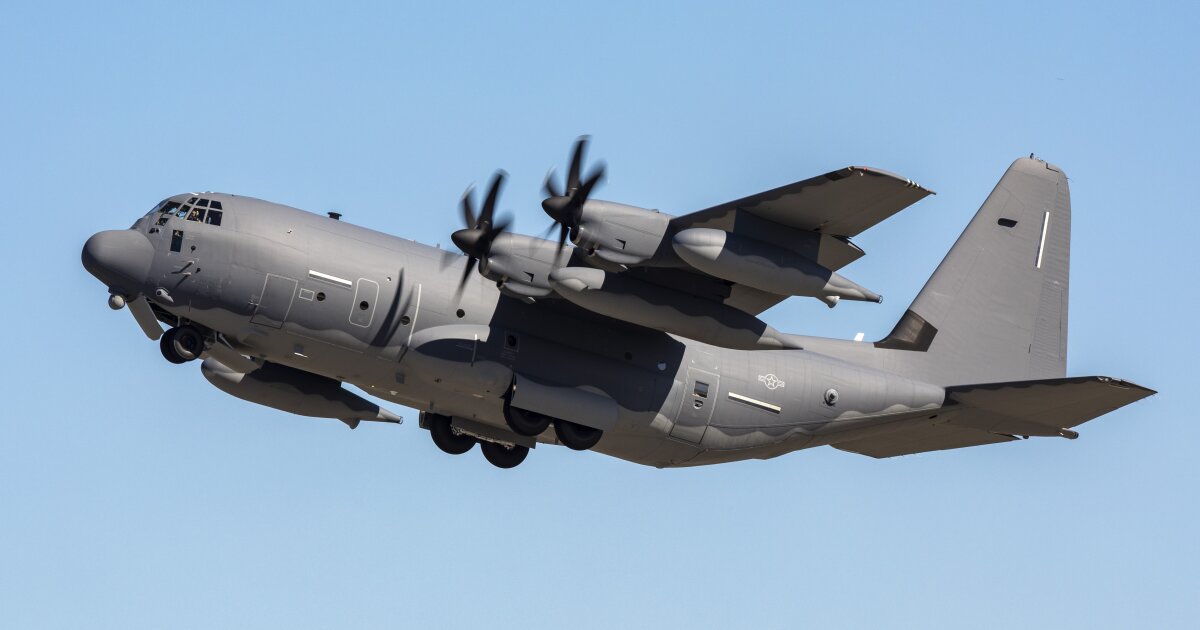
That being said, most autonomous systems have been confined to smaller aircraft, with the largest conversions involving small to medium planes like the Cessna 150 or the Cessna 208B Grand Caravan. But the real future market is in heavy cargo aircraft like the Lockheed Martin Hercules.
According to Boeing, demand for large cargo aircraft is expected to grow considerably over the next decade, with 2,800 airframe builds and conversions projected over the next 20 years. The trouble is that there is a crisis-level pilot shortage raising the question of where the crews will come from for all these aircraft.
The same goes for passenger aircraft, but public opinion is still a long way from being willing to travel on an airliner without a human pilot in the cockpit. Cargo planes are another matter, which is where Merlin Pilot for Commercial Cargo comes in.
Founded in 2018 in Boston, Merlin has been developing and testing its systems through several years of flight trials involving five distinct aircraft types. In addition, real-world tests have been carried out on commercial flight routes in Alaska and New Zealand.
According to the company, Merlin Pilot – part of Merlin’s new Condor product family for large, multi-crew aircraft – is designed to be aircraft-agnostic and capable of being retrofitted into existing airframes. It uses a multi-sensor suite including GPS, inertial guidance, radar and radio altimeters, as well as environmental sensors. Along with flight software that allows it to control the plane autonomously while safely avoiding other aircraft and obstacles, it also has an integrated natural language processing model trained to understand commands and queries from air traffic control and respond like a human pilot – hopefully with better articulation.
Because obtaining official certification and regulatory clearance for autonomous systems is notoriously difficult, Merlin is opting for a staged approach to introducing the technology for large cargo craft and, eventually, military aircraft. This means first using the system as an advanced cognitive co-pilot alongside a human safety pilot. This not only makes the FAA smile, it also allows Merlin Pilot to gather data that can be used to obtain the necessary certification for fully autonomous flight.
“The pilot shortage is structurally impacting operators and comes at a time when the conversion market is at record volume,” said Matt George, CEO and Founder of Merlin. “The window to integrate autonomy, both during the Passenger-to-Freighter (P2F) conversion and in aircraft being currently built, is open, making this a particularly pivotal moment. Condor represents our approach to scaling autonomy across large, multi-crew aircraft, with the Merlin Pilot at its core. It’s being built to certify, advancing on real military aircraft with real regulators, and is designed to integrate into the aircraft operators already own. That’s what we’re building for commercial cargo.”
Source: Merlin

