


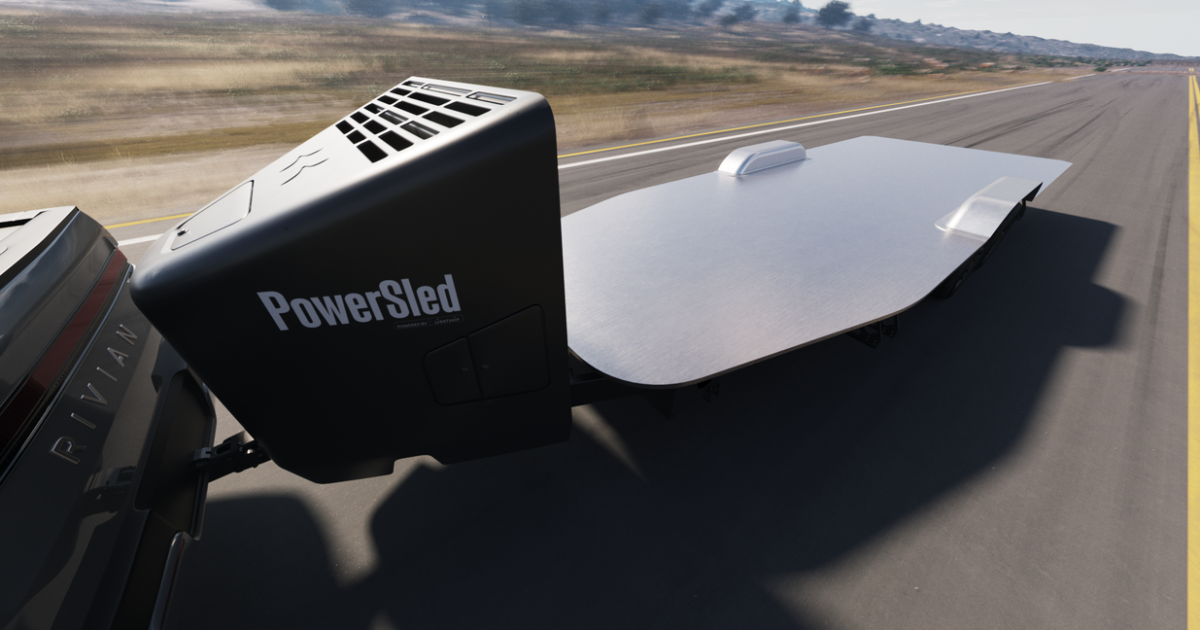
Lightship is part of the new guard of Silicon Valley-based high-tech electric camper builders. It became one of the first self-powered trailer pioneers to market when it began production of its AE.1 telescoper last summer. Now it’s launching a different type of self-driving, battery-bulked electric trailer, one that could have an even bigger impact on how the world tows. The all-new Powersled is a simpler cargo trailer based on a chassis outright overflowing with lithium battery power. It shoulders thousands of pounds, then serves as a mobile power station on arrival.
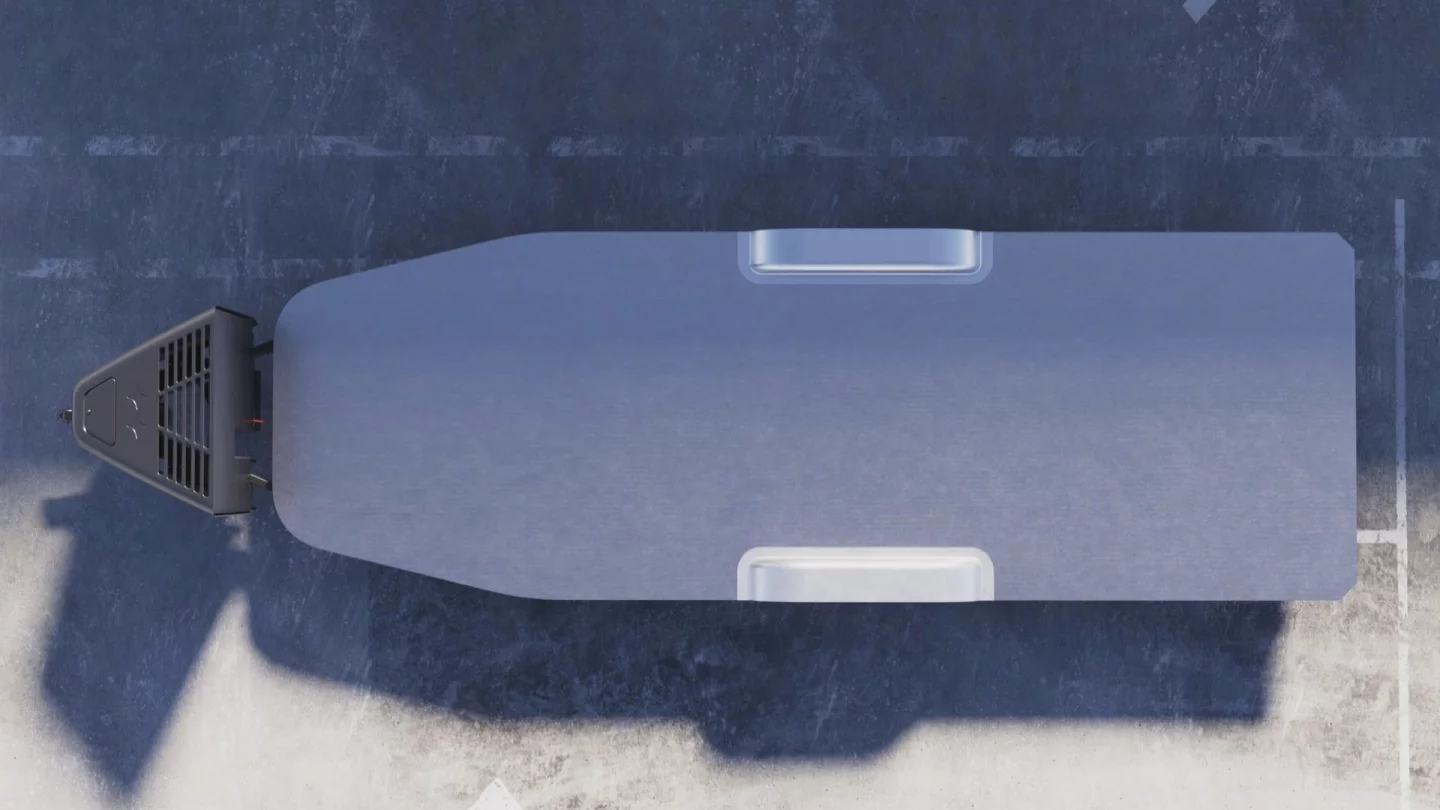
An ideal tool for new construction, mining operations, emergency response camps and other off-grid job sites that demand access to serious portable power, the Powersled arrives as what’s essentially an AE.1 stripped down to its bare, battery-loaded ladder chassis. Depending on their use case, buyers can purchase it as a chassis and build it up from there, opt up for the flatbed variant or have Lightship build it out into an enclosed cargo trailer.
Lightship
Buyers can choose from 80-kW, 160-kW and 240-kW battery capacity options. As that relates to our headline comparison, the Tesla Cybertruck has a 123-kWh battery, so that maxed-out Powersled pack is just shy of the capacity of two Cybertruck batteries. Okay, yes, it technically falls 2.4% short, but “Cybertruck combined with a Lucid Air” (235 kWh) didn’t quite fit the headline box.
The 26.6-foot (8.1-m) Powersled is built to carry between 6,200 and 8,700 lb (2,800 and 3,945 kg) of payload, depending on configuration and the selected battery pack size. The idea is that instead of towing a big generator or battery trailer on its own, the Powersled takes advantage of Lightship’s electrified skateboard chassis to carry a full load of cargo on the journey, then provide a versatile source of exportable power at the destination. Two separate trips become a single trip to increase efficiency and cut costs.
The trip to the job site should also prove cleaner, more efficient and cheaper. Like the AE.1 camper, the Powersled comes equipped with Lightship’s Trekdrive powered axle, able to kick in motive power when it’s most needed, such as on long climbs. The primary Trekdrive unit comprises a permanent magnet motor, inverter and single-speed gearbox, and the greater system includes a sensor-loaded hitch and a Drive Control Unit (DCU).

Lightship
The multi-sensor hitch measures movement data such as push and pull between tow vehicle and trailer, sending it to the DCU, which then adjusts output from the Trekdrive accordingly. If it works as advertised, it’s meant to power in and out seamlessly without any discernible bucking or drag. Lightship says the system is capable of up to doubling the fuel economy and range of the tow vehicle pulling a non-powered trailer’s weight. It delivers 40 hp continuous and 94 hp peak output.
Upon arrival, the Powersled serves as a mobile power pack you can unhitch precisely where it’s needed. It can put out a continuous 38 kilowatts of power at 240VAC, and Lightship notes it’s designed to supply job site power for communications equipment, pumps, lights, diagnostic tools and other commercial hardware. The company will consult with each buyer about their specific power requirements to find the solution that matches.
Lightship
Unlike a fuel generator, the Powersled delivers power silently and without any emissions, maintaining a cleaner work environment. As for recharging, it’s designed to power up from 20 to 80% in 40 to 120 minutes with its integrated NACS fast-charging hardware. AC charging time exceeds five hours.
The Powersled doesn’t entirely abandon Lightship’s recreational roots, either. Lightship imagines some buyers using it as a high-powered recreational cargo trailer, capable of carrying side-by-sides or dirt bikes and then delivering serious power at base camp. It could be a particularly attractive solution for electric dirt bikers, allowing them to charge fully off-grid.

Lightship
Lightship announced the new Powersled last week and said it received its first order from Exedy Drones, which plans to use the sled as a mobile charging and operations hub for its drone-based agricultural crop monitoring and spraying operations. The trailer will be built at the company’s Colorado manufacturing facility, which is in the early stages of an expansion that will quadruple the company’s production capacity by later this year.
Lightship doesn’t list pricing information for the commercial-focused, built-to-order Powersled, leaving that to a “contact us for a quote”-type system. Given it’s the same chassis that’s under the 77-kWh AE.1, the 80-kWh base Powersled should start well south of the US$157,500 camper. The AE.1 does not come standard with the Trekdrive, a $20K option, but does come with a pretty fancy, well-equipped expandable living module that gets completely left behind in the Powersled configuration – so that should lighten the price tag considerably.
Source: Lightship

