


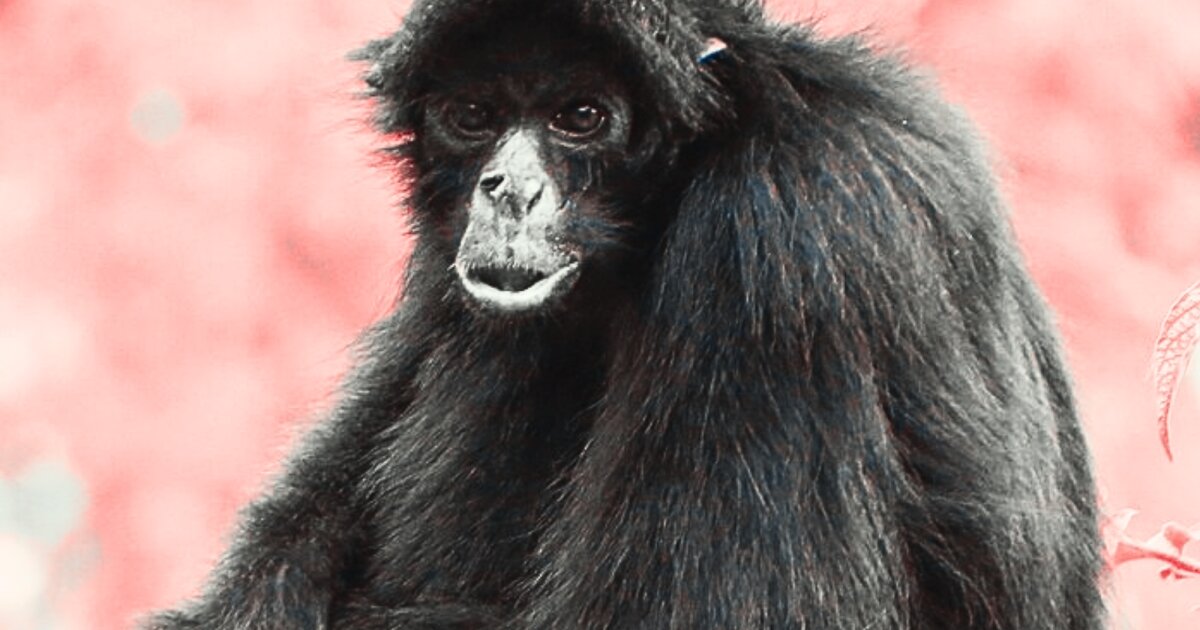
As deforestation accelerates across the Amazon, scientists are uncovering a disturbing new consequence: humans are transmitting diseases to wildlife.
A recent study from the University of Salford in the UK and the Federal University of Amazonas in Brazil has found that wild monkeys are contracting the human Hepatitis B virus (HBV) – something never before documented in these species.
The virus has previously been documented in Old World apes, typically those living in Africa and Asia, but not the New World primates of the Americas.
Researchers tested blood or liver samples from 88 New World primates across 28 species in two Brazilian Amazonian regions, the human-impacted Rondonia and Mato Grosso states, and the remote upper Japurá River in Amazonas state.
They found HBV in 17 of the 49 primates from the human-impacted area, with the genotypes matching locally circulating human HBV strains. By comparison, none of the 39 primate samples from the remote area tested positive for the virus.
In humans, HBV is a highly infectious pathogen that attacks the liver, causing more than a million deaths a year through cirrhosis and liver cancer. Though it is typically spread through blood transfers or other intimate contact, the team is unsure how the monkeys became infected.
As Professor Jean Boubli, who led the research at the University of Salford, explained: “As yet, it is very hard to ascertain, considering the transmission of HBV human to human is restricted to blood or certain other body fluids from an infected person entering the body of someone who is not infected.”
One theory is that infant and juvenile primates kept as pets are “picking up the virus somehow” before being released into the wild once they grow into more aggressive adults, Boubli said.
“Also, the closeness of urban centres to the forest edges might increase the likelihood of transmission, but the mechanism is still something that needs investigating.”
The study suggests human encroachment into forests could be introducing pathogens into fragile ecosystems, with deforestation “the number one threat”, Boubli said. “Ideally, deforestation should be halted and buffer zones implanted to minimise the contact of human cities and developments from native forests.”
The implication for the monkeys is also unclear. Researchers don’t know whether the virus is causing disease in infected monkeys or if it is being passed from monkey to monkey.
The monkeys don’t show clinical signs, but they are likely being affected as HBV is such a serious disease for both humans and apes, Boubli said.
“Clinical follow-up of infected monkeys needs to be carried out in captivity to understand the evolution of this disease in new world primates. Is it lethal? Does it have clinical presentation? Is it likely to reduce the chance of the infected monkey surviving in the wild?” he added.
“To study the potential monkey-to-monkey transmission pathway would be more complicated due to ethical issues and also difficult to replicate in captivity in a realistic field/wild scenario.”
There is also concern about further cross-species disease transmission, particularly as the Amazonian Indigenous people and local communities consume around three million primates for subsistence.
“Humans have been in the Amazon for thousands of years and eating primates and other game species as their main subsistence,” Boubli said. “These original populations occurred in very small gatherings and caused minimal impact on the forest.”
“However, what we have now is a very distinct situation, with an influx of millions from other parts of Brazil and the world, encroaching the primary forest and bringing non-native microorganisms and pathogens.”
Boubli concluded: “This is a huge warning sign, but there is still a lot we need to learn.”
The paper has been published in EcoHealth
Fact-checked by Mike McRae

