


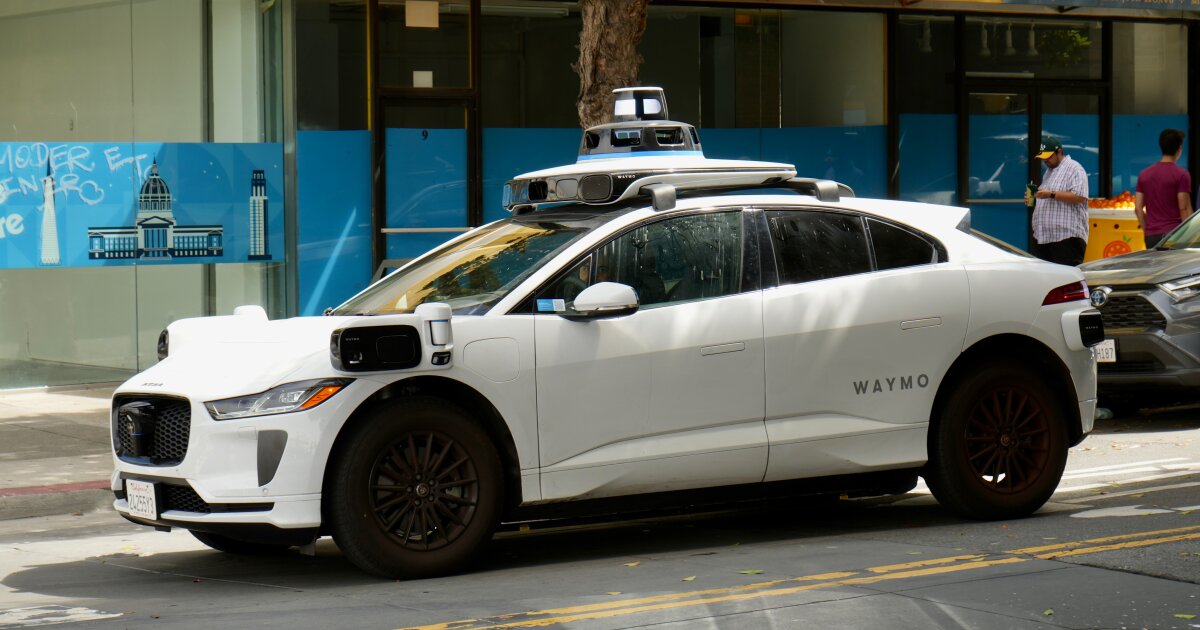
In today’s world, more and more daily tasks are being fully automated. Robotic devices can work independently, and they are often more efficient than humans. Yet, in some aspects, technology still cannot match what nature has created. One example is vision. Advanced cameras are used in modern robots and self-driving cars, allowing them to detect and recognize objects quickly and accurately, but there is one thing with which they still struggle: sudden changes in lighting. A research team from Pennsylvania State University may have found a solution.
Driving at night is quite a challenge even for humans, not to mention robots. There is glare from streetlights, bright headlights from oncoming vehicles, and dark skies in the background. The human eye adapts to these lighting contrasts pretty quickly without us noticing it too much, but there is quite a complex mechanism behind that, and here’s how it works…
Specialized cells in our retinas called rods help us see in low-light conditions, while cone cells are responsible for allowing us to recognize colors and small details in bright light. When bright and dark conditions are present at the same time, pigments in the rod cells briefly “bleach” and then slowly regenerate, while cones continue functioning normally, letting us distinguish all the details. This process is what the research team tried to recreate using tiny electronic sensors called photomemristors.
“Memristor” combines the words “memory” and “resistor.” A photomemristor is a special type of memristor designed specifically to detect and store information about light. Measuring less than a millimeter thick, this sensor basically acts like a neuron in our brain, processing and keeping the information even after the original signal is gone.
Jia Zhu/CC BY-NC-ND
Photomemristors are already widely used in optical systems and advanced cameras, but they are designed for consistent lighting conditions. It means that they function equally well in both dark and bright environments, but not when brightness and darkness are present at the same time. The scientists took on the challenge of creating a new type of memristor that could eliminate this issue.
For this experiment, the researchers built their memristors using a stretchy, gel-like conductive plastic (PEDOT:PSS) and titanium oxide (TiO2), a powdery compound derived from titanium. The titanium oxide captures ambient light, and converts it into an electrical current. This current then passes through the surface of the plastic layer, controlling how much water it absorbs from the surrounding environment.
In dark conditions, the plastic absorbs water faster. In bright conditions, it releases that water, drying itself out. This mechanism allows the system to automatically adjust its light sensitivity, based on the brightness of its environment.
Testing showed that the new photomemristors could detect ultraviolet light more accurately and consistently than traditional ones. The researchers also conducted tests using illuminated letters, similar to those used in eye exams. The system showed more than 95% accuracy in recognizing the letter shapes in mixed lighting conditions.
Even though the human eye is pretty adaptive to extreme, rapid changes in light, it still normally takes between 20 and 30 minutes to adapt fully. According to the researchers, these new photomemristors could potentially adapt much faster while still capturing and processing all the fine details.
There is still a lot of work ahead for the research team, but if the project succeeds, this technology could improve self-driving cars, make robots more adaptable, enhance advanced camera systems, and even serve as a vision aid for people with visual impairments.
A paper on the research, which was led by Prof. Larry Cheng, was recently published in the journal Nature Communications.
Source: Pennsylvania State University

