


Heatbit makes a couple of clever home appliances that combine essential heating functions with Bitcoin mining – potentially earning you some money while you use them. Its latest product is designed to ensure you have hot showers on demand, and hopefully earn its keep in the process.
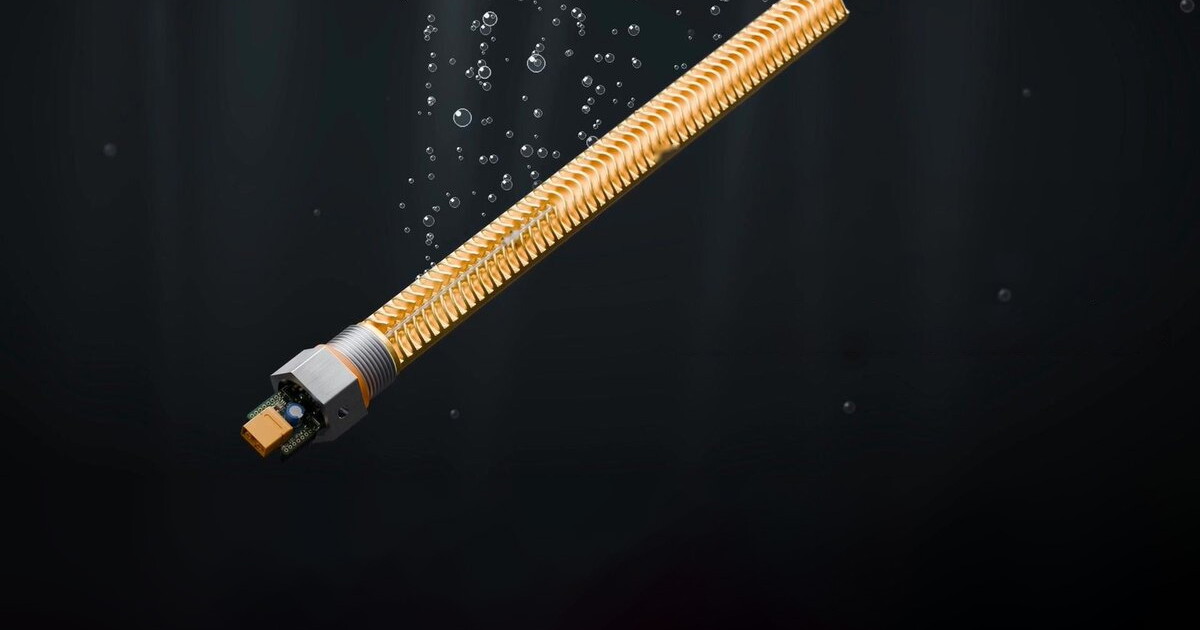
The brand’s new Bitwater replaces the lower water heater element in your existing tank. It resembles other rod-like elements, but it’s got a whole plug-and-play Bitcoin mining system built in.
Heatbit says this fits existing electric tank water heaters from big brands sold across North America, in the standard 1-inch screw-in element port. Once you’ve installed it, turned it on, and connected to your Wi-Fi network, it’ll begin mining Bitcoin, and the heat generated by its processors will warm your water.
Heatbit
Mining is taxing on these processors because it requires trillions of calculations to confirm Bitcoin transactions and create new coins on the cryptocurrency’s network. The Bitwater has 20 ASIC mining chips running simultaneously, and that generates heat for your water tank.
The chips in question are BM1370s, which together draw up to 600 W of power, and peak at a hashrate (how many guesses per second a miner makes) of 34 TH/s or 34 trillion guesses per second.
They’re secured inside the element by welded Eco Brass heatsinks, which are said to be efficient at conducting heat from the chips to the water while also resisting corrosion.
The company says that you can install the Bitwater by yourself and have it up and running in under an hour. It’s got a powered titanium rod that uses a small current to protect the steel tank instead of dissolving; this works in hard water, doesn’t cause any odors like a magnesium rod, and doesn’t need replacing.
The Bitwater pairs with a mobile app from which you can monitor temperature, hashrate, and earnings. It also promises to learn when you often use hot water, and to ensure the tank’s ready before you need it. From here, you can also set your Bitcoin mining pool, and direct earnings to your preferred wallet.

Heatbit
Water makes this a good cooling setup. It carries heat away far better than air does, so the chips stay cool enough to run reliably. The tank temperature also sets a ceiling: if the water is at 55-60 °C, the chips need to tolerate that, which is why the design needs a well-sealed, waterproof housing. Hopefully that’s addressed in the design and housing.
From the sound of things, the Bitwater seems like it’ll do its job as a heating element. Heatbit actually makes air purifiers and space heaters based on the same idea of using the heat from a mining system for your home. It even offers a wall-mounted ‘Canvas’ that can be drawn on with markers, and radiates heat into the room.
So how much money would this earn you, and should you consider one?
Heatbit responded to a similar query on X by pointing to an AI calculation of earnings of US$1.35 per day. This doesn’t factor in the cost of electricity, so depending on where you live and your hot water needs, your mileage will vary.
Now, Heatbit is pegging the Bitwater’s first batch of units at $899 and aims to ship them in the first quarter of 2027; subsequent batches will be priced at $1,299.
At this point in the Bitcoin game, the amount you can make per day running the Bitwater isn’t much. I imagine this might make sense if you’re deeply invested in cryptocurrency, and if you believe this is a viable way to build your assets on the blockchain.
Meanwhile, a similar, non-mining heater element with a powered rod can be had for a lot less money; a popular one on Amazon is listed at about $180. I’d have been more intrigued by the Bitwater concept if there wasn’t such a huge gap between its price and that of a conventional element.
If you’re into this kind of thing, I’d love to hear how you evaluate a dual-purpose product like this. Sound off in the comments.
Source: Heatbit

