


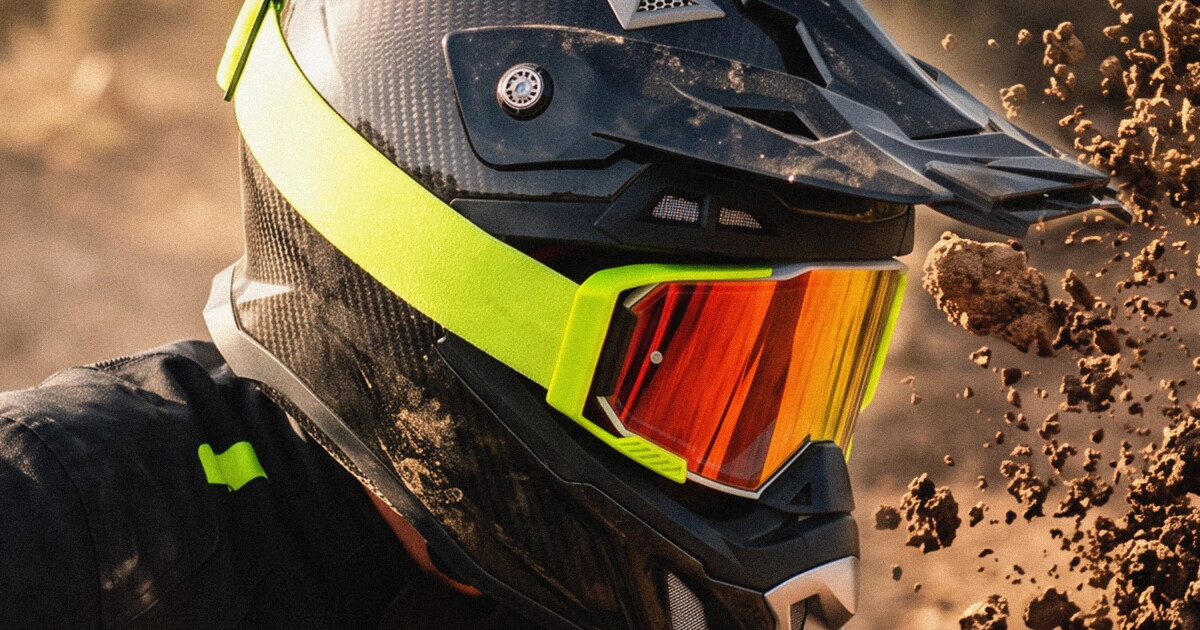
There are a few things in motorcycling that make me immediately suspicious. A 200-hp Chinese V4? Sounds about right. A Honda Dax dressed as a hot rod chopper? I’ll raise an eyebrow. But a rather unheard-of helmet manufacturer suddenly announcing that it has built the world’s lightest off-road helmet? Now you’ve got my attention.
Axor isn’t exactly a household name. It’s an Indian helmet maker that barely started its operations some 10 years ago. For it to stroll into the party with a carbon-fiber MX helmet weighing roughly 2.29 lb (1.04 kg) will indeed raise suspicion.
That’s because Axor isn’t a name that springs to mind when you think of the great helmet manufacturers of the world. Shoei. Arai. Bell. Alpinestars. AGV. 6D. Fox. Those are the usual suspects. These are brands with decades of racing experience, giant R&D departments, and helmets protecting the heads of some of the fastest people on two wheels.
Let’s look at the claim first. Axor calls its new MX Carbon the world’s lightest off-road helmet with triple protection certification. The company’s stated weight is approximately 2.29 lb (1,040 g), with a ±50 g tolerance.
Axor
Helmet weight comparisons are notoriously messy, Different manufacturers weigh different sizes. Some quote a shell without accessories. Others include the visor, peak, cheek pads, and all the other hardware hanging off it. Some give an average weight; others give a nominal figure. Even the same helmet model can vary considerably between shell sizes.
Axor’s own number includes that ±50 g tolerance, meaning the helmet could theoretically come in anywhere between roughly 2.18 and 2.4 lb (990 and 1,090 g). That’s still remarkably light.
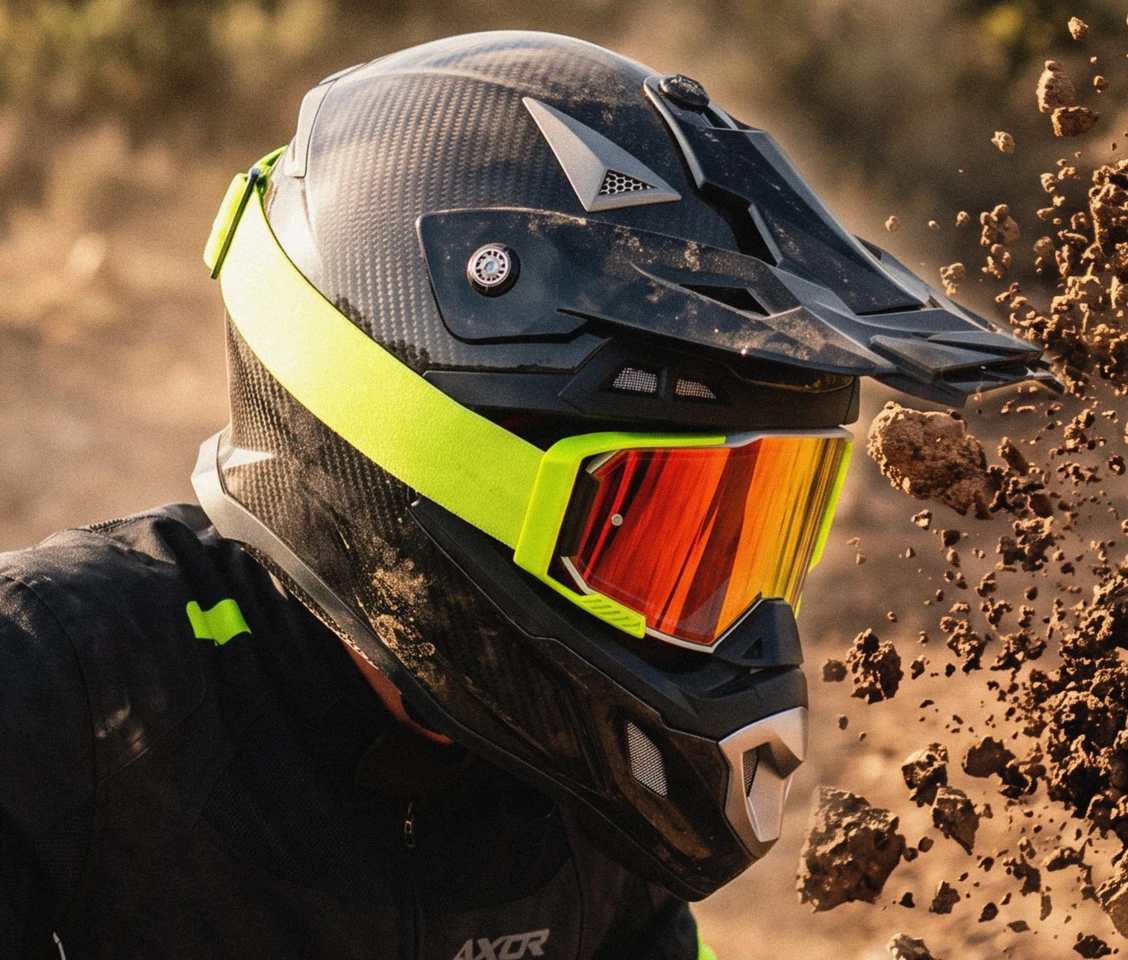
The MX Carbon is also not a cheap plastic lid put on a diet. Axor says it uses a tri-composite carbon-fiber shell paired with a multi-density EPS liner. There’s a double-D-ring retention system and a base trim intended to provide additional cervical protection. It also features a wide eyeport for goggles, complete with anti-slip zones and strategically placed air channels.
For context, the Alpinestars Supertech M10 weighs around 2.77 lb (1.26 kg) in a medium-size ECE configuration. Shoei’s off-road lids are also considerably heavier, as are many other premium motocross helmets.

Axor
That doesn’t automatically make Axor’s helmet better, but it does make the number remarkable. We’re talking about shaving hundreds of grams off something you’re expected to wear on your head while riding a motorcycle over rocks, jumps, and assorted obstacles nature uses to make you regret your life choices.
However, a lightweight helmet isn’t inherently safer than a heavier one. Getting a helmet down to around a kilogram while maintaining structural integrity, impact performance, penetration resistance, and passing strict certification tests is the toughest challenge in helmet design.
The MX Carbon’s certification claims are therefore more interesting than the weight claim by itself. Axor states that the helmet is certified to ECE 22.06, DOT, and India’s ISI standard.
That wording is important. Notice that Axor isn’t simply saying “world’s lightest helmet,” full stop. It’s making a specific claim: world’s lightest off-road helmet with three certifications.

Axor
Of those three standards, ECE 22.06 is particularly relevant because it is the most stringent and represents the newer European helmet safety regulation, which includes much stricter testing requirements than the older 22.05 standard, including tough rotational impact tests.
By tying the claim to triple certification, Axor narrows the field significantly. The market has plenty of light carbon helmets, but the comparison becomes far more specific when you ask how many are simultaneously built for off-road use while carrying ECE 22.06, DOT, and ISI certifications.
Another thing that raised eyebrows was a promotional video circulating online during the helmet launch. While it succeeded in grabbing attention, it did nothing to prove the helmet’s real-world safety or impact performance.
Axor MX Carbon | How Strong Is This Lightweight Helmet? | BikeWale Shorts
Naturally, the next logical step was to get hands-on with one, put it on a scale, compare it against established premium off-road helmets, and ask the tough questions.
I reached out to the company to request a media sample to test and review, but I haven’t received a response. I then checked with official retail distributors of Axor helmets to see if I could buy one locally, but came up empty. They were unsure when – or if – stock would arrive.
Until unit samples hit the market for independent testing, caution is warranted. Interestingly, Axor has priced the MX Carbon helmet at ₹20,060 (around US$212). My entry-level Bell adventure helmet cost more than that.
Axor
It shouldn’t be written off completely, though. Axor isn’t an obscure startup that appeared overnight; it is owned by Vega Auto Accessories, a massive Indian manufacturer founded in 1982. While high-end gear has historically been dominated by European, Japanese, and American brands, India’s massive motorcycle industry has the scale to make bold moves. If this helmet delivers on its specs, it could mark an interesting shift in global gear manufacturing.
Source: Axor

