


“Man overboard!” The dreaded call that starts a race against time and the often treacherous sea. Sadly, the sea often wins, mainly due to reaction times. Researchers at the Technical University of Denmark (DTU) are now developing an onboard drone that aids rescues without human intervention.
The autonomous drone can launch from a moving ship, search likely drift zones using onboard cameras and smart algorithms, identify a person in the water, and eventually drop an inflatable life jacket that also sends out a GPS signal. When a man-overboard incident is confirmed, the idea is for the drone to take off immediately, long before a rescue boat can be deployed.
Ships are not vehicles that can come to a complete halt at the press of a pedal. When someone falls overboard, the vessel has to stop, prepare a rescue boat, lower it, and then begin searching. All of these take time, the one thing the person in the water does not have. To non-seafarers, it can be shocking how quickly a person can drift completely out of sight into what appears to be open, empty water. According to figures cited by DTU from the Cruise Lines International Association, more than 70% of people who fell overboard between 2009 and 2019 died.
When you think about it, this grim figure is not hard to understand. A person in the water can quickly become exhausted or injured, all while fighting cold shock and panic. Wind and currents can push them away from the ship surprisingly quickly. Now picture all these things happening at night, in waves, with the ship already losing visual contact.
US Navy
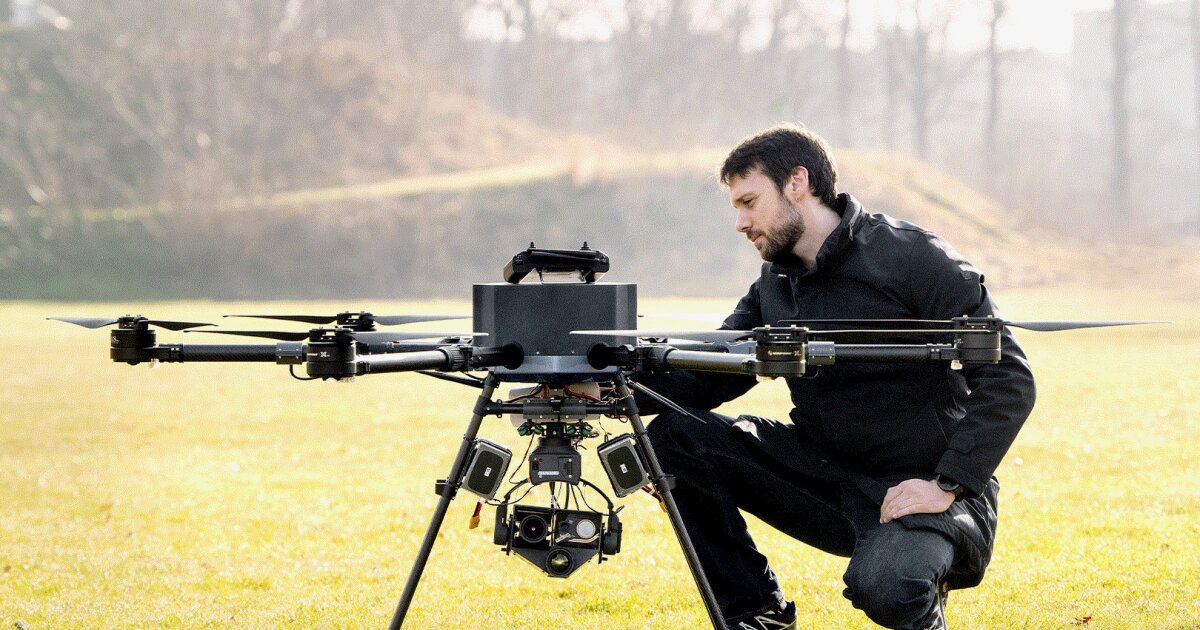
PhD student Dimosthenis Angelis is trying to shrink that dangerous gap between the fall and the rescue with a drone designed to take off quickly, then autonomously search the most likely locations where a person may have drifted. Rather than replacing the rescue boat, the drone acts as the first responder: it gets eyes in the air, finds the person faster, delivers flotation, and gives the crew a better target to reach.
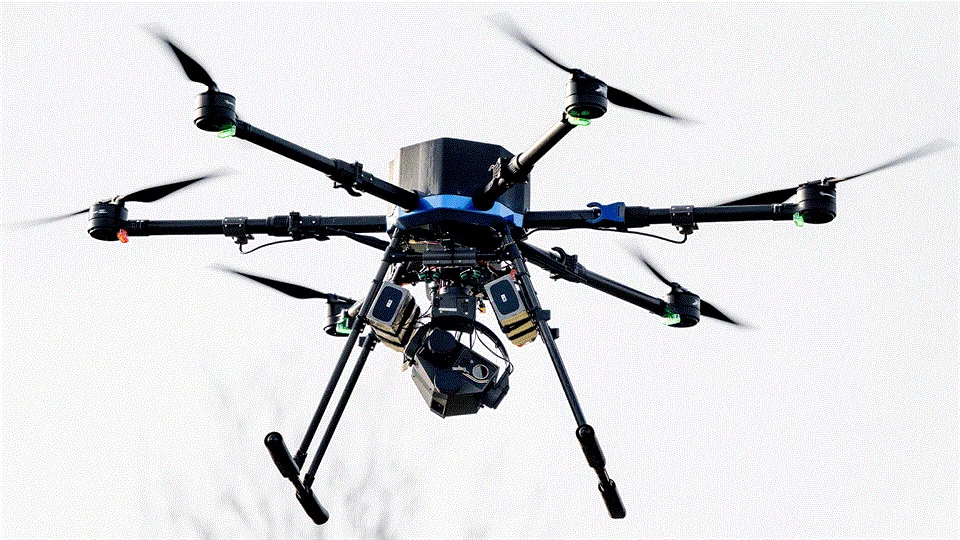
The current prototype weighs 24.8 kg (54.7 lb), measures 2.4 m (7.9 ft) in diameter, and can carry another 20 kg (44 lb) of cargo. It has a flight time of around 30 minutes and can search up to one square kilometer, depending on weather and payload. Its vision system combines three types of cameras: RGB, infrared, and thermal. This means it can use ordinary visual imaging, see in low-light conditions, and detect body heat in the water.
The fully developed version is intended to carry an inflatable life jacket that transmits GPS. That serves two purposes: it helps keep the person alive, and it marks their location so the rescue boat can reach them more easily.
“This has a two-fold purpose: One is to extend the person’s life in the water – the other is to guide a lifeboat to them easily,” says Angelis.
Bax Lindhardt
Life jackets really do earn their name. In cold water, survival time can collapse frighteningly fast. DTU notes that, according to the Life Jacket Association, a life jacket can extend survival time in 4-10 °C (39-50 °F) water from about 30-60 minutes to as much as three hours! Although this depends on sea state and the person’s swimming ability, among other conditions. In a real emergency, that extra time could be the difference between a rescue and a body recovery.
Another critical innovation of the drone is how it conducts searches. In traditional man-overboard rescues, a rescue boat searches in triangular patterns along the likely drift path. The issue with this approach is that the boat sits low in the water, limiting visibility. A person’s head and shoulders can be very hard to spot, especially in waves.
The DTU drone searches from above, using algorithms to decide where to look first. These algorithms combine multiple computer-based search methods with the vessel’s real-time data, including wind and current information, while also accounting for how much time has elapsed since the person fell. Instead of simply sweeping the same patch of ocean repeatedly, the drone estimates where the person is most likely to be, and plans a route to avoid wasting time.
“Our methodology incorporates different search methods and the vessel’s real-time data related to wind and currents to accurately predict a person’s location while ensuring the drone doesn’t waste time searching the same area twice,” says Angelis.
In a real-world scenario, the system would work something like this: a man-overboard event is confirmed, the drone is automatically dispatched from the ship, it flies toward the predicted drift zone, scans the water using its camera suite, identifies the person, drops the GPS-enabled life jacket, and then guides the rescue boat toward the target. The ship still needs to recover the person, but the drone helps solve the worst early problems: determining their location and keeping them afloat until help arrives.
Tests so far suggest the approach could make a meaningful difference. According to DTU, results indicate the drone would be able to locate more than 80% of people in distress. The system has been tested on land and over the Kattegat sea strait, where it searched for a humanoid mannequin wearing a heated vest. Those tests are being used to fine-tune the equipment and verify the drone’s search accuracy.
The team is also working on another important piece of the puzzle: getting the drone safely back onto a moving ship. Landing on a swaying vessel is difficult, and many drones need to hover while calculating how the landing area is tilting. That delay can eat into precious battery life. Angelis says the team is developing a camera-based landing method that relies on real-time vision rather than long calibration.
“Having to wait up to five minutes to land is a big hit on the battery life,” he says. “With our new method that we are developing, landing takes about three seconds.”
The drone is still a prototype, and the maritime sector is heavily regulated, so it may be some time before systems like this become standard equipment on passenger ships. In the near term, Angelis believes coast guards could be among the first users, especially for getting flotation to people in distress before boats arrive. His long-term hope is that every ship carrying people could one day have a rescue drone onboard.
It should be noted that several shore-based drones have already been created to deliver flotation devices to distressed swimmers. These include the TY-3R Flying Lifebuoy, the Auxdron Lifeguard Drone and the Little Ripper.
Source: Technical University of Denmark

