


Life as a daughter of royalty in Ancient Egypt may not have been all rose petals and feather fans.
A re-evaluation of 4,000-year-old skeletal remains that include a family of six sibling princesses has revealed signs of illness and physical wear and tear that point to proficiency in weapons.
The findings, published in the journal Frontiers in Environmental Archaeology, suggest the arsenal of maces and bows buried with the women wasn’t merely for cosplay in the afterlife.
Researchers from Egypt’s University of Beni-Suef and Ministry of Tourism and Antiquities, and the Institute for Bioarcheology in the UK, combined the results of X-rays, spectroscopy analysis, and osteological examinations on six skeletal remains discovered in excavations conducted in the late 19th century.
The bodies recovered from pyramid complexes at Dahshur belonged to the late Middle Kingdom pharaoh Hor I, daughters of Amenemhat II including princesses Noub-Hotep, Ita, Khenmet, and Itaweret, and an unknown female who has been tentatively named Princess Sathathormeryt.
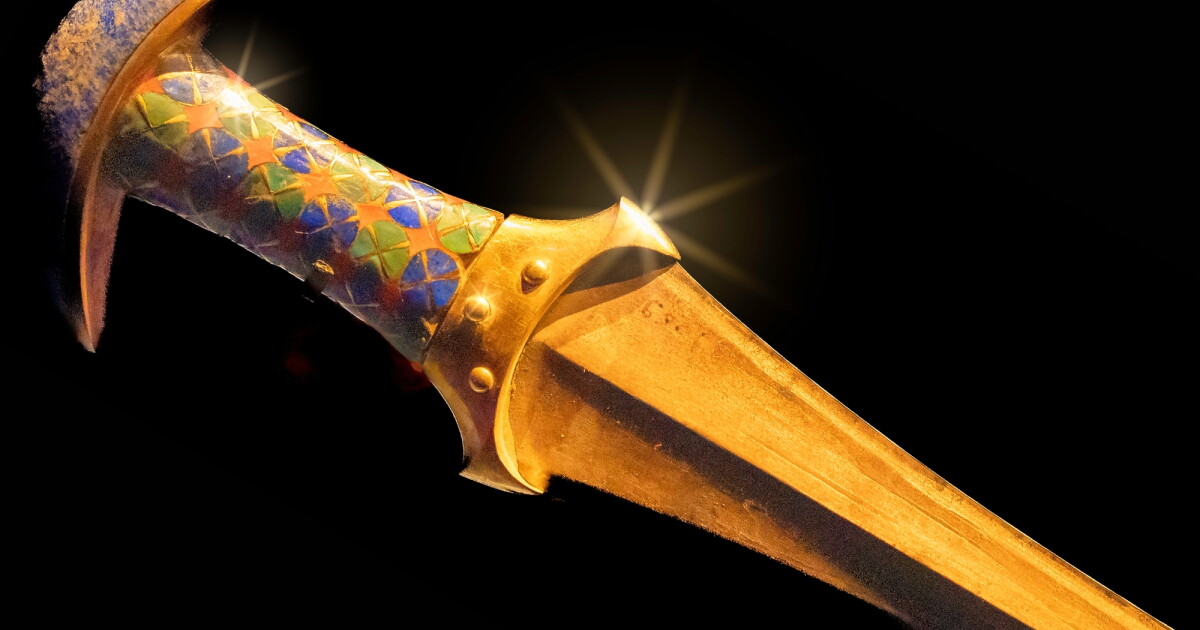
The family’s burial within the Amenemhat II and III complexes reflects their connections to the royal dynasty, with the remains including an assortment of “court-type” regalia, among which were bows, staves, and maces. One particular item interred with Princess Ita is a stunning dagger with an inlay of gold, green feldspar, and lapis lazuli.
Whether the items were purely symbolic representations of authority or an indication of their skills as fighters was never clearly settled.
While King Hor and Princess Noub-Hotep were examined shortly after their discovery, the rest had yet to be comprehensively analyzed.
Despite careful mummification, none of the soft tissues remained, and various bones were no longer present, including the princesses’ skulls. Still, the marks on the skeletons were enough to confidently identify signs of sickness, injury, and even athletic prowess.
Development of the upper limbs, for example, is indicative of repeatedly pulling back bowstrings or swinging heavy objects.
“Princess Ita was a young woman aged between 28 and 34 with strong upper-body muscle attachments, suggesting she habitually used weapons like maces or daggers,” says Beni-Suef University archeologist Zeinab Hashesh.
“Princess Khenmet was a woman in her late 30s or 40s who showed signs of thinning bones, but had very robust ligament attachments. Princess Itaweret was a young woman aged between 20 and 34 who survived broken ribs and foot fractures; her skeleton shows she was a skilled archer.”
Similar signs on King Hor and Princess Noub-Hotep suggested they, too, were practiced with the bow.
Fractures and signs of mineral deficiencies in the bones made it clear that a life at the top was no protection from serious falls, bad infections, and poor nutrition. Or congenital defects, with abnormalities consistent with a rather restricted gene pool.
What was clear was that the princesses were all well cared for when injured or sick, something many of their subjects may not have experienced.
Further analyses could continue to provide details on the biographies of this famous family of fighting royals, giving us an even more accurate picture of the risks and benefits of being a pharaoh’s daughter in the world of Ancient Egypt.
This research was published in the journal Frontiers in Environmental Archaeology.
Source: Scimex
Fact-checked by Bronwyn Thompson

