



Nvidia is fundamentally rethinking the portable PC, treating its new RTX Spark platform not as a traditional gaming silicon upgrade, but as a blueprint for a high-end, on-device AI powerhouse.
The idea of an ‘AI PC’ has been doing a lot of heavy lifting in recent years. In practice, it has often meant a Windows laptop with a Neural Processing Unit, Copilot branding, and a few on-device AI tricks that may have only a small impact on how people use their computers.
Nvidia’s RTX Spark ‘superchip,’ unveiled earlier this month at Computex 2026, is a clearer attempt to define what this category could really be. Built in close partnership with Microsoft and shown across Surface hardware, it isn’t just trying to make today’s Intel or AMD machines a little bit faster. It’s pitching an entirely different architecture: part creator laptop, part localized AI node, and part gaming-capable Arm PC.
Nvidia
The familiar high-end Windows laptop template pairs an Intel or AMD CPU with system RAM and, in creator or gaming models, a discrete GPU with its own VRAM. The RTX Spark takes a more integrated route. Nvidia’s N1X chip combines a 20-core Grace Arm-based CPU with a Blackwell RTX GPU, 6,144 CUDA cores, fifth-gen Tensor Cores with FP4 precision, and NVLink-C2C between CPU and GPU.
It also supports up to 128 GB of LPDDR5X unified memory in a 45-80-W power envelope, with Nvidia claiming up to 1 petaflop of AI performance. Conceptually, it’s reminiscent of Apple’s MacBook Pro approach – but with Nvidia’s CUDA, RTX, DLSS, TensorRT, and Windows ecosystem layered on top.
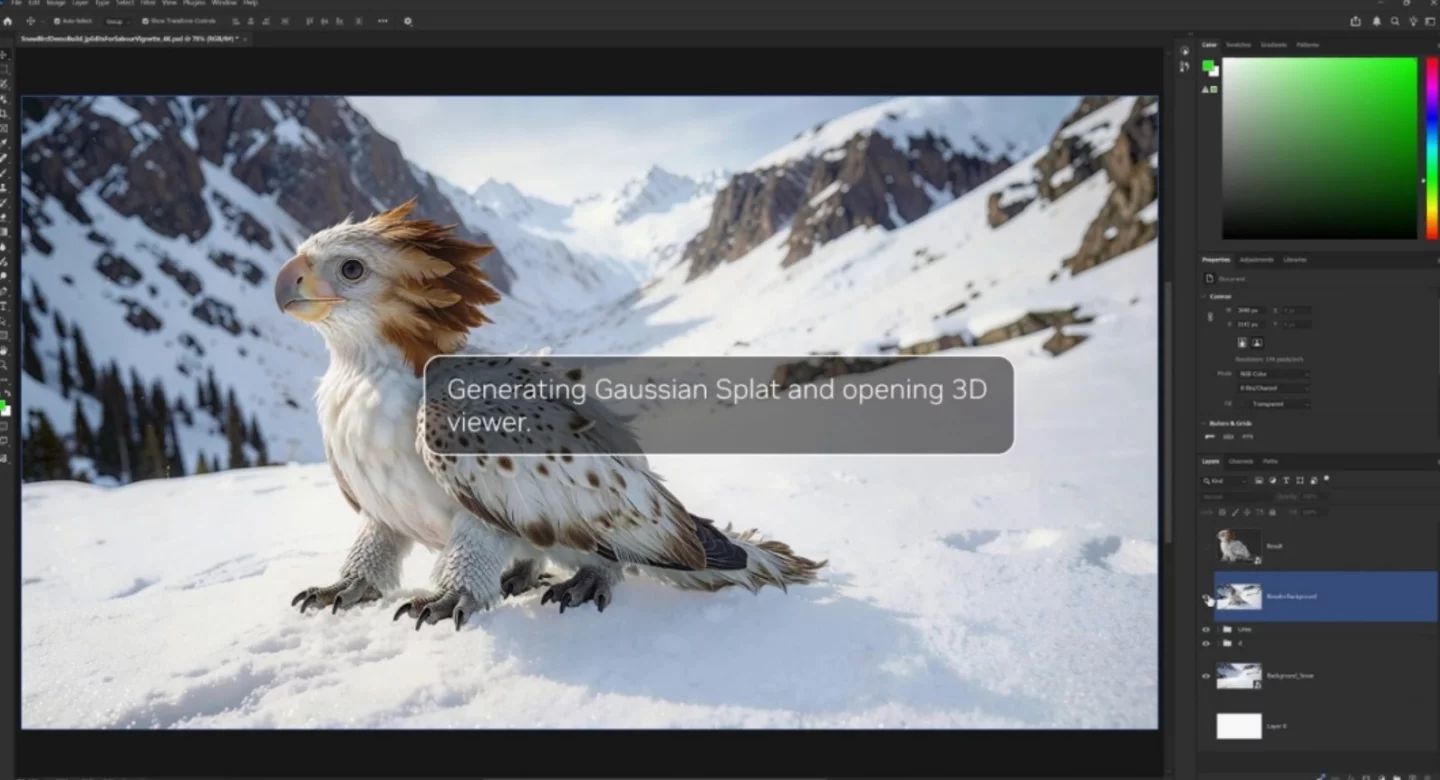
This architecture is why the RTX Spark excels at pro-grade creation. A massive shared memory pool can effortlessly accommodate immense localized AI models, multi-agent systems, sprawling 3D scenes, 12K video timelines, and heavy Unreal Engine 5 projects without the out-of-memory errors that typically plague standard laptops.
When it comes to gaming, the RTX Spark finds itself in a somewhat awkward middle ground. It has a Blackwell RTX GPU, DLSS 4.5, Multi Frame Generation, Reflex, and Ray Reconstruction; clearly, Nvidia wants games to be part of the story. But that doesn’t necessarily make it a replacement for a conventional high-end Intel or AMD gaming laptop with a discrete RTX GPU and dedicated GDDR7 VRAM.
Nvidia
There are still a few big unknowns, too: Windows on Arm compatibility, Prism emulation for non-native games, anti-cheat support, compatibility with older PC titles, power limits, and real-world benchmarks outside of controlled demos.
The RTX Spark may well be good enough for gaming, especially with Nvidia’s software stack helping out. But traditional gaming laptops remain the safer bet for raw performance, broad compatibility, and probably price, too.
The early positioning reflects that. The first RTX Spark systems lean toward creator, premium, and business-style designs rather than obvious ROG or Legion-style gaming machines.
The first wave is due later this year from major manufacturers, including Microsoft Surface, Lenovo, Dell, ASUS, HP, MSI, and others. It’s still unclear what these systems will retail at – but if the DGX Spark AI PC is anything to go by, it’s probably safe to say it won’t be cheap.
NVIDIA RTX Spark Reinvents Windows PCs for the Age of Personal AI
Source: Nvidia

