


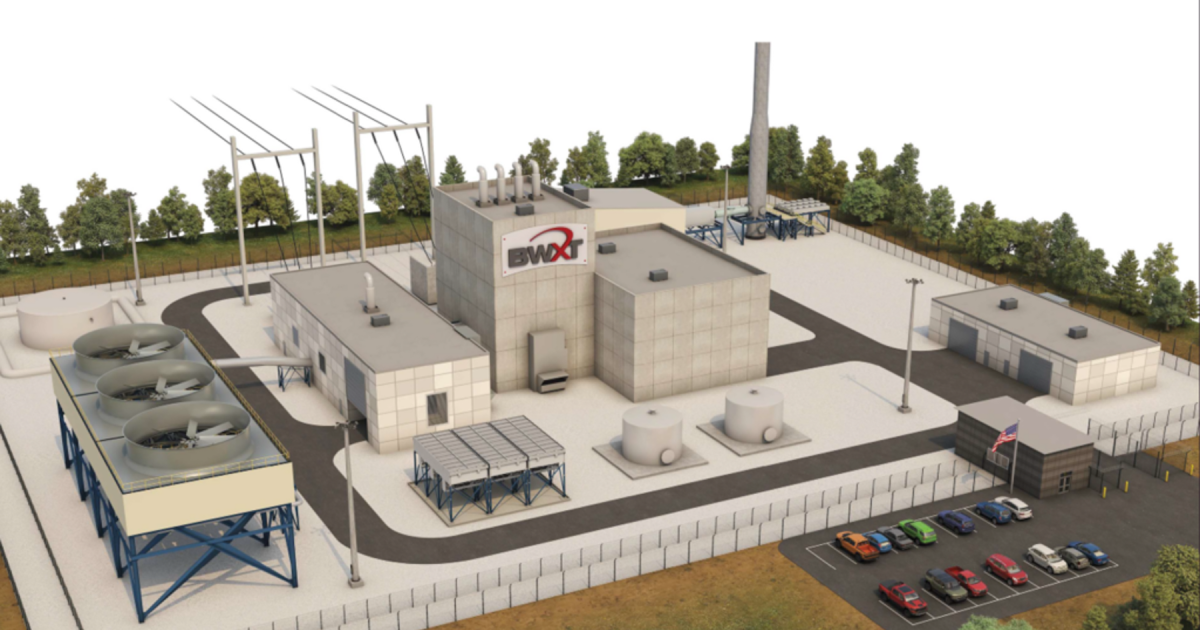
In a two-for-one move, the US Army has announced that it has authorized the construction of up to 20 nuclear micro-reactors across military bases in the continental United States to provide reliable power and boost the country’s nuclear industrial base.
The August 26 announcement is part of the Army’s Janus Program, which is tasked with developing stationary and transportable micro-reactors for defense applications. In this case, the goal is to develop nuclear power systems to provide baseline electricity generation for military bases – not just distant bases in places like Alaska that suffer from logistical problems, but regular bases that have traditionally relied upon vulnerable and increasingly unstable civilian power grids.
The other purpose of the initiative is to support America’s nascent nuclear renaissance by farming out the siting and deployment evaluations to five different vendors: BWXT Advanced Technologies, LLC; Westinghouse Government Services; Radiant Industries, Inc.; General Atomics Electromagnetic Systems; and Antares Nuclear, Inc.
The fact that these micro-reactors are built in factories and shipped for installation on-site is significant because traditional nuclear power in the United States faces severe hurdles. The tortuous regulatory system that is hostile to new nuclear plants makes the commercial process expensive, slow, and prone to legal challenges. However, the US military operates with specific regulatory exemptions and has a great deal of latitude when installing reactors for its own use.
The 20 reactors will be deployed across five of nine candidate sites, which include Fort Benning (Georgia). Fort Bragg (North Carolina), Fort Campbell (Kentucky), Fort Drum (New York), Fort Hood (Texas), Fort Wainwright (Alaska), Holston Army Ammunition Plant (Tennessee), Joint Base Lewis-McChord (Washington), and Redstone Arsenal (Alabama).
If the project remains on schedule, the deployments will begin between 2028 and 2030.
“The Janus Program is grabbing the baton from Project Pele and the [Department of Energy’s] Reactor Pilot Program,” said Dr. Jeff Waksman, principal deputy assistant secretary of the Army for Installations, Energy and Environment. “We are seeking not just reactors capable of turning on for a brief demonstration, but rather systems able to deliver power with high-capacity factors for years of operation. The Janus Program will be a complete success when and only when we have assisted multiple nuclear companies in developing truly reliable and affordable nuclear micro-reactors which they can sell to other buyers beyond just the military.”
Source: US Army

