


Earlier on Tuesday before the trial began, dozens of supporters including Gojek drivers turned up at the Jakarta courthouse. They carried white banners with the words “We are with Nadiem” and “Free Nadiem”.
“It’s been difficult for almost 10 months. As a family, we have continued to pray, fight, and stand by him throughout this time,” Nadiem’s mother-in-law, Sania Makki, told BBC News .
During the hearing, dozens of supporters – including drivers wearing Gojek jackets – sat in a nearby room where the proceedings were being streamed live.
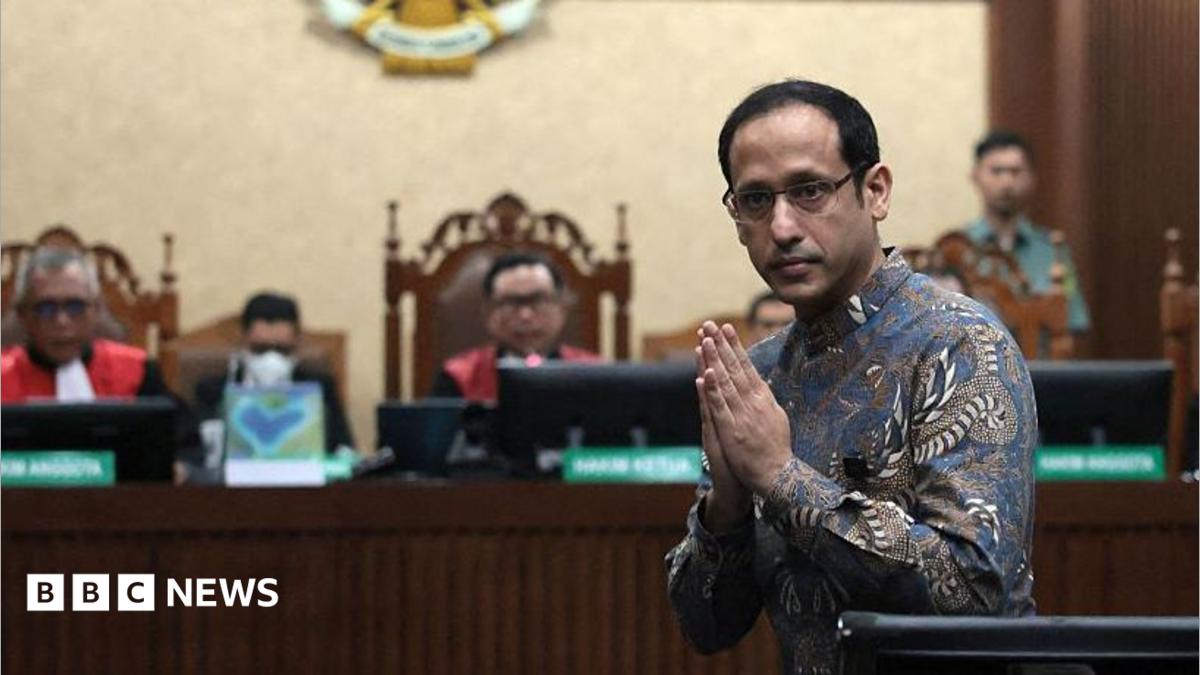
When the judge delivered the verdict and sentence, Nadiem appeared visibly emotional and began crying, while supporters outside the courtroom booed loudly.
He was still in tears when he exited the courtroom and hugged several of his supporters.
Nadiem told reporters he would file an appeal. “I do not know what words I can use to explain how I feel today,” he said.
“I do not know whom I should ask for help, or where I can seek justice. My only hope is in the Indonesian people, in those who still believe that truth still exists in this country.”
Some analysts have questioned the case against Nadiem.
“The eradication of corruption is being used to attack those who are not liked, or those who are critical of people in power,” lawyer and activist Todung Mulya Lubis told BBC News.
Observers also say a guilty verdict could risk disillusioning young Indonesians who want to pursue a career in government.
“There’s a feeling of fear. It’s like, so if someone that’s from outside of the government tries to work with the government or tries to do good in their own field in this country, am I going to get criminalised?” artist and political activist Andovi da Lopez told BBC News.
“I can’t speak for everybody, but in my circle, there’s this fear and people just say, ‘just don’t work with the government, just don’t.’ And that fear is real,” he said.
To young Indonesians, Nadiem is seen as someone who “wants to bring change but is trapped in a government system that has systemic problems,” said Usman Hamid, executive director of Amnesty International Indonesia.
“Maybe [Nadiem] was perceived as forcing [the government] to innovate policies, and maybe he wanted to do it too fast,” he added.

