


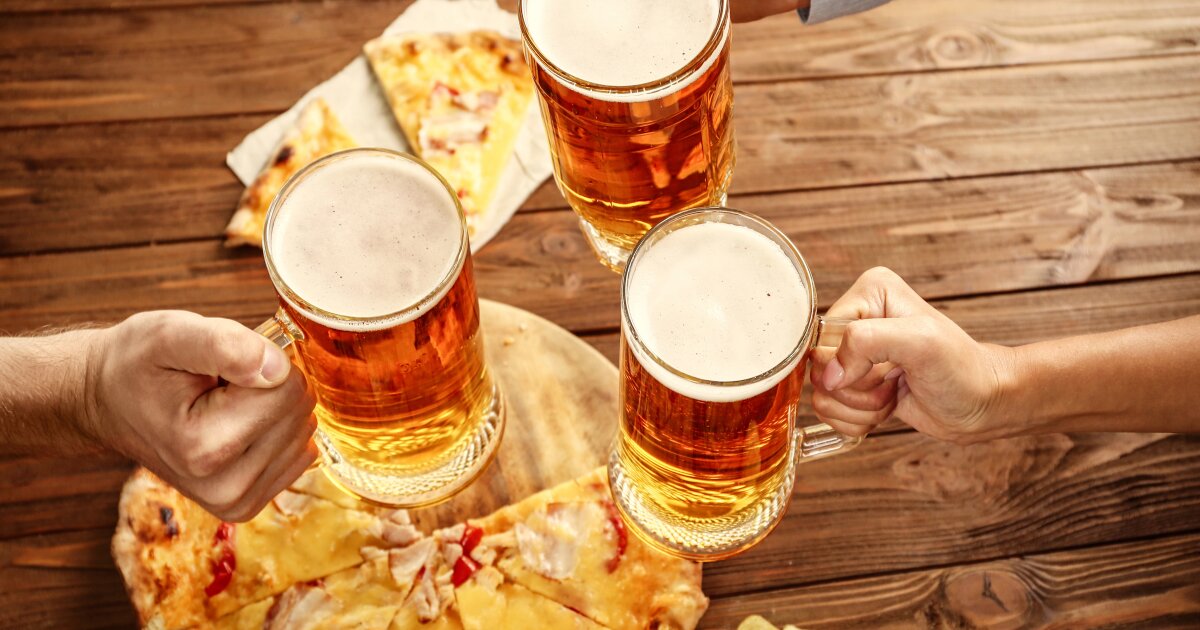
Grabbing that late-night kebab or pizza slice after a few drinks may not be a sign of poor willpower, but a biological drive that once would have seen us seek out protein but now leads us straight into the comforting arms of savory ultra-processed foods.
Researchers at the University of Sydney’s Charles Perkins Centre found that drinking alcohol triggers an ancient biological pathway that spikes the activity of the hormone Fibroblast Growth Factor 21 (FGF21). Mainly produced by the liver, FGF21 plays a key role in energy homeostasis and nutrient intake.
And elevated levels of FGF21 can dial down any cravings for sweet foods in favor of savory and umami-forward preferences. Traditionally, this trigger would have most likely made humans seek out protein-rich energy such as meat – but now, these savory and umami flavors are hallmarks of ultra-processed foods (UPFs).
This may not seem like a huge problem, but UPFs are typically low in protein and packed with energy, leading people to over-consume and then store the added fuel as fat, leading to weight gain.
“Many people will recognize the experience of having a few drinks and suddenly craving something salty, like chips, french fries, pizza or other savory foods,” says lead author Dr Amanda Grech. “Now we have a better understanding of the hormonal dynamic at play, which may be driving overconsumption of ultra-processed foods.”
Now, beer or no beer, I’m an umami fiend and always have been; growing up, it was Vegemite on toast for breakfast, Vegemite sandwiches for school lunch, hot chips (fries, if you will) loaded with the Australian staple of chicken salt and drenched with ketchup. To this day, I’ll spread Vegemite on bread like it’s Nutella, and will choose fermented foods over anything sweet. I also haven’t eaten meat since I was 10 years old, nor any animal products for nearly two decades, so it’s perhaps not a surprise that these other kinds of savory, umami foods dominate my diet.
While umami is often described as “salty,” it’s very different. It was first recognized as the “savory” part of our five recognized basic tastes in 1908, when Japanese scientist Kikunae Ikeda produced monosodium glutamate (MSG) and got a patent for this new flavor the same year.
A century later and you can’t watch a reality-TV cooking show without hearing a chef mention umami flavor. And in the last decade, scientists have begun looking into just why this savory taste is so compelling. With this has come a growing body of evidence that suggests umami has a specific neurocognitive effect that can lead to over-consumption. This is, of course, a dangerous mix when it comes to UPFs – which by their nutritional profile lead to excessive energy intake.
In this new study, researchers looked at Australian national dietary survey data to see if there were any patterns to be found when it comes to alcohol and savory food consumption. They were interested not just in behavior but potential underlying mechanisms driving it.
What they noticed was that the prevalence of meals featuring savory content spiked on days of alcohol consumption, compared with non-drinking periods. The more standard drinks consumed, the greater amount of savory foods eaten. And this intake was skewed toward low-protein UPFs. There was also a pattern of fewer sweet-tasting foods being consumed on these days.
While previous studies have shown mixed results for the relationship between alcohol and weight gain, the authors say their mechanistic approach helps reconcile these inconsistencies by explaining how diet context modifies alcohol’s effects, mediated by the actions of the protein hunger hormone, FGF21.
The researchers found that artificially flavored savory foods serve as “protein decoys,” tricking the brain into thinking the craving has been met but without the foods that would traditionally serve this purpose (aka, meat). As a result, people may be eating greater amounts of fats and carbohydrates to satisfy this taste signal.
“Cravings for a packet of chips with a drink (sometimes referred to as the ‘aperitif effect’), a pizza at the end of a big night out, or a fry-up the next morning may be driven by the way alcohol alters the body’s regulation of appetite, particularly for protein,” said senior author Professor David Raubenheimer.
“Our study suggests that when dietary protein is diluted, people compensate by eating more overall to satisfy the increased protein appetite induced by alcohol,” he adds. “In this way, alcohol may contribute to overeating particularly when ultra-processed, low-protein savory foods are readily available.”
While the observational study has its limitations – population diversity, how foods were categorized, unavoidable generalizations that don’t factor in variables – it’s nonetheless an intriguing look into how biochemistry fluctuations may influence our social behaviors more than we realize.
“Mixture analysis paired with nutritional geometry confirmed these predictions in population data, suggesting the model may generalize to ecological contexts,” the researches noted in the paper. “Our results potentially explain why alcohol has variable effects on energy balance across dietary patterns and suggest that it exacerbates the obesogenic effects of ultra-processed diets – a potentially important interaction given their global rise.”
The researchers believe their work may also give new insight into lifestyle-related weight gain, where alcohol isn’t the sole culprit.
“An important finding is that alcohol has different effects on total energy intake depending on the dietary environment, particularly whether diets are dominated by minimally processed foods or ultra-processed savory foods,” add co-author Professor Stephen Simpson. “It is not simply a matter of the calories in alcohol itself.”
So, how to mitigate the double-hit of alcohol calories and those from the UPFs that help satiate the savory cravings? Plan in advance, the researchers suggest.
“If you choose to drink, it’s worth being mindful of this hormonal interplay,” says Raubenheimer. “Having protein-rich whole foods readily available can help steer you away from ultra-processed foods. Think roasted chickpeas, smoked salmon, lean cold meats, prawns, or oysters.”
The study was published in the journal Obesity Reviews.
Source: The University of Sydney

