


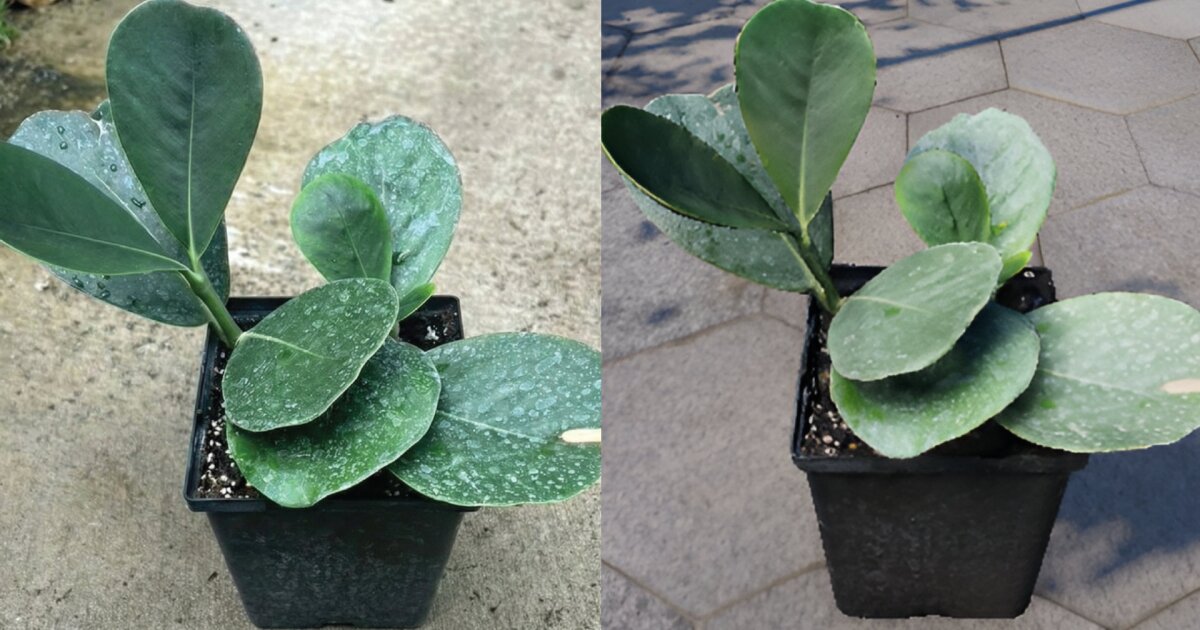
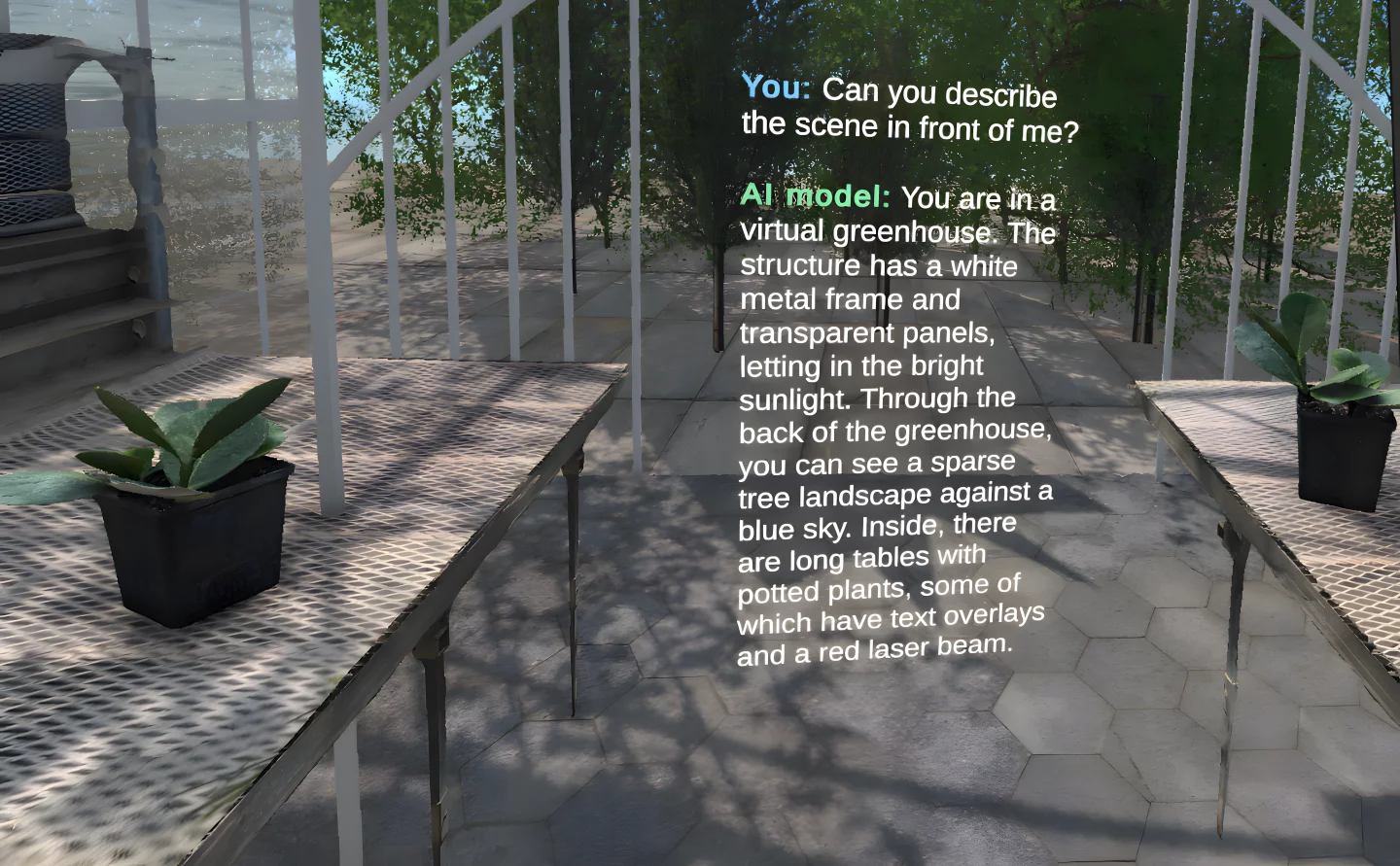
Imagine putting on a VR headset and suddenly finding yourself standing between rows of tomato plants. You can walk the aisles, crouch beside a struggling seedling, and check its soil moisture and temperature in real time. That’s the idea behind a system developed by engineers at Binghamton University, State University of New York: a digital twin, or live 3D replica synchronized with real-world sensors, that links your physical greenhouse to a virtual one you can access anywhere.
The system works by photographing each plant and placing it as a 3D object in a virtual environment. A small microcontroller installed near each plant continuously monitors soil humidity, temperature, and gas levels, feeding that data into the virtual space.
The digital twin updates continuously. If a corner of your greenhouse overheats, the virtual version reflects it almost instantly. If a plant runs dry, you’ll see it at the precise location in the virtual space.
🌱This Looks Like a Farming Sim…But The Plants Are Real #digitaltwin #vr #internetofthings
The system was built with a specific kind of user in mind. Someone for whom getting to the greenhouse isn’t easy, like older farmers, people with limited mobility, and agricultural students without access to physical labs all stand to benefit.
Sensor-based crop monitoring typically stops at 2D dashboards showing graphs, alerts, and numbers. They tell you what is happening, but not where, and not with the spatial context of actually being on site.
“Many commercial greenhouse platforms focus on sensor monitoring and automation but rely on traditional dashboards rather than immersive spatial interaction,” Anwar Elhadad, assistant professor of electrical and computer engineering at Binghamton University, State University of New York, told us via email. “Conversely, many VR agricultural systems are designed as static training environments and are not synchronized with real-time biological sensing data.” The Binghamton system sits at the intersection of both.
Mohamed Gallai
A small setup – sensor nodes, an edge gateway, and a standalone XR headset – would currently run in the low thousands of dollars. The sensing hardware is inexpensive; the real cost is in the headset and the computing power for real-time rendering. That puts it out of reach for most small producers today, but drones, solar panels, and smartphones all followed the same development curve before becoming everyday tools. Wider adoption tends to drive costs down, and there’s little reason to think this system will be any different.
The team’s roadmap includes a Digital Twin Network linking multiple greenhouses simultaneously. Embedded AI would handle genuine agronomic reasoning – identifying nutrient deficiencies, tracking disease progression, and making species-specific recommendations before visible symptoms appear. “We are also exploring multi-user collaborative XR environments where researchers, farm managers, or agronomists can simultaneously interact with the same digital twin remotely,” Elhadad adds.
The bigger leap is moving from observation to action, but the architecture was intentionally designed to support closed-loop control. “We’re exploring automated irrigation, nutrient dosing, ventilation, and lighting that can be triggered manually from the XR interface or autonomously through AI-driven policies,” reveals Elhadad.
Mohamed Gallai
If sensors detect dry soil near a specific plant cluster, the system could adjust irrigation automatically – no human command required. A greenhouse that not only shows you what’s wrong, but fixes it. That, says Elhadad, is when “the digital twin would evolve from an observational system into an active cyber–physical control platform.”
Source: Binghamton University

