


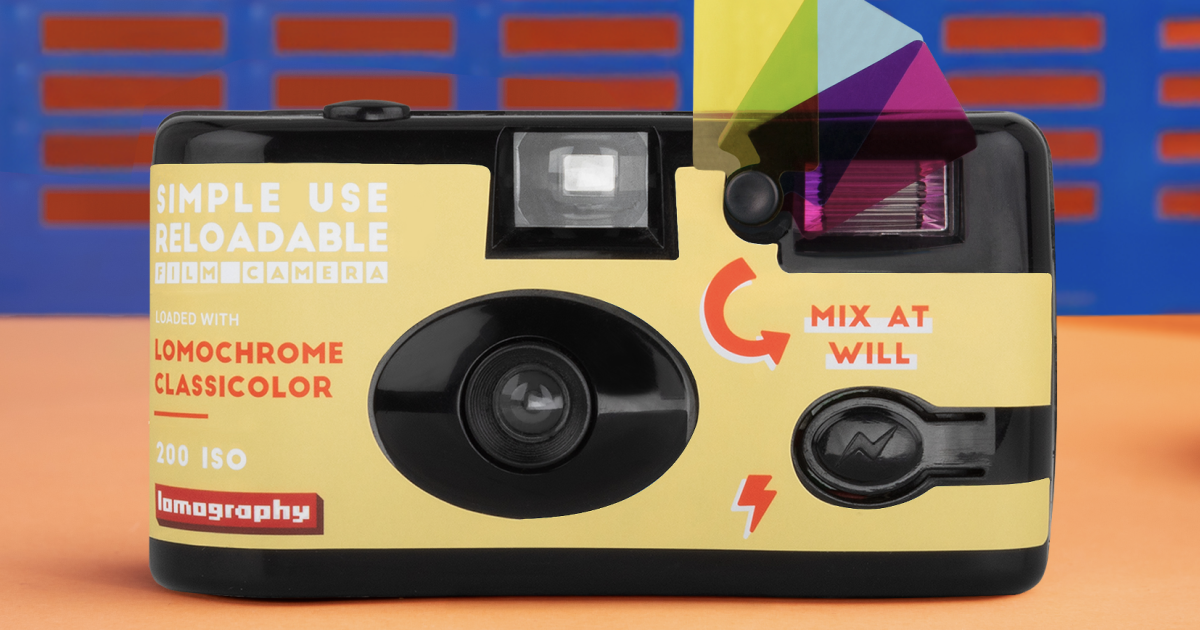
Drastically shifting from experimental film and costly hardware, Lomography is taking on the digital world of photography. Its new reloadable LomoChrome Classicolor camera – costing less than US$28 – captures images that don’t need any filters.
While I love my original “Lomo,” the camera itself wasn’t cheap or that user-friendly for novices, and developing rolls of film got more expensive over time – enough to make the switch from “experimental” but fun to reliable and digital. So while I have a large set of photos from that time, now 20 years ago, the results were hard to justify the cost, effort and expectation.
However, in 2017, the Lomography team launched its Simple Use Reloadable Film Camera – which has become a range that has steadily but deliberately moved more toward everyday use without the previous wild color filters and unpredictable (and costly) results.
Antonio Sotelo/Lomography
This new model has me a little excited to re-enter this old-school photography world as it not only comes with the more use-friendly Classicolor film loaded inside it, but it might be the most “normal” Lomography release yet. While normal sounds dull, it should be anything but – promising results that capture natural skin tones (in a good way), clean blues and greens, and dazzling pops of color, with results differing depending on light and environments. And all with the warmth of film and the “look” that Lomography has made its own, but in away that’s more accessible and affordable.
Of course, the film still leans into the quirks of analog shooting, but results will subtly change depending on light and location – for example, you can expect to capture soft and slightly glowing images in the sun, and warmer, more muted pictures in less bright environments. And the company’s Simple Use Reloadable model – which is stripped back to be an effective and affordable point-and-shoot device – can be then used with any 35-mm film you like after you finish the preloaded roll. However, the company has made the Classicolor film pretty cheap too, at around $11 a roll.

Melissa Peritore/Lomography
This week, the BBC wrote about the resurgence of film photography among everyday casual shooters, which felt lost for good once smartphones and filters came along. Even instant cameras have been part of the revival, with the most well-known makers Polaroid going from bankruptcy in 2001 to a multimillion-dollar empire today. Part of it has been reported to be generational, but it also feels like some of the change is experiencing and capturing things in a simpler and more “real” way in an increasingly digital world.
So while most LomoChrome films so far – such as Purple, Turquoise, Metropolis types – have held onto the company’s preference for experimental distorted color palettes, this new model and film strips that away while still offering stylized results that you don’t need to create in digital post-production. Classicolor is a general-purpose color-negative 35-mm film (ISO 200), ideal for daily use, portraits or capturing travel experiences.
The finer details
Film Format: 35 mm
Lens Focal Length: 31 mm
Shutter Speed: 1/120 s
Aperture: f/9
Focusing: 1 m to Infinity
Flash: Built-in flash (press & hold to charge), 15-second recharge time
Battery: 1 × AA battery (included)
Classicolor Exposures: 27
Processing: C-41

Lomography
While the days of walking into a store and getting film processed might still be over for people on a budget (and outside of large cities), there are more online “mail-in” developing companies popping up, such as The Darkroom in the US. Some offer developing and digital scans, others go with additional printing options, but prices generally range from around $10 to $15 a roll, depending on where you’re located. Which, yes, is more expensive and time-consuming than snapping 100 images on your cellphone, but cheaper than instant camera film with arguably better results.
I’m particularly interested in this new release, and hope the Taipei store has some in stock so I can put my money where my mouth is and test out the promise of both the camera and film myself.
Source: Lomography

