


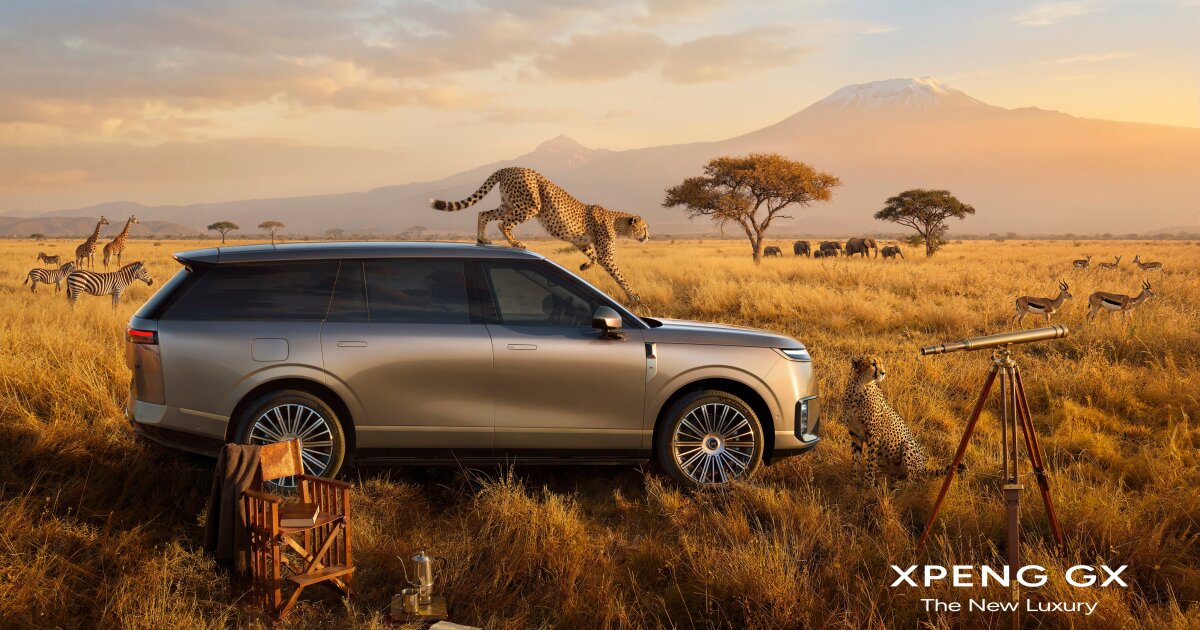
That’s not a Range Rover you’re looking at, that’s the Xpeng GX. It’s the Chinese carmaker’s first full-size crossover, packing some serious tech inside. So while it may look like another Chinese copycat, it’s actually a classic case of offering more than meets the eye.
So, what’s special about it? Outside of that Range Rover design, that is. The SUV is built on Xpeng’s new SEPA 3.0 ‘physical AI vehicle architecture.’
That means it gets features like an AI-powered chassis that automatically tailors itself to different driving conditions, L4 autonomous driving, an AR heads-up display, and, most notably, steer-by-wire, which does away with the traditional mechanical link between the wheel and the tires.
Xpeng
It’s set to be launched as both a Battery Electric Vehicle (BEV) and as an Extended Range Electric Vehicle (EREV). The entry-level rear-wheel-drive BEV comes with a single electric motor that’s rated at 362 hp and a top speed of 125 mph (200 km/h). This trim will come powered by a CALB-made LFP battery – the capacity of which is yet to be revealed.
Next, there’s the AWD trim, which sports a second 215-hp motor at the front, resulting in a total output of 577 horsepower. Energizing the electric motors on this one is a ternary NMC pack from CALB. As with the RWD trim, we don’t know the battery capacity just yet, but it’s rated at the same top speed of 125 mph (200 km/h).
Then there’s the EREV trim that comes powered by a 1.5-liter gas-powered four-cylinder turbocharger. But that turbocharger doesn’t directly drive the wheels; rather, it helps drive the two electric motors that are rated at 496 horsepower combined. A CALB-made 63.3-kWh LFP battery powers the system, offering ~200 miles (320 km) of range with the same top speed of 125 mph (200 km/h).
Interestingly, the EREV trim will reportedly make use of Xpeng’s new ‘Kunpeng Super Electric System,’ which is expected to deliver a total range of more than 621 miles (1,000 km). If that indeed turns out to be the case, we might just be saying goodbye to range anxiety.
Xpeng
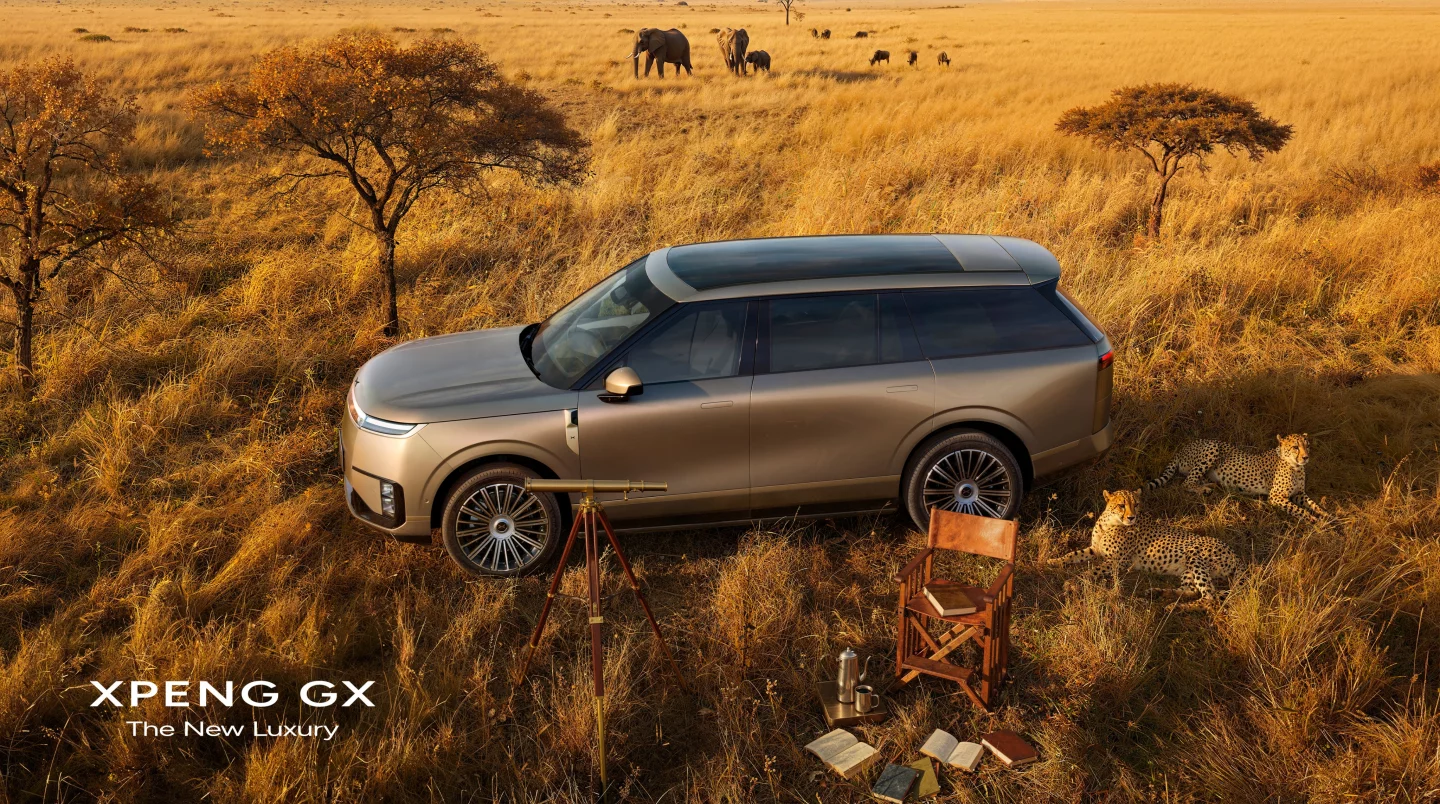
Coming to the design, you’ll spot an active air intake port in the front alongside retractable door handles. There’s also what appears to be a floating roof, but that’s more or less an illusion caused by the blackened pillars. It comes with a 2+2+2 layout, a split tailgate, and a curb weight that lies between 5,930 lb (2,690 kg) and 6,371 lb (2,890 kg) depending on the trim.
Xpeng’s research found several prevailing issues with existing three-row SUVs, reportedly “having no room left for luggage” when all passengers are seated, and they can often “feel bulky and difficult to drive.” The company calls it the ‘impossible triangle’ of comfort, space, and handling, and that’s what the GX essentially tries to deliver – for both, “daily city commuting and long family trips.”
The SUV has a wheelbase of 122.6 inches (3,115 mm), rolling on either 21 or 22-inch wheels depending on the trim. It has an overhang of 38.5 in (980 mm) in the front and 46 in (1,170 mm) in the back, with the approach/departure angles reaching 18 and 20 degrees, respectively.

MIIT
Xpeng previously stated that the SUV’s processing chops will be powered by four Turing AI chips with a total computing power surpassing 3,000 TOPS (Trillion Operations Per Second). It could technically pass as a supercomputer if it had to!
Once launched, it will be positioned above the G9, which has a starting price of 248,800 yuan (US$35,840). That would mean it will become Xpeng’s most expensive model, likely priced between 400,000 and 500,000 yuan ($57,600 to $72,000). As such, it will take on the likes of Li Auto L9, Aito M9, Zeekr 9X, and Denza N9 in China.
Even if Xpeng’s GX doesn’t mechanically borrow from the Range Rover, the visual cues are there for all to see – from the slanted A/B pillars and floating roof effect to a split tailgate like what you’d see on the British original.

Xpeng
It’ll definitely make enthusiasts chuckle, and purists twitch: pastiche or homage? But if one could manage to look past the Range Rover exterior, the GX definitely makes a case for a global launch in my eyes.
Source: Xpeng via CarNewsChina

