


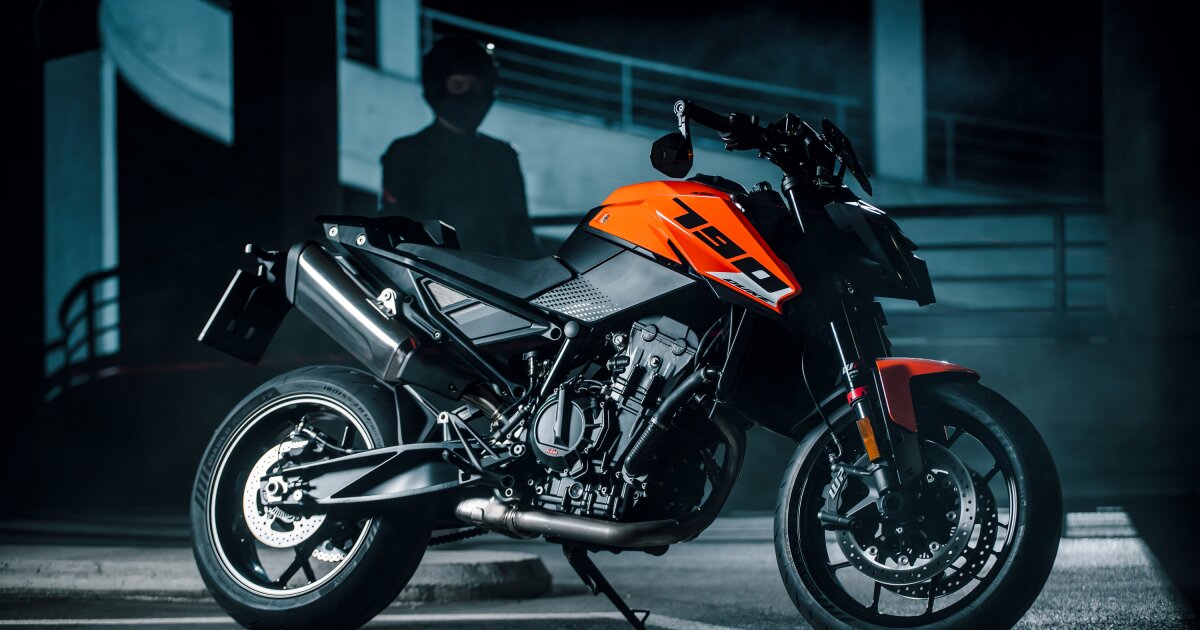
Naked motorcycles are probably the most fun road-going motorcycles money can buy. And when you’re talking about nakeds, KTM’s Dukes are up there with some of the best in the world. Of that entire Duke lineup, it’s the 790 that has fascinated me the most, offering the sweet spot of just enough power to be a serious everyday motorcycle, while remaining incredibly nimble.
It also happens to have the most turbulent timeline in KTM’s ranks. First introduced in 2017, it was later completely replaced by the 890 Duke in 2021. It made a surprise comeback in 2023 based on the 799cc LC8c parallel-twin platform, largely remaining unchanged – until now.
The 2027 model year features some of the most influential upgrades KTM’s middleweight naked has ever seen. While the signature chromium-molybdenum tubular steel frame is retained, there’s a completely new cast-aluminum subframe that incorporates the airbox and side air intakes.
KTM also re-engineered the rider triangle. Redesigned rider and passenger footpegs are paired with a new handlebar featuring a broader, more open angle, resulting in a much more natural, connected riding position.
KTM
Even more significantly, the WP APEX suspension components have received a major overhaul. The 43-mm inverted open-cartridge front fork now features 5-position clickers for both compression damping (left) and rebound damping (right). At the rear, the gas-assisted monoshock gets manual preload adjustment and a 5-click rebound adjuster alongside increased wheel travel. A WP steering damper still comes standard.
Moving down, the stopping hardware is completely new. Marking a major push toward vertical integration, KTM introduces its in-house developed WP braking system (calipers, master cylinders, and braided lines), though the dual 300-mm front discs and 240-mm rear disc continue to be sourced from Galfer. In addition, the rear brake lever has been repositioned to be more accessible than before.
Powering the motorcycle is the same trusty 799cc LC8c parallel-twin powerplant. It produces 105 hp at 9,500 rpm for the majority of the world, but there’s a 95-hp configuration for Europe to meet A2 license compliance regulations. Torque remains punchy at 64 lb-ft (87 Nm).

KTM
While outright power numbers remain identical, the exhaust system has been entirely redesigned. The outer muffler cover has been removed in favor of a sleek, rolled design that hides ugly weld seams on the lower inside. This exhaust tweak, alongside the new subframe and cut-back bodywork, contributes to an impressive 4.4 lb (2 kg) total weight reduction.
For those looking to customize, KTM PowerParts offers a clean anodized aluminum silencer bracket or a sporty titanium Akrapovič slip-on silencer.
Visually, the 790 Duke takes obvious cues from its bigger siblings, the 990 Duke and 1390 Super Duke R Evo. It features a radically restyled fuel tank with flatter sides for better knee grip, a larger front fairing, and a striking new “floating” LED headlight unit.
The electronic suite gets a user-experience boost with a new 5-inch bonded-glass TFT dashboard utilizing fewer menus and clean infographics. Standard features include three ride modes (Sport, Street, and Rain), Supermoto ABS, lean-sensitive cornering ABS, and traction control. Optional extras include cruise control, motor slip regulation (MSR), track mode, and a quickshifter. Best of all? KTM has officially done away with its controversial “Demo Mode,” meaning no more software paywalls after your first 1,500 km (932 miles).

Dubbed “The Scalpel,” the 2027 KTM 790 Duke will hit dealerships globally starting at the end of July 2026. It will retail for US$9,799 and come in KTM’s iconic orange or stealthy black.
The original 790 Duke earned its reputation by being one of the sharpest tools in the shed. It didn’t overwhelm riders with brute force; it won them over with precision. The 2027 update doesn’t try to rewrite that formula. Instead, KTM has gone back and polished almost every touchpoint, but what’s particularly interesting is that KTM has resisted the temptation to chase a bigger engine or a headline-grabbing horsepower figure. The 799cc parallel twin remains largely unchanged, because why fix something that isn’t broken?

KTM
So, KTM hasn’t forged a new blade, it’s just honed the one it already had.
Source: KTM

