


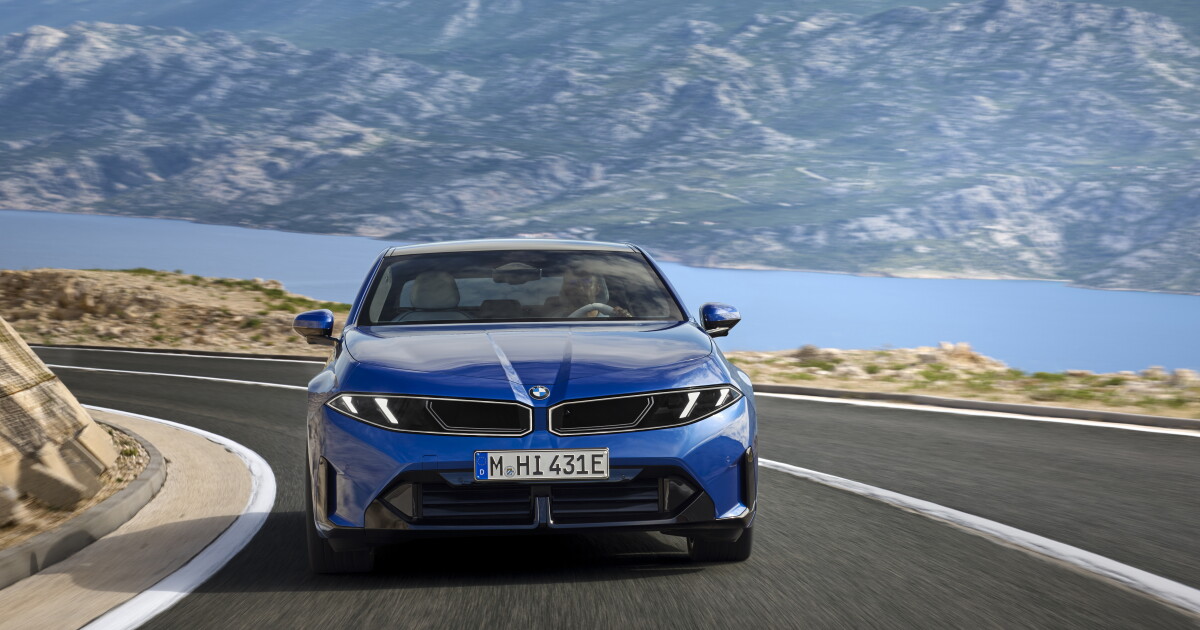
It takes some serious guts to go out and change just about everything on your best-selling car. The eighth generation of the 3 Series is here, and BMW has done just that.
Almost 50 years since the first-ever 3 Series was revealed at the Frankfurt Motor Show, we now have the shiny new model that’s unlike any of its predecessors. Of course, you’ve got the Neue Klasse body to thank for that, but there’s much more beneath the surface.
First and foremost, we’re specifically talking about the gasoline-only models here – the 330, 330 xDrive, and M350 xDrive. We already covered the basics of the electric i3 earlier in the year. We now know the i3 50 xDrive model carries a suggested retail price of US$61,500, and that series production began in Munich in August. An i3 M60 xDrive variant will join the family from next year too.
The 330 and xDrive variant both run a turbocharged 2.0-liter four-cylinder engine that makes 255 hp and 295 lb.ft (400 Nm) of torque. Power is transmitted via an eight-speed Steptronic automatic transmission for both rear-wheel-drive (RWD) and all-wheel-drive (AWD) models. Both vehicles are limited to a top speed of 155 mph (241 km/h) when wearing sport tires.
BMW
It’s the new M350 model, which replaces the existing M340i, that gets a different engine range. The 3.0-liter inline-six now produces 437 hp and 428 lb.ft (580 Nm) of torque. Not only is that a more than 50-horsepower increase over the M340i, but it’s also more power than all M3 models save the present one.
A new turbocharger, new intake ports, revamped combustion chambers, and changes to camshaft timing all contribute to the power increase. The result is a 3.9-second sprint to reach 60 mph (96.5 km/h) compared to 5.9 seconds for the 330 and 330 xDrive trims. However, the same electronically limited 155-mph top speed is in play.
Despite coming as just AWD, the M350’s Drift Moment function, which decouples the front axle, will enable drivers to participate in rear-drive tailout shenanigans.
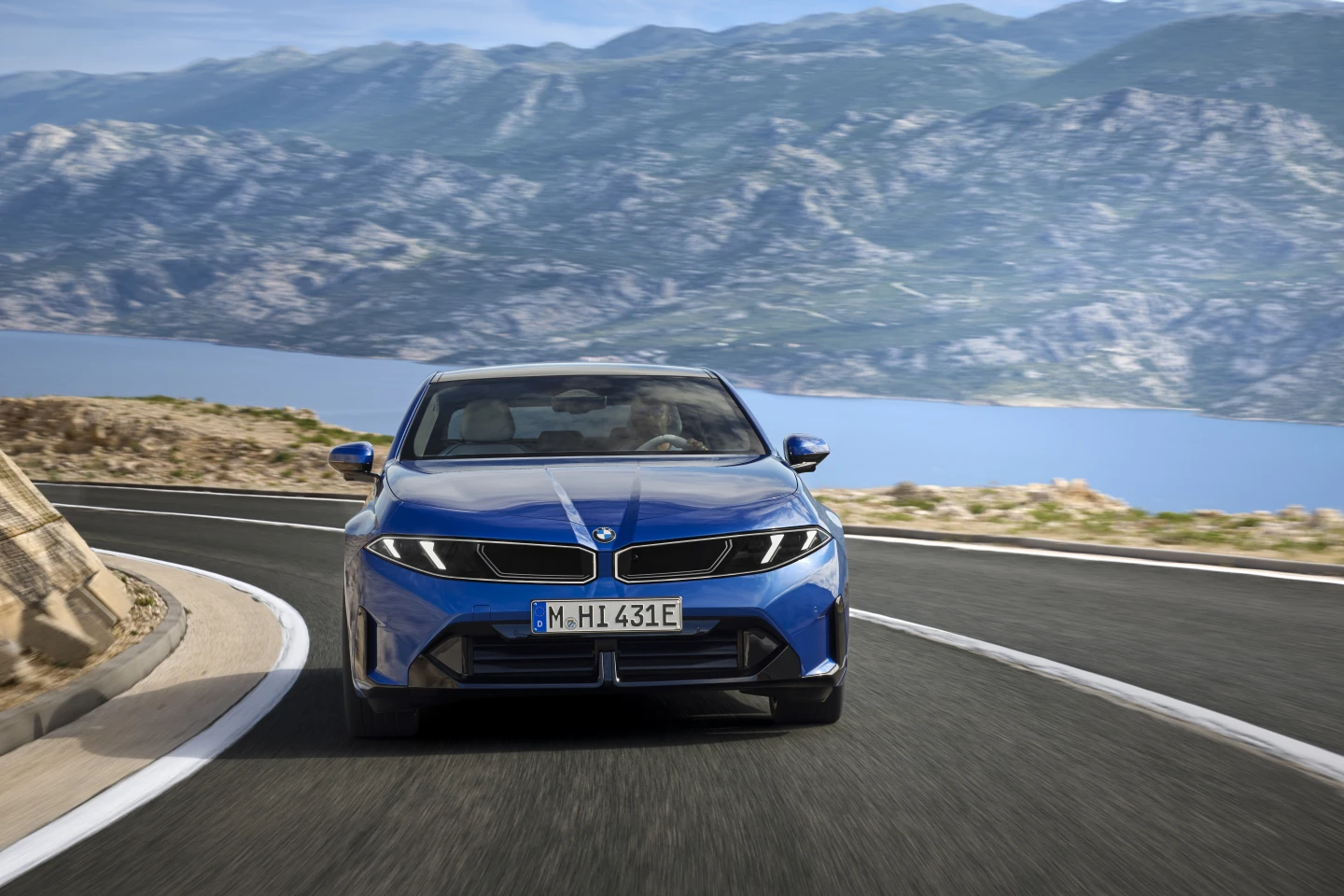
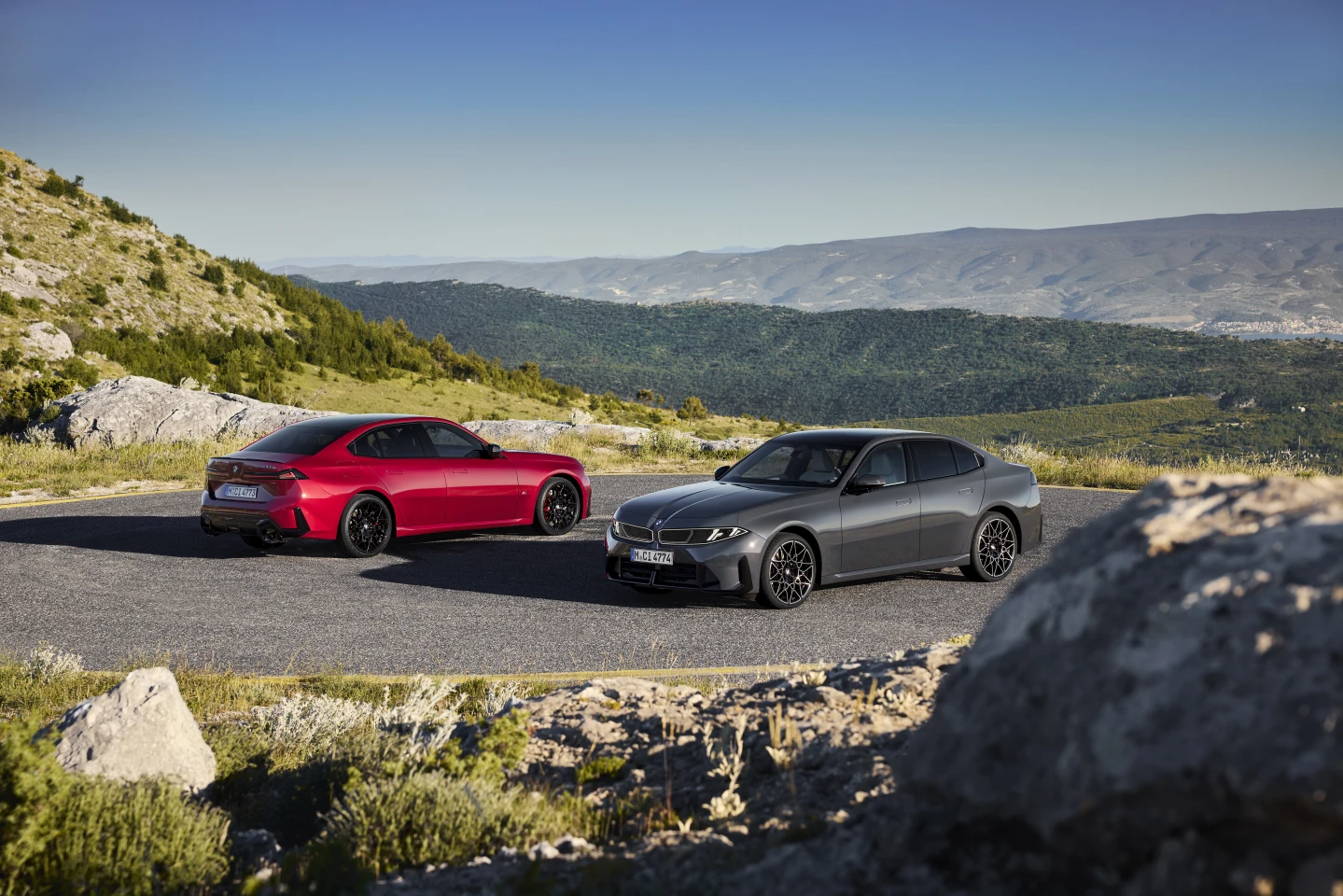
Away from the engine itself, perhaps the biggest update on the new 3 Series is its styling. As with the new i3, the 3 Series follows with the updated Neue Klasse body with the narrow kidney grilles and optional yellow M lights in the headlight fixture.
There will be some who don’t like how the new 3 Series significantly deviates from BMW’s recent design philosophy, and I can see why. But it’s certainly not the ugliest Neue Klasse BMW out there.
BMW
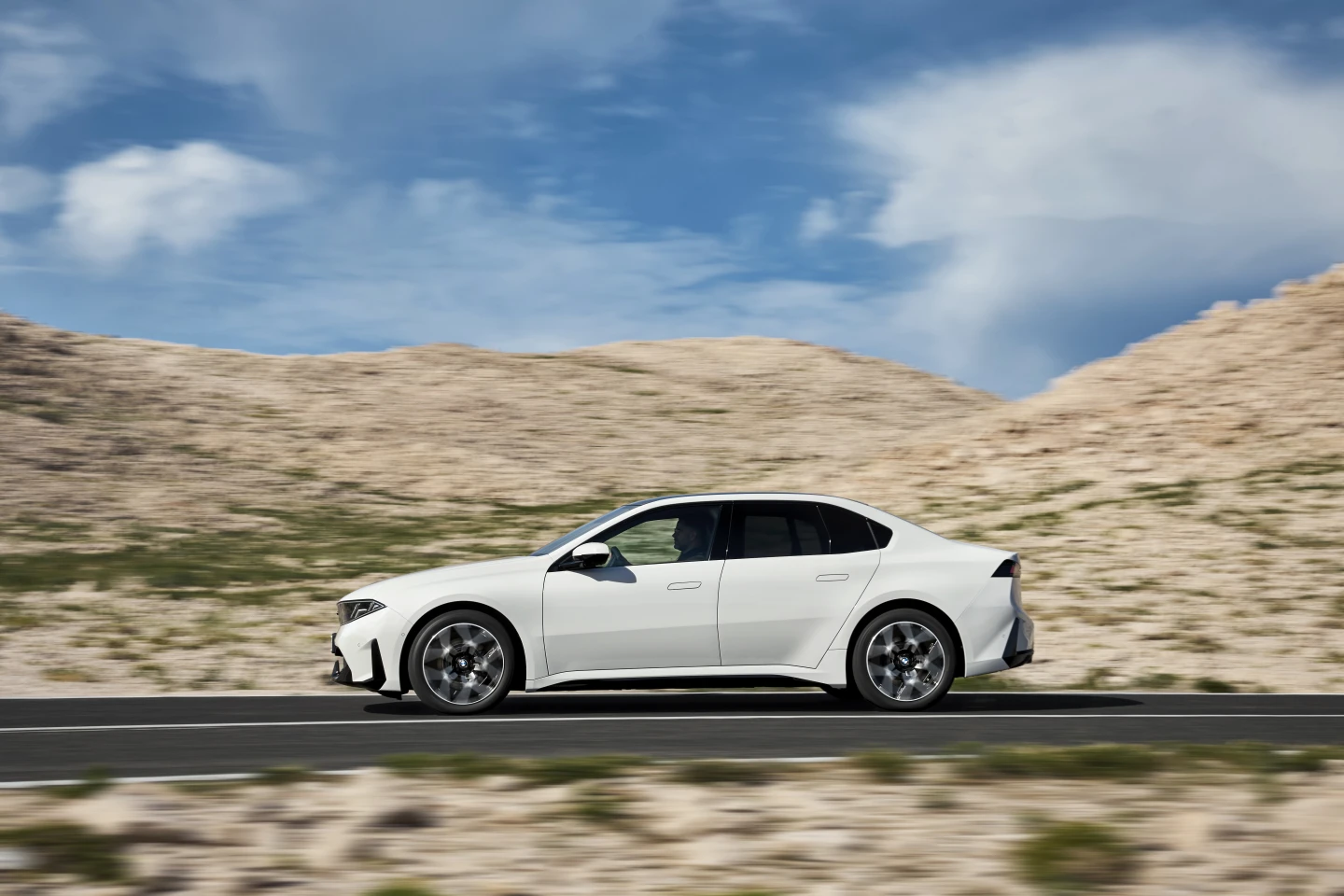
The 3 Series’ rear is almost identical to that of the i3, partly because all Neue Klasse cars have the same taillight design. Up front, you’ll see a similar shark-nose front-end as well. The sedan features short overhangs and a streamlined side profile, which does get accentuated by the flat door handles. You also get the standard 19-inch or optional 20-inch rims around the car.
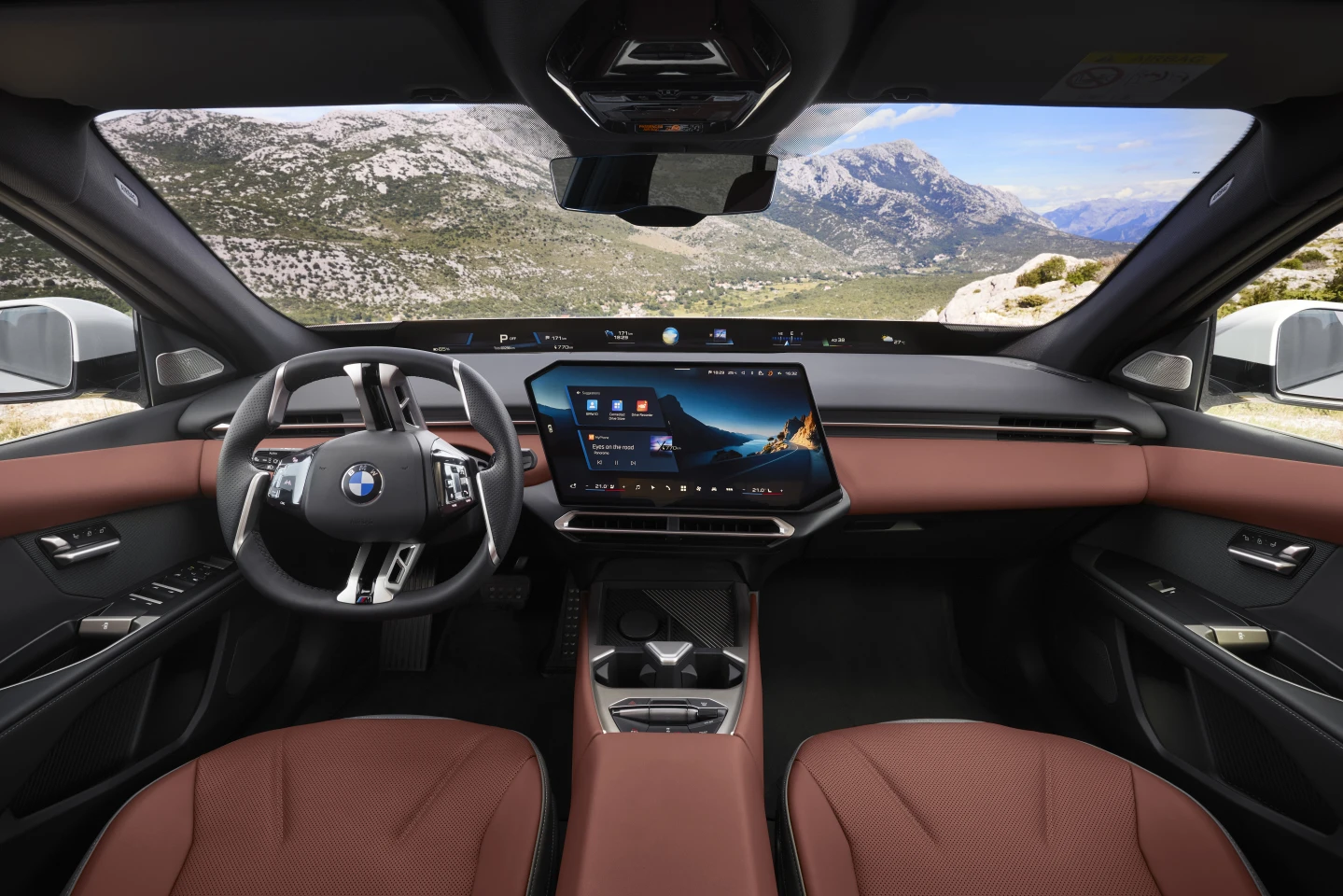
The interior, meanwhile, receives a major rejig. Sadly, most physical buttons are dead, with the only survivors being a button for hazard lights, one for the gear selector, and the ones on the doors.
You use the enormous 17.9-inch center display for everything from climate controls to drive mode settings. Even air vent placement can be toggled from that screen. It also incorporates a TiVo-powered video app, allowing passengers to stream TV shows and movies when the car is stationary.
Stretching across the base of the windshield, the panoramic iDrive display projects information onto a black band that runs from one A-pillar to the other. Positioned directly within the driver’s line of sight, the display is split into several sections. The left-hand portion is dedicated to essential information such as speed, odometer readings, engine revs, fuel level, and driver-assistance functions, while the remaining sections can be customized to show things like music, weather updates, or even artwork from BMW’s famous Art Car collection.
BMW
The redesigned steering wheel takes a similarly futuristic approach, replacing conventional buttons with larger touch-sensitive controls that provide haptic feedback when activated. Even those controls are designed to stay out of sight until they’re needed, lighting up only when their respective functions are available. The M Performance versions get their own sportier steering wheel, complete with dedicated toggles for activating M Mode and the Boost function.
BMW has also revised its suite of driver-assistance systems. Adaptive cruise control, speed-limit assist, lane-keeping assistance and steering assistance are all standard on the new 3 Series.
As with the new X5, tapping the brakes while using adaptive cruise control no longer switches the system off completely. Instead, the car adjusts the cruise-control speed to the lower speed you’ve requested.
The lane-keeping system is also designed to be less intrusive. If you move across a lane without indicating, the car can use its eye-tracking and steering-angle sensors to determine whether the maneuver appears deliberate rather than immediately trying to bring you back in line.
BMW
For enthusiasts, the headline feature is the “Drift Moment.” On the M 350 xDrive, the system can reduce drive to the front wheels to make controlled sideways action easier. It’s the first M Performance model to get the tech, although buyers will have to wait for it. It won’t be available at launch and is instead scheduled to arrive through an over-the-air software update sometime in 2027.
For all the talk of tech on offer, the new 3 Series still seems to understand the one thing that matters: this is supposed to be a BMW you actually want to drive. The Neue Klasse makeover brings it firmly into the digital age, but BMW hasn’t thrown out the old recipe just yet. There are still engines up front, power going to the wheels, a quicker steering rack and, rather wonderfully, a button somewhere in the software that basically says, “Go on then, make it drift sideways.”
In an era when the modern car is increasingly becoming a very expensive smartphone on wheels, that’s a reassuringly mischievous thing for the 3 Series to remain, and that is: a driver’s car.
BMW
The 2027 BMW 3 Series will launch in early 2027, with pricing starting at US$49,900 for the base 330 model, climbing to $51,900 for the xDrive trim, and $65,900 for the M350 xDrive.
Source: BMW

