


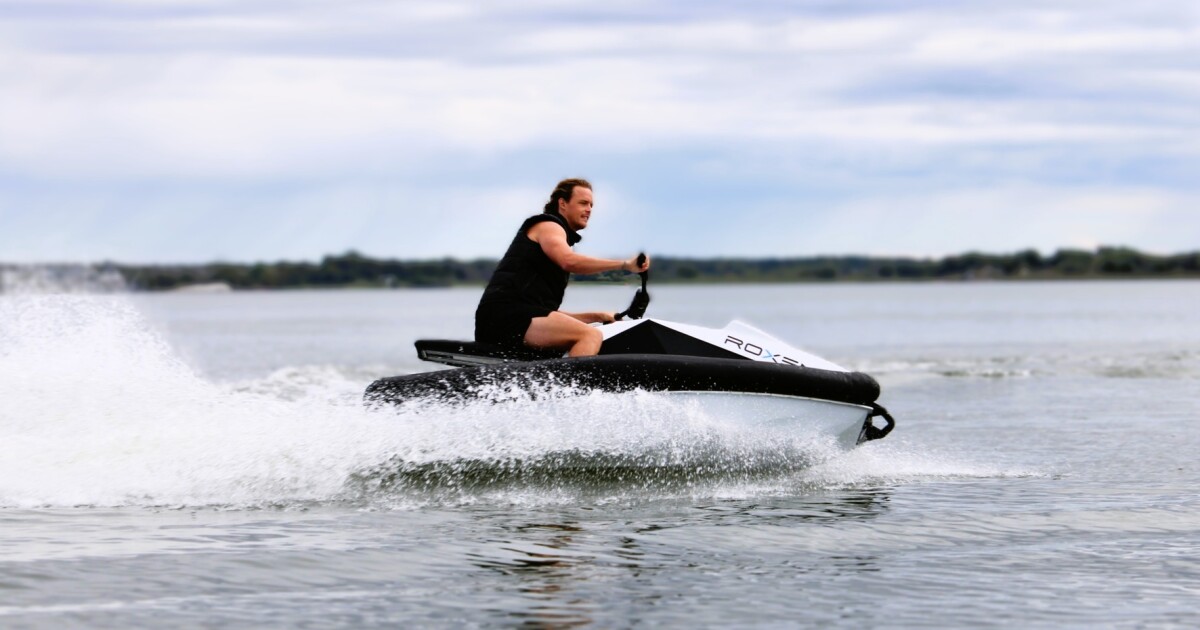
Roxen Innovations, a Swedish company focused on sustainable water vehicles, has announced its Roxen electric personal watercraft (PWC). It’s designed to be quiet, lightweight, and environmentally friendly without compromising performance.
After several years of design, engineering, and testing, Roxen Innovations has announced its production plan: manufacturing will start in April 2026 and initially be limited to 200 units to ensure quality, before increasing production volume. Forty units have already been pre-sold.
Owning a traditional PWC comes with ongoing costs such as fuel, servicing, and maintenance. Electric alternatives have fewer moving parts and eliminate fuel-related expenses, including oil changes, spark plugs, and exhaust system maintenance.
Roxen
Roxen Innovations analyzed fuel and electricity prices in Europe and reported that, as of June 2025, a traditional petrol-powered watercraft burns about 15 liters of fuel per hour, which costs roughly €23 (US$27). In comparison, operating the electric Roxen for an hour costs about €1.8 ($2.10) in electricity – about one-fifteenth as much. If you ride your PWC somewhat regularly during summer weekends, this difference could become quite significant.
Besides sustainability and lower operating costs, weight reduction was one of the main priorities for the creators. Traditional PWCs can weigh several hundred kilograms, while the Roxen weighs 57 kg (126 lb) without the battery and about 93 kg (205 lb) with the battery installed. The lower weight allows for easier handling on land and increased agility on the water.
The watercraft uses a swappable 5.25-kWh battery pack that weighs around 33 kg (73 lb). Charging takes between two and three hours using a standard 230V outlet. Depending on water conditions and riding speed, the craft offers an average runtime of 60 to 90 minutes, or a range of up to 20 nautical miles (about 30 km or 19 miles). An additional battery pack can be purchased separately, so you can just swap the batteries and continue the ride instead of waiting for the battery to recharge.
Roxen
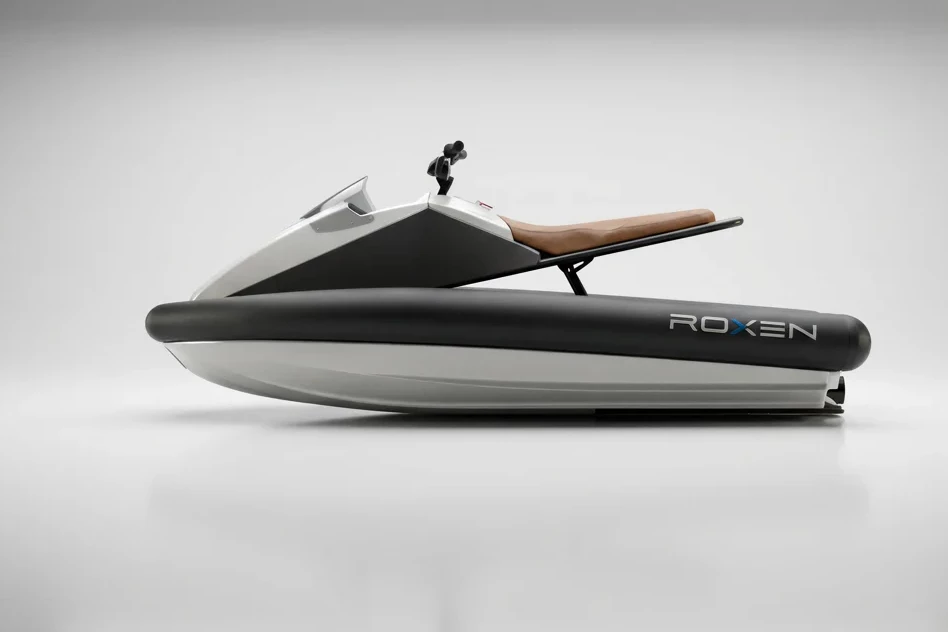
The battery is positioned low in the hull to improve the center of gravity and increase stability on the water. The craft also features an inflatable “bumper” for extra stability and safety. The hull is made of ABS, a material known for its durability, shock resistance, light weight, and relatively easy repairability.
The Roxen measures 2.49 x 1.25 x 1 meters (8.2 x 4.1 x 3.3 ft) in riding mode, and 2.49 x 1.15 x 0.65 meters (8.2 x 3.8 x 2.1 ft) in transport mode. The craft is compact and lightweight, so it’s possible to transport even on the roof of a vehicle instead of a bulky, expensive trailer.
It’s driven by a 22-kW electric motor with jet propulsion, which basically pushes the vehicle forward by expelling water at high speed instead of using an external propeller. The PWC can reach a maximum speed of about 30 knots (approximately 55 km/h or 34 mph), while cruising speeds range between 15 and 20 knots. The creators promise instant acceleration, as well as responsive and smooth handling.

Roxen
The craft features several connectivity options. Built-in 4G and LTE allow users to send emergency signals if necessary. The system also includes GPS with geofencing capability and over-the-air software updates. A mobile app allows users to check on battery status, adjust personalized settings, and perform remote diagnostics.
According to the company, the final version still may vary slightly from the current specifications.
Maintenance for the Roxen is expected to be easier than for traditional PWCs. The electric motor eliminates the need for oil changes and fuel system servicing, which removes nearly half of maintenance tasks. The vehicle is built using marine-grade materials suitable for both saltwater and freshwater use. The creators recommend following standard battery care guidelines, rinsing the craft after saltwater rides, and performing regular motor checkups – that’s pretty much it for maintenance.
The estimated price for the Roxen is €17,900 (about US$21,200), which is close to the price of premium petrol-powered PWC models. The craft comes with a two-year warranty and requires a mandatory check-up after the first 12 months.
ROXEN 2024 Demo Web
Source: Roxen

