


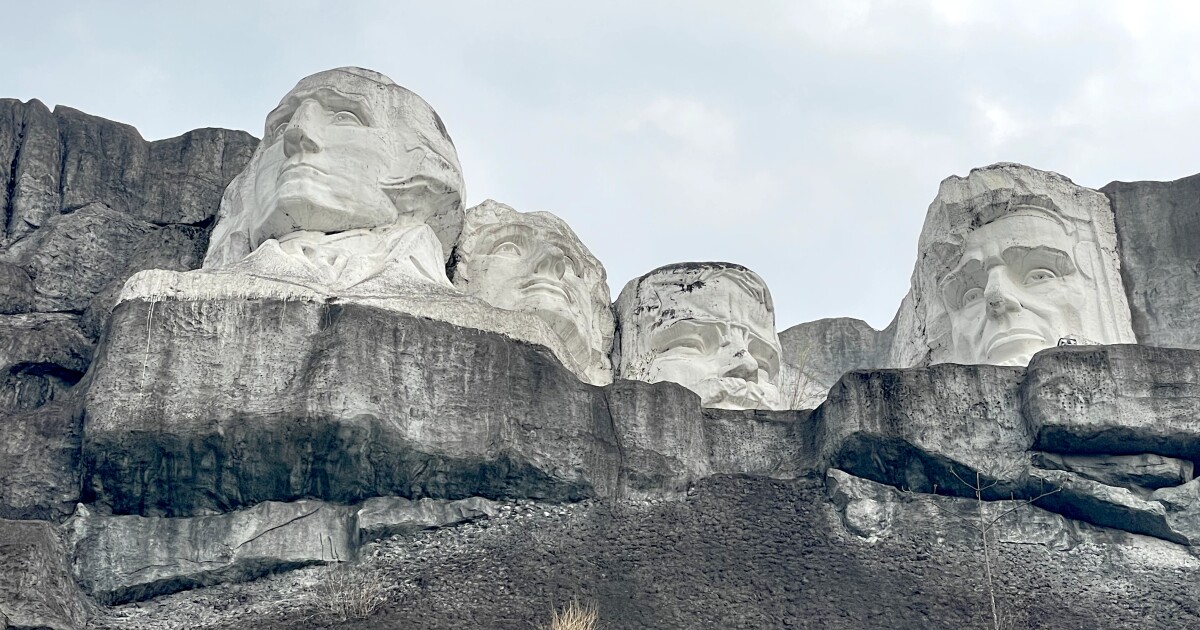
Mount Rushmore may have its home in South Dakota, but it’s also in Shenzhen, China. Here, the four presidents stare out over a section of a 118-acre (48-hectare) theme park, where iconic structures from across the world sit alongside each other, frozen in time as a rapidly growing tech metropolis rises around it.
In less than 50 years, Shenzhen has gone from a rural fishing village to an expansive picture of modernity – a dense patchwork of skyscrapers, modern apartment towers, incredibly bold world-class architecture for public use, futuristic libraries and luxury designer malls. If you have recent tech products in your home, chances are it – or parts of it – may have ties to this southern Chinese city, or at least its province (Guangdong). It’s a key hub of robotics, AI and smart tech, and now also home to more than 50,000 millionaires. It’s a little overwhelming at first; if you manage to avoid getting hit by one of the thousands of food-delivery workers riding scooters on sidewalks with seemingly careless abandon day and night, you’ll most likely be reminded of them 24-7, thanks to the incessant background “music” of moped and car horns.
In 2025, Shenzhen’s population was nearing 18 million, almost double that of 2010. But amid the city’s incredible progress – autonomous taxis, solar-powered phone-charging stations at bus stops, delivery drones dropping off McDonald’s orders by Talent Park waterfront – there’s a massive theme park in the buzzing tech-centric Nanshan district that feels out of place with everything rising up around it. The park, Window of the World, opened in 1994 with a clear mission: to allow China’s residents to travel the globe in a few hours without crossing more than provincial borders. Sure, at a glance the park looks dated and easy to dismiss as a quirky oddity. And it is odd. But it’s also been the only way for millions of people to have been – and still be – able to tour “the world.”
China began connecting to the rest of the world in the late-1970s following Deng Xiaoping’s landmark “open-door” reforms, but international travel remained a financial dream for many, so why not bring the world to China instead? And in just shy of three years, Window of the World opened its gates. It still attracts more than three million visitors a year.
Window of the World/New Atlas
The day I visited, I was still recovering from an asthma attack that landed me in the “resuscitation” ER of a nearby public hospital (side note: medical care is accessible, affordable and, in such a large city, very, very good, even as a foreigner). Then, as soon as I bought a ticket for 220 RMB (about US$32) – the lovely clerk making sure I didn’t want to come back after 7.30 pm for the night session when entry is 100 RMB (about US$15) – a huge storm rolled in. But I figured the 354-ft (108-m) metal Eiffel Tower looming over nearly all of the 130 structures inside the park would be a lightning strike’s first choice, and a bit of rain might cut through the Shenzhen humidity.
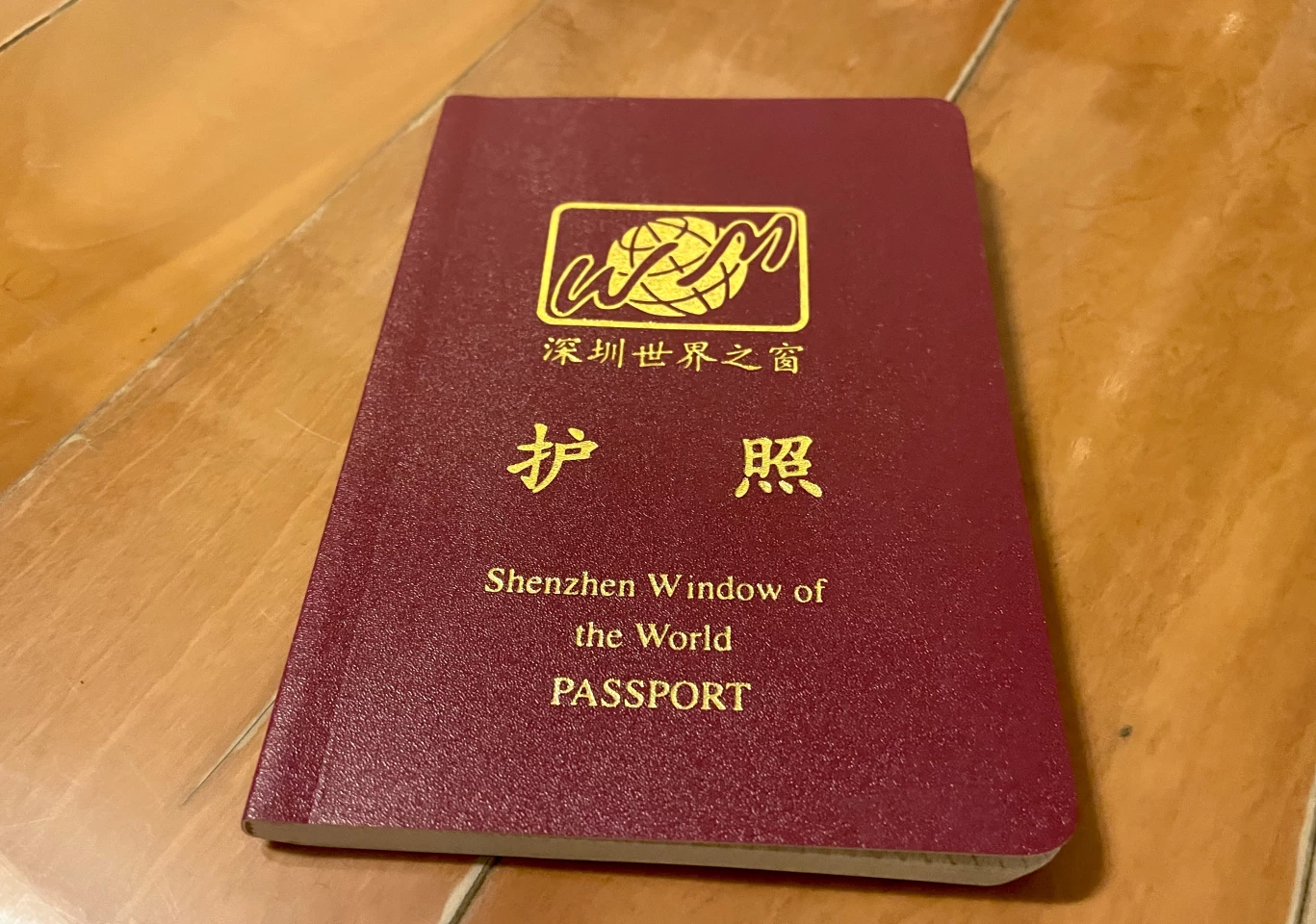
While the poor weather didn’t lift, my mood did when, soon after consulting the map for the best route, I saw a table lined up with stamps. Here, visitors can buy a “passport” for about $10 and mark every “country” in the park with its stamp on its dedicated page. I’ve become a stamp-seeking fiend, thanks to every train station and many attractions in Taiwan having unique markings to collect. And I still have my souvenir stamped passport from Brisbane’s Expo 88, the only other time I’ve had the chance to see the world in a day.
Here, you collect all 43 stamps when you get your passport, instead of finding them around the park. Sure, it took the “treasure hunt” out of the process, but on this day, I was thankful for the efficiency (many guides suggest you need up to six hours to see everything). Continent and country statistics are in English and Chinese, and while it hasn’t been updated for a few years (it lists Australia’s population as just shy of 24 million, a benchmark it hit in February 2016), each section has a QR code linking to digital data.
Plus, it’s best not to get too hung up on fact-checking a fake passport for a theme park in which modern and ancient sites sit side by side and relative scale doesn’t exist.
Window of the World/New Atlas
As the storm worsened – a sure sign that the city’s wet summer is on its way – I skipped Japan and Korea near the start of the recommended route (mostly because they were down a hill that I’d have to walk up again) and then a few more. In my defense, I’ve spent most of the last three months traveling “The Area of Asia” as it’s described on the map, though I am a little sad that in my haste I missed the large snowcapped peak of Mount Fuji.
The work put into these reconstructions varies like their scale, but most are pretty impressive. There’s not a whole lot of information at each site, but you can, once again, scan QR codes for more.
On that topic, daily life in China is QR codes and apps, so while you can easily get cash out at major bank ATMs using international cards, you won’t be able to order an autonomous taxi – or any taxi, for that matter – with paper or plastic. In Shenzhen, you can travel on the excellent underground Metro (深圳地铁) network using cash, where single trips mostly cost 2-4 RMB (30-60 cents), as well as spend it in supermarkets, convenience stores and plenty of restaurants, but the city has well and truly moved beyond these payment systems. And I learnt the hard way. So if you are planning a China visit, make sure to get a physical SIM card and data plan at your port of entry, which comes with a local phone number that’ll help in setting up crucial apps like Alipay or WeChat Pay for most transactions, Meituan for food delivery, Didi for ride shares and Amap for navigation.
Speaking of navigation, the Window of the World map is excellent, and while I took a few detours off the main path, I didn’t get lost despite the park’s size. So, onto North America – which was pretty much just the US, apart from Horseshoe Falls. The waterfall itself was surprisingly large and powerful, with its spray spotting cellphone screens as tourists hurried to take selfies in front of it, despite its fair distance from the pond’s fence line.
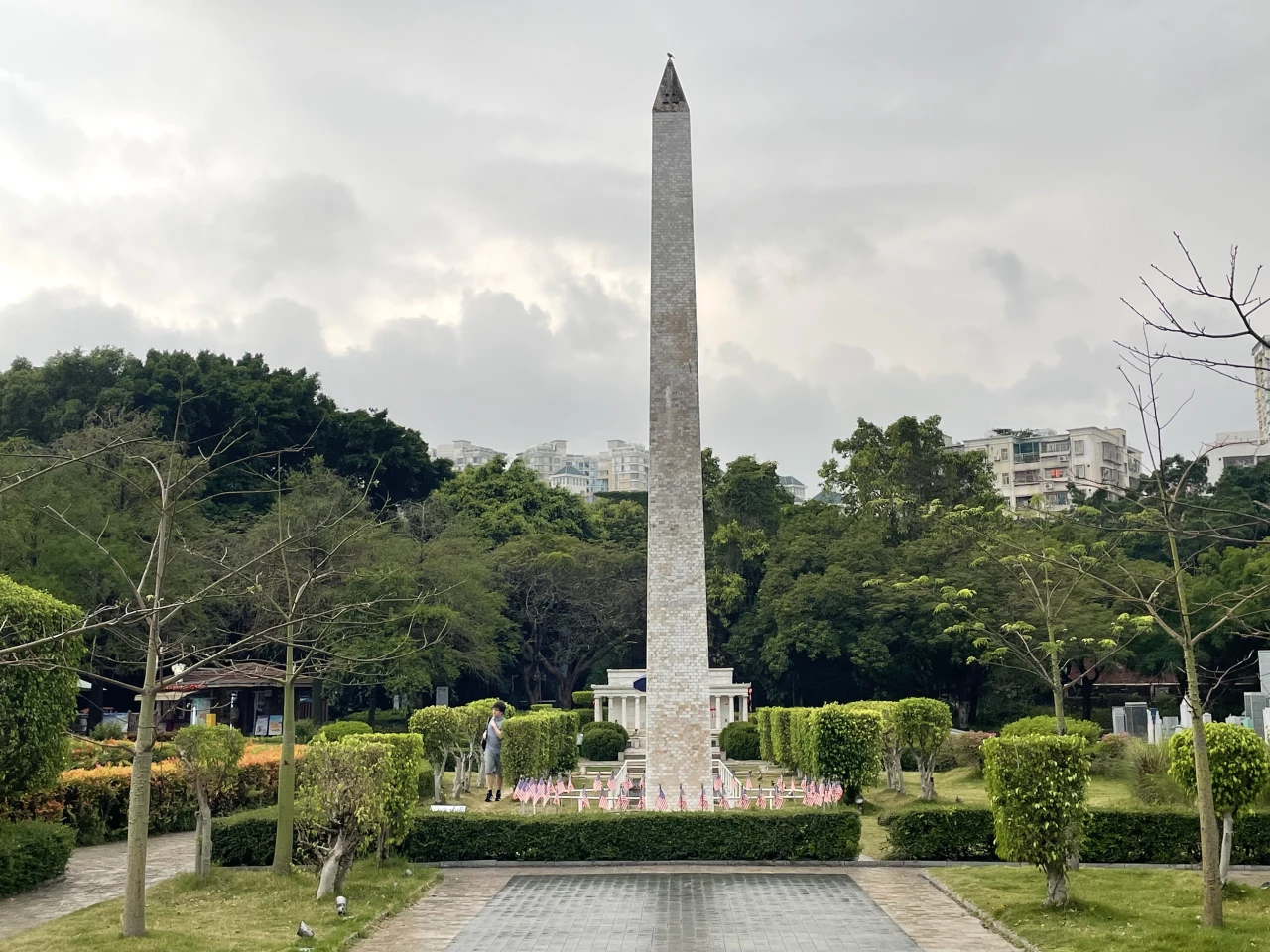
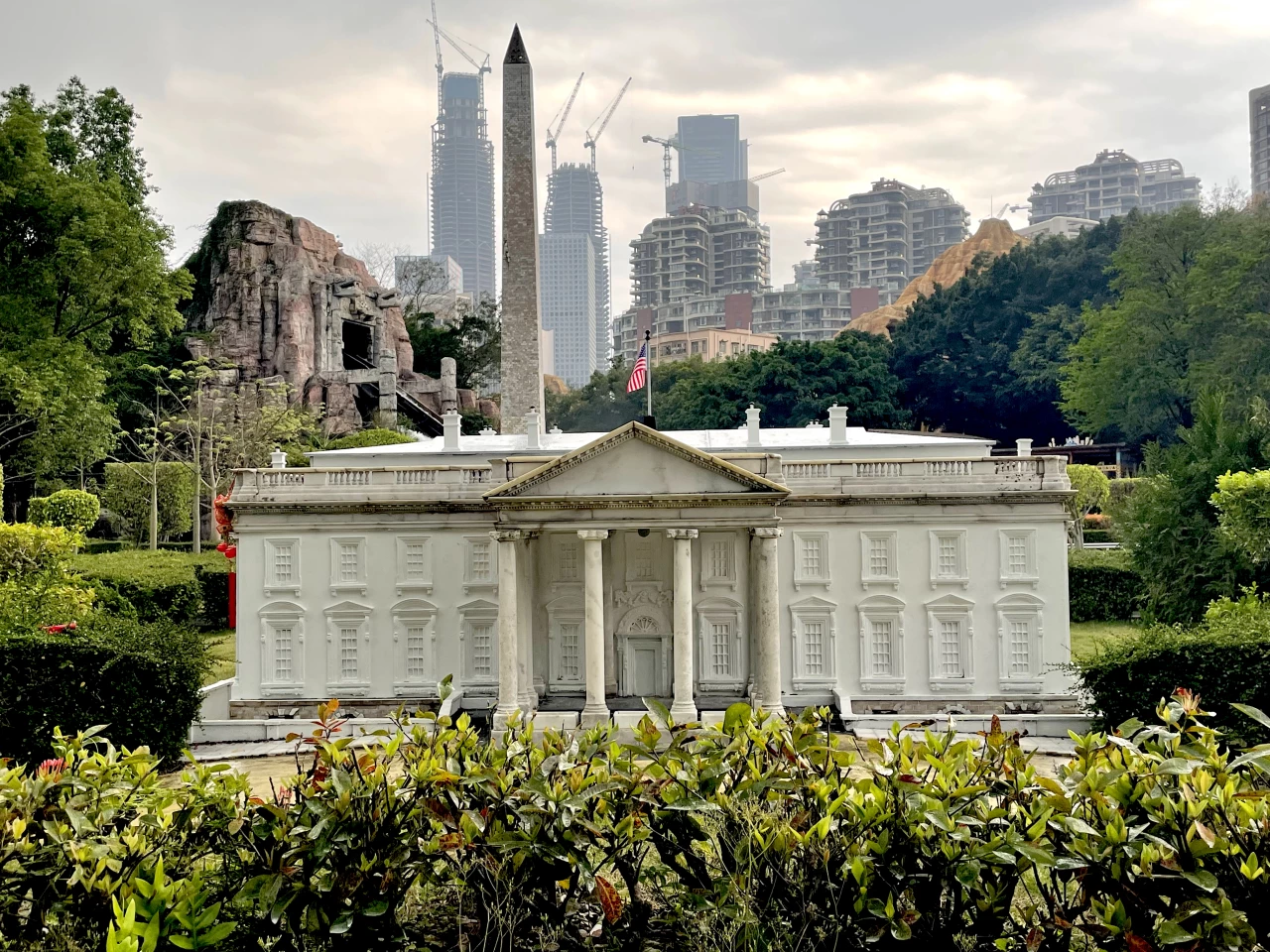
Then, around the bend, I landed in Washington, DC, with some of its famous sites dotted around neat hedges and green lawns – all watched over by a towering Mount Rushmore, which is definitely not in DC. As to accuracy, we’ll let you be the judge. The Washington Monument, surrounded by a circle of small US flags, also made its presence felt (as did the bright red Lunar New Year decorations hanging like Christmas baubles from the white buildings).
Window of the World/New Atlas
Window of the World/New Atlas
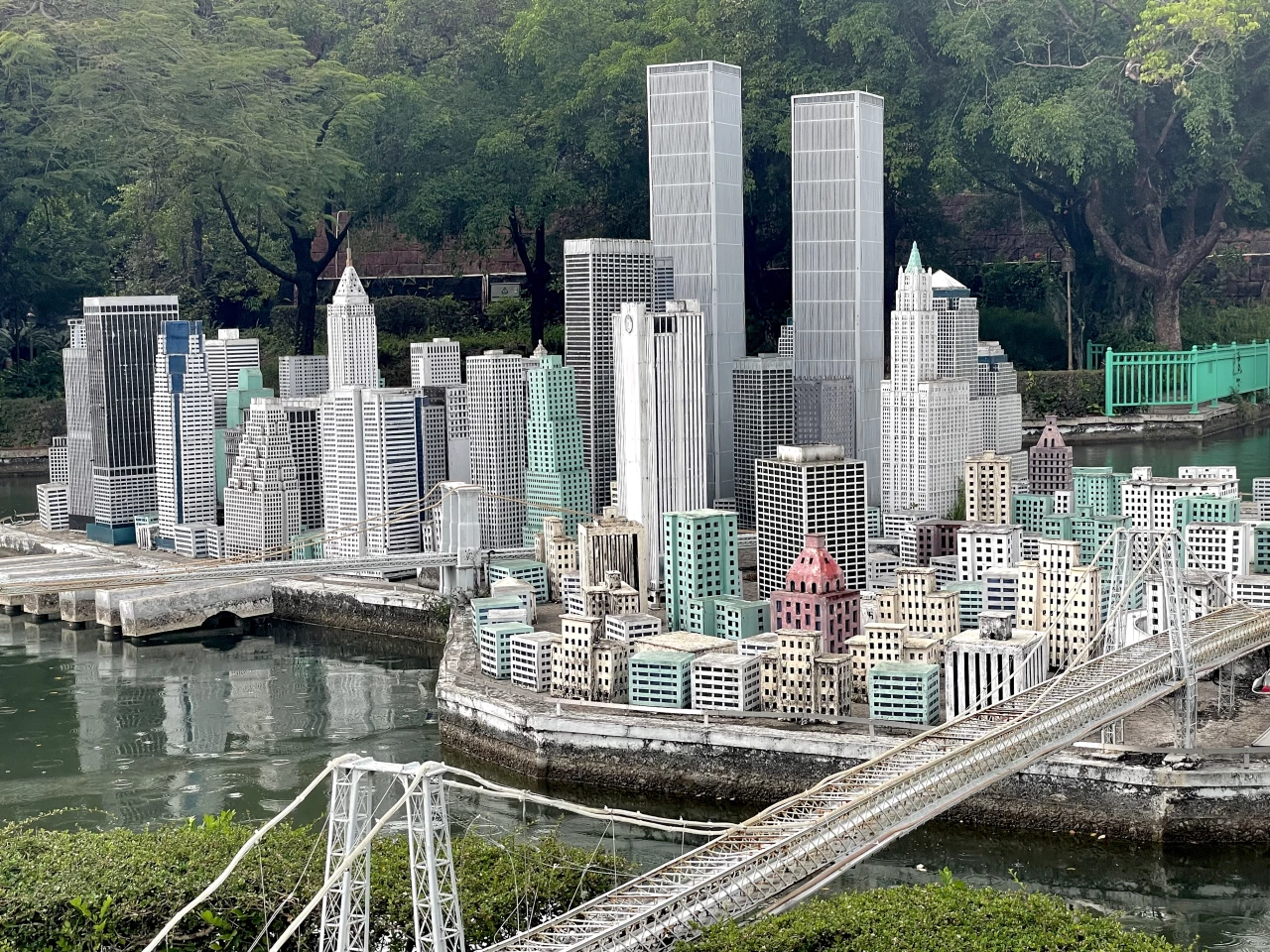
Alongside DC’s formal garden stretched a sprawling New York City, frozen in time. But it also made me think that when the park’s construction began in 1991, the Manhattan skyline would have been aspirational for a city still in its very early stages of development. And while it’s easy to poke fun, there was something that felt carefully considered, especially in its bridges. Fast-forward 35 years, and now China is leading the way when it comes to such engineering feats.
Window of the World/New Atlas
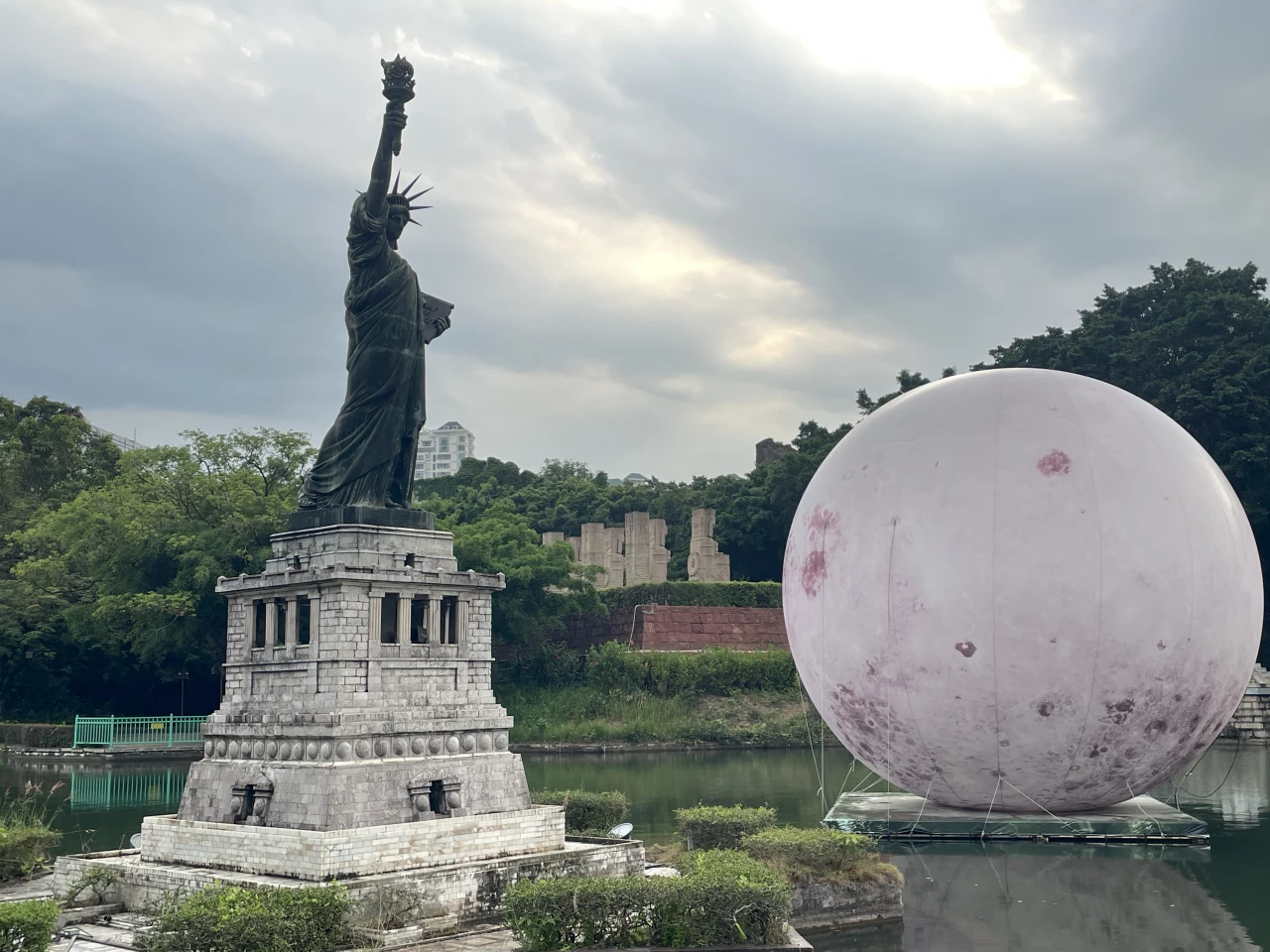
Lady Liberty was also present, slightly dwarfed and obscured by a moon-like sphere (which I imagine would be one of the light features you’d see during the park’s evening session).
Window of the World/New Atlas
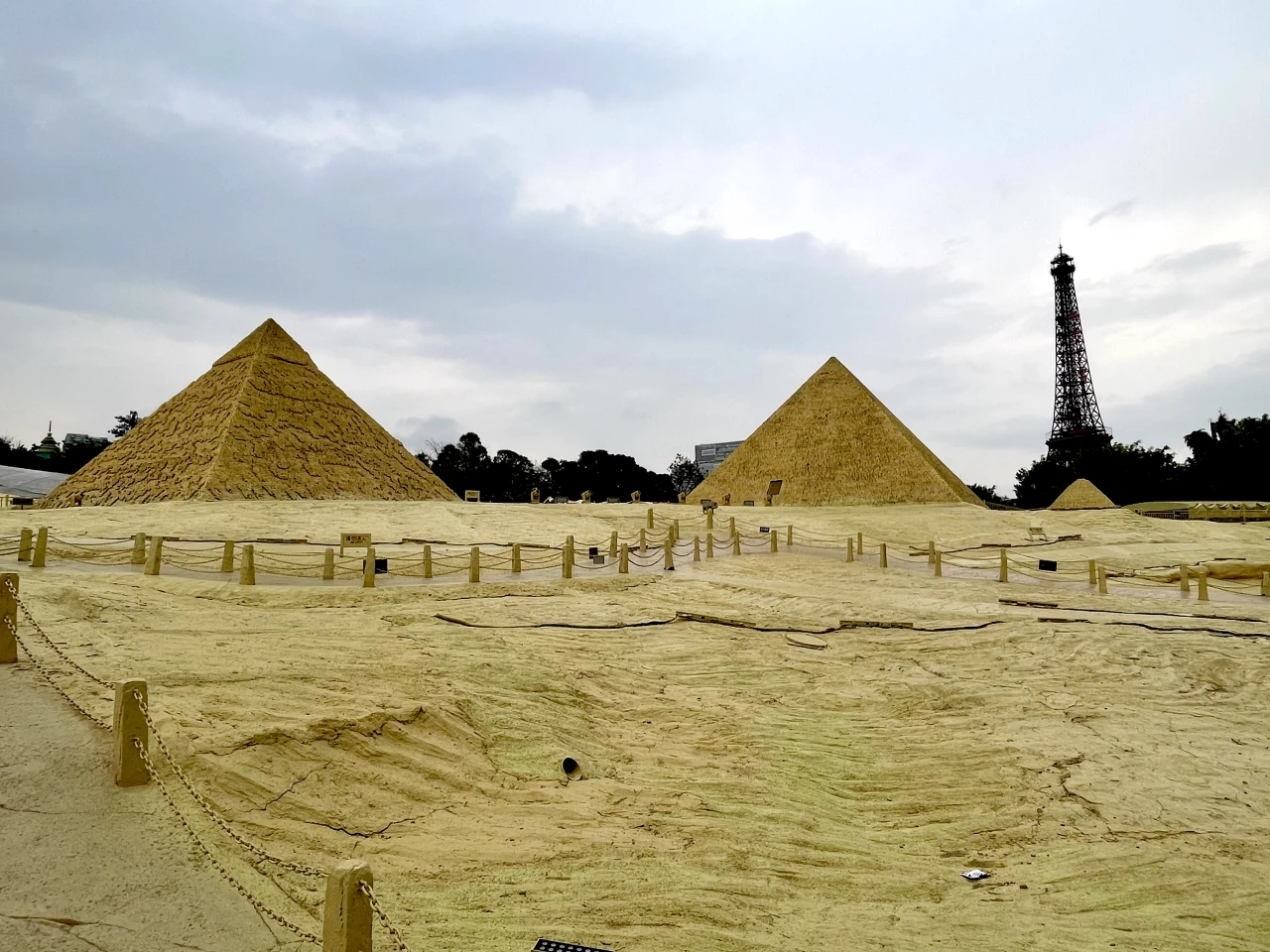
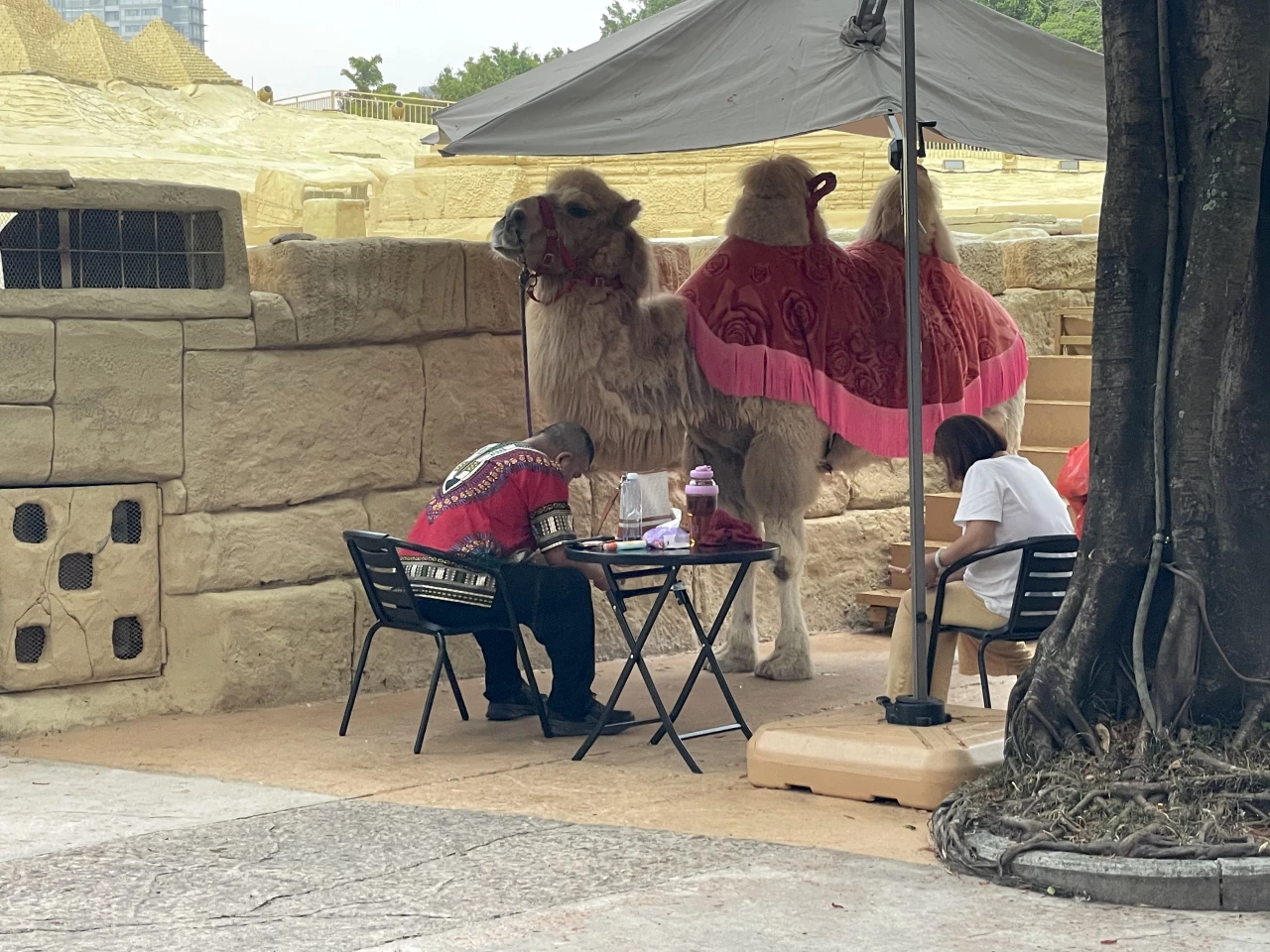
I was honestly impressed by the scale and ambition of some of the builds – the pyramids rose from a solid, sand-colored mound that obscured much of the towering city beyond, and traipsing around the path felt a world away from the “outside” real world. There was also a dapper two-humped camel that visitors could ride along said path, but I wasn’t feeling adventurous and a second storm had just arrived so I thought I’d spare us both.
Window of the World/New Atlas
Window of the World/New Atlas
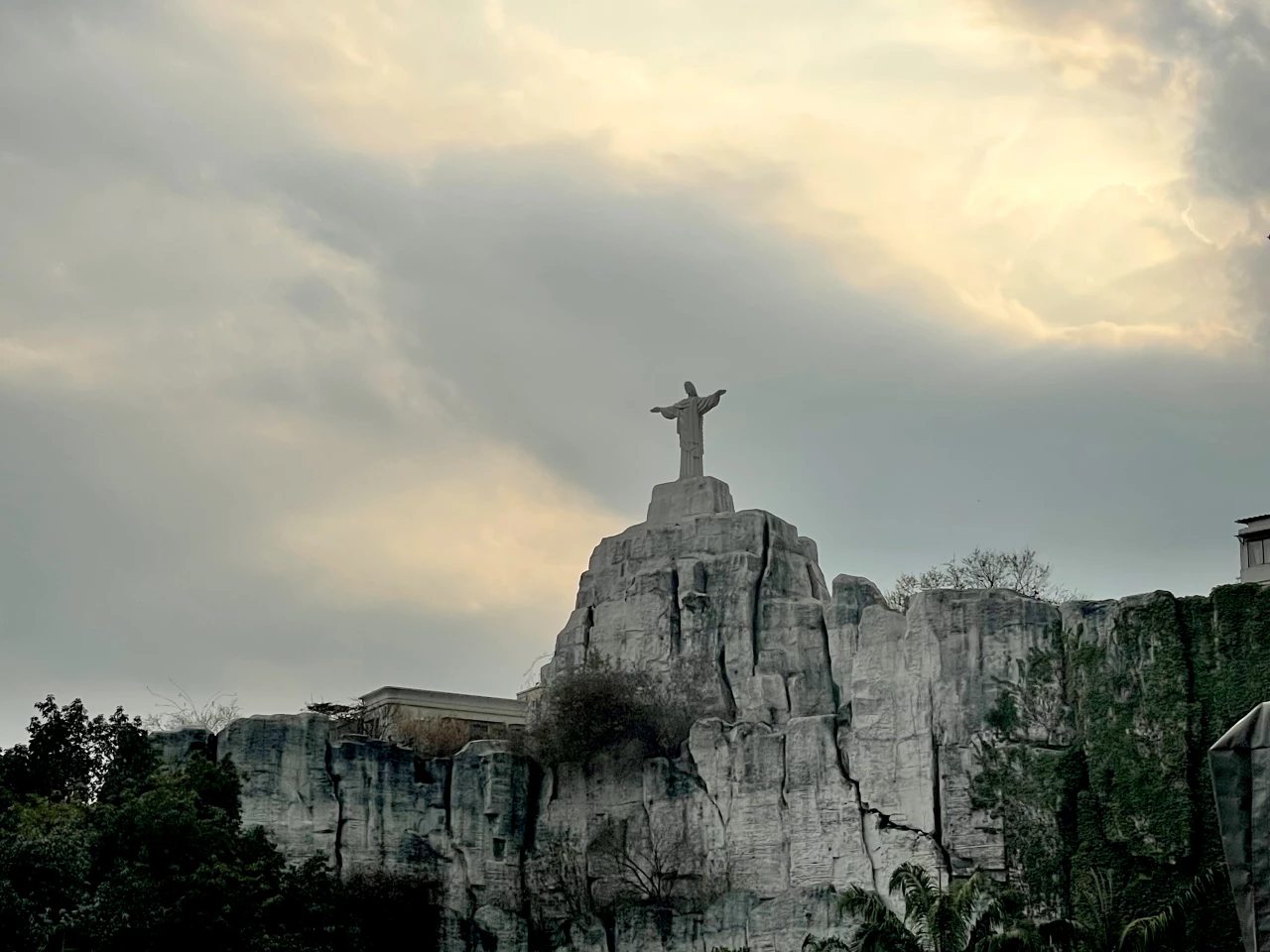
Brazil’s Cristo Redentor was an impressive site on top of a seriously large Mount Corcovado cliff face, which dwarfed Mount Rushmore once you looked up and noticed it. The Fontaine de l’Observatoire in France was grand, framed by an even more impressive Arc de Triomphe behind it. But you can see much more in our gallery here.
Window of the World/New Atlas
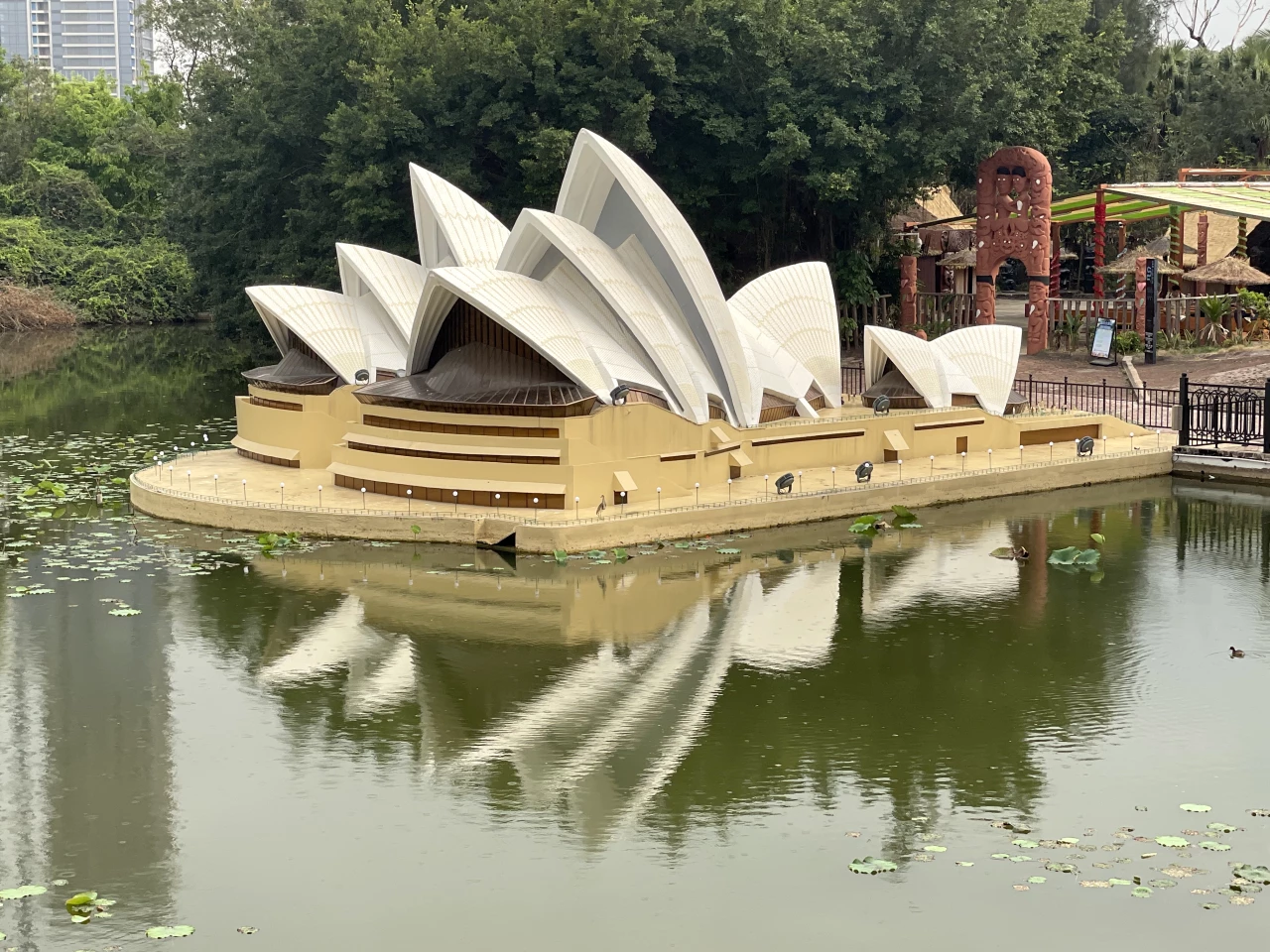
In Oceania, aka Sydney, Australia and New Zealand – the latter being more of a mash-up of Polynesia including Hawaii – there were some decent accuracies. The Sydney Harbour Bridge was positioned next to the Opera House, much like you’d see it crossing by car or train, and signs warning visitors to not climb Uluru were accidentally 25 years ahead of their time. And the traditional Māori Marae (meeting place) was almost to scale, with some nice woodwork – for the most part (I’ve saved the jump-scare for the gallery).
Speaking of odd, one of the strangest sites was also in this area. However, I will premise this with the fact that during my US travels I have been met with many “ideas” about Australian life – all animals want to kill you, Steve Irwin is the Prime Minister, kangaroos can be ridden like horses but also want to fight everyone, and deadly snakes and spiders live in our toilets.
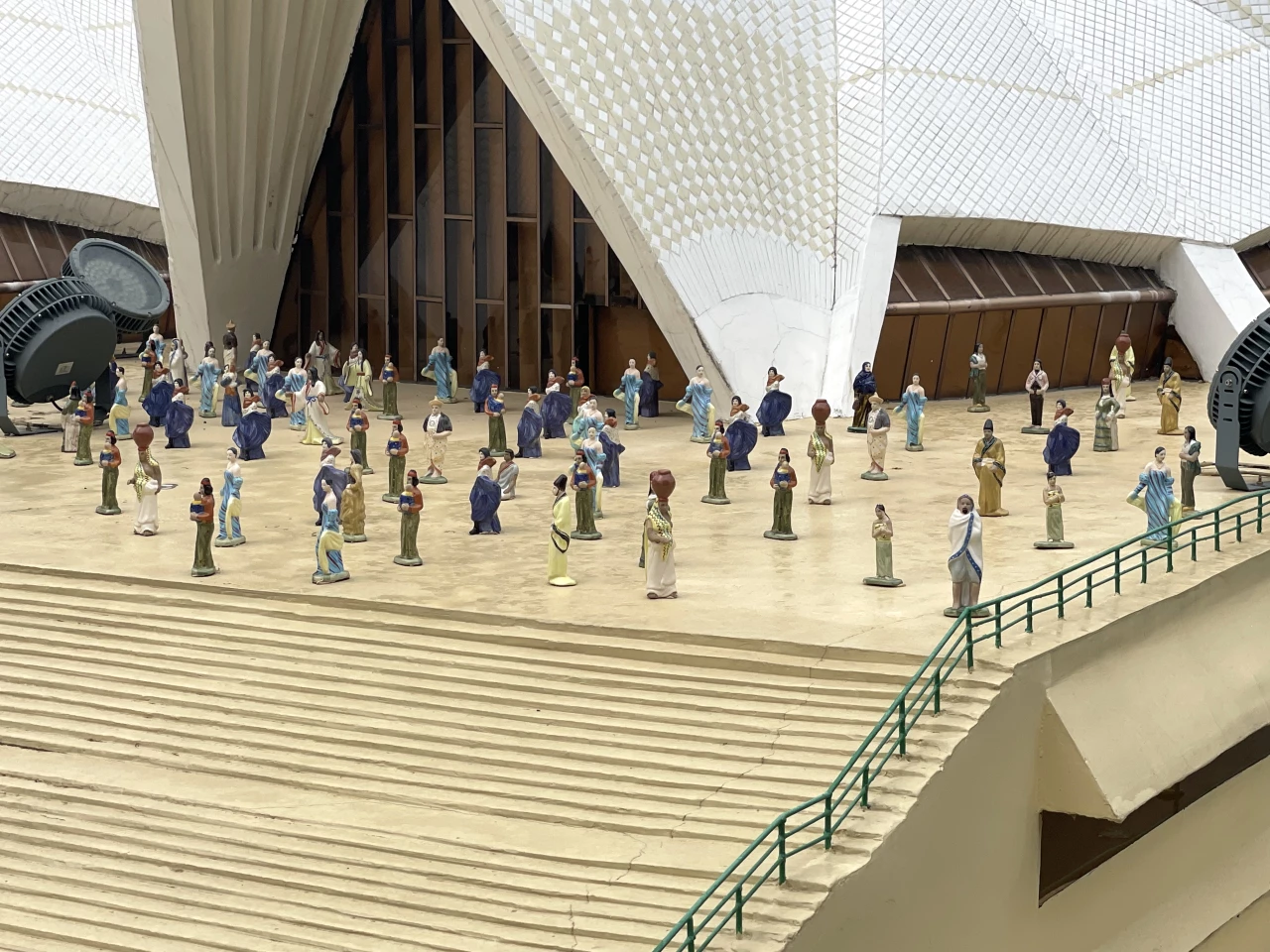
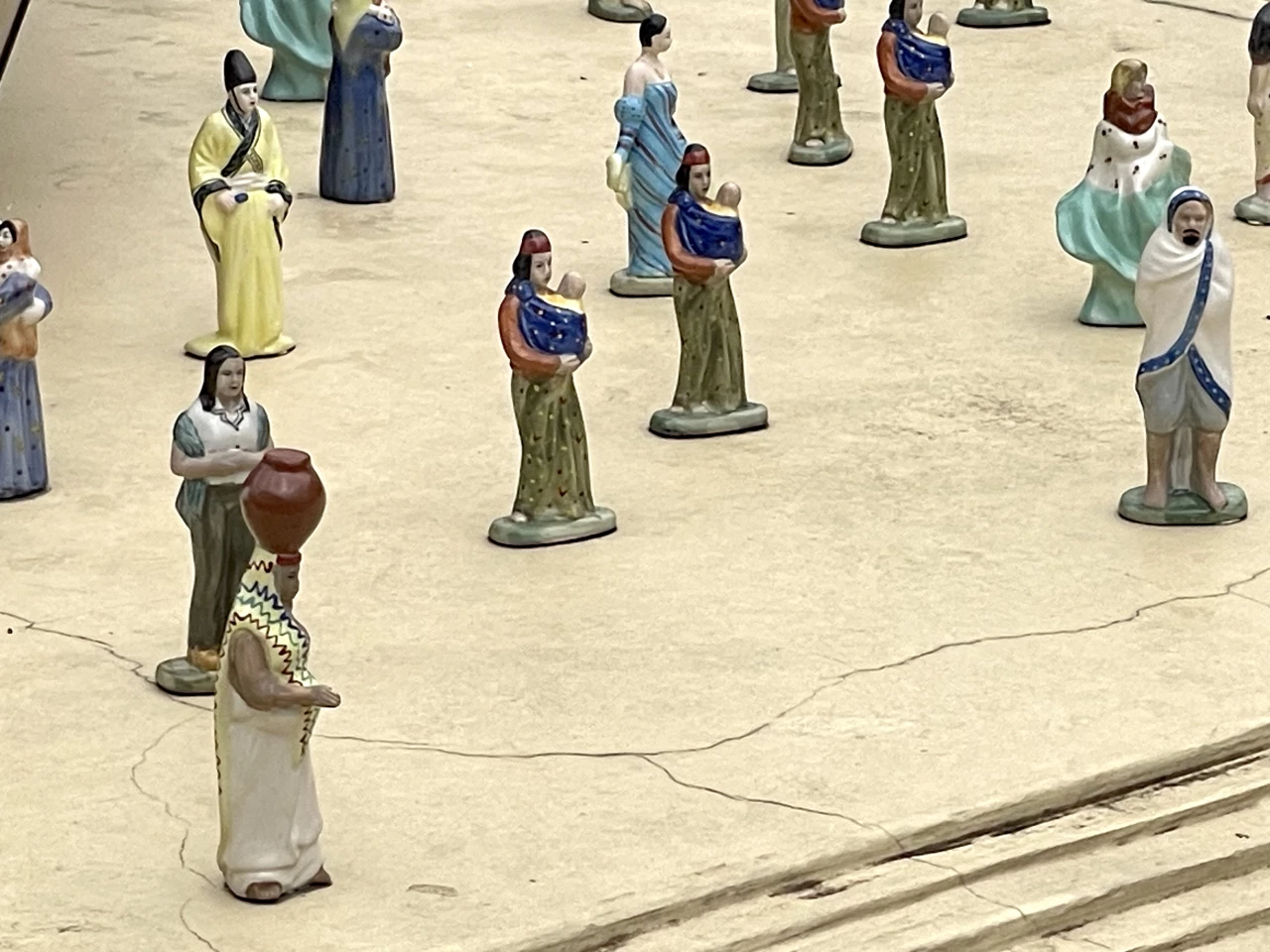
So, while the Opera House was realistically rendered, the figures beneath the famous “sails” were anything but – even for 1973, when the iconic building opened. While I can’t say for sure, I don’t imagine subscriptions to Australian Vogue were in high (or any) demand in 1991 China, and to be honest, that decade of Aussie fashion probably should stay hidden from the world stage anyway.
Nonetheless, this mismatch seemed to follow the park’s broader logic – everything is recognizable enough, even if some of the details aren’t designed to hold up to close scrutiny. Especially not the scrutiny of a scientist and journalist.
Window of the World/New Atlas
Window of the World/New Atlas
Window of the World/New Atlas
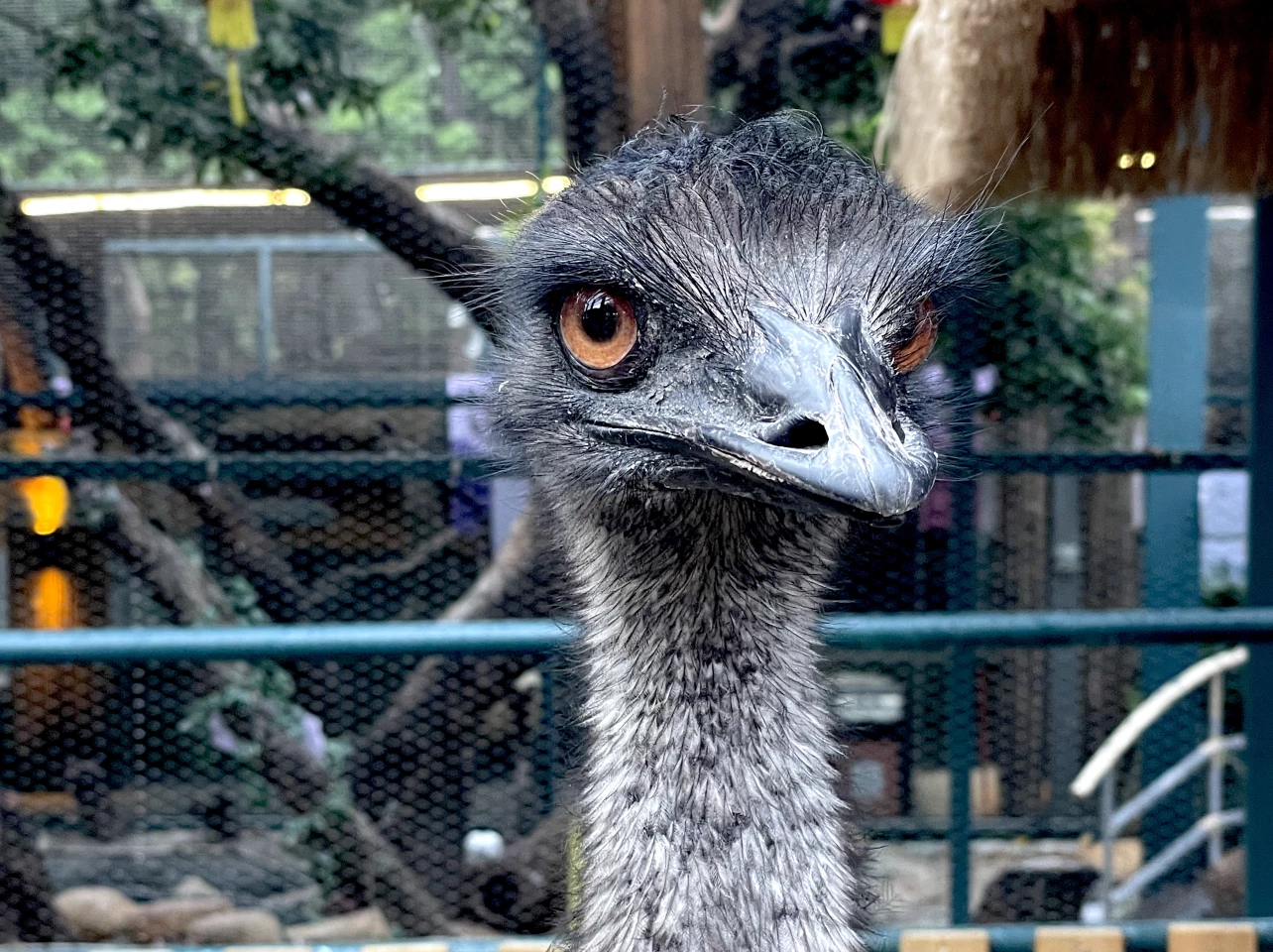
This was enough travel in one day for me, so I tried to make a quick exit. Such a thing doesn’t exist in Window of the World, and along the way the history and geography rulebook was thrown out to make way for a more typical theme park. There seemed to be more rides and restaurants, as well as model dinosaurs, a mini-zoo (where I found myself face to face with some fellow Australians, emus, along its perimeter). Entry was extra, and by then I’d found a way out, via a quaintly rendered Prague town square – right next to the indoor-skiing pavilion, Alpine Snow World. I also passed another modern space that housed virtual-reality/augmented-reality experiences. It was almost like the park was easing you back into life on the outside.
New Atlas
As Shenzhen and Guangdong Province race into the future, I’m glad Window of the World isn’t going anywhere. And by appreciating its origin story and the role it still plays for millions of residents, it also serves as a window – albeit a very small one – into modern-day China. A country that has emerged from world isolation to global superpower in less time than I’ve been on this planet.
And I wouldn’t be surprised to find out that Chinese engineers had started and finished building several bridges in the time it’s taken me to add captions to all the images in the gallery …
Source: Window of the World

