


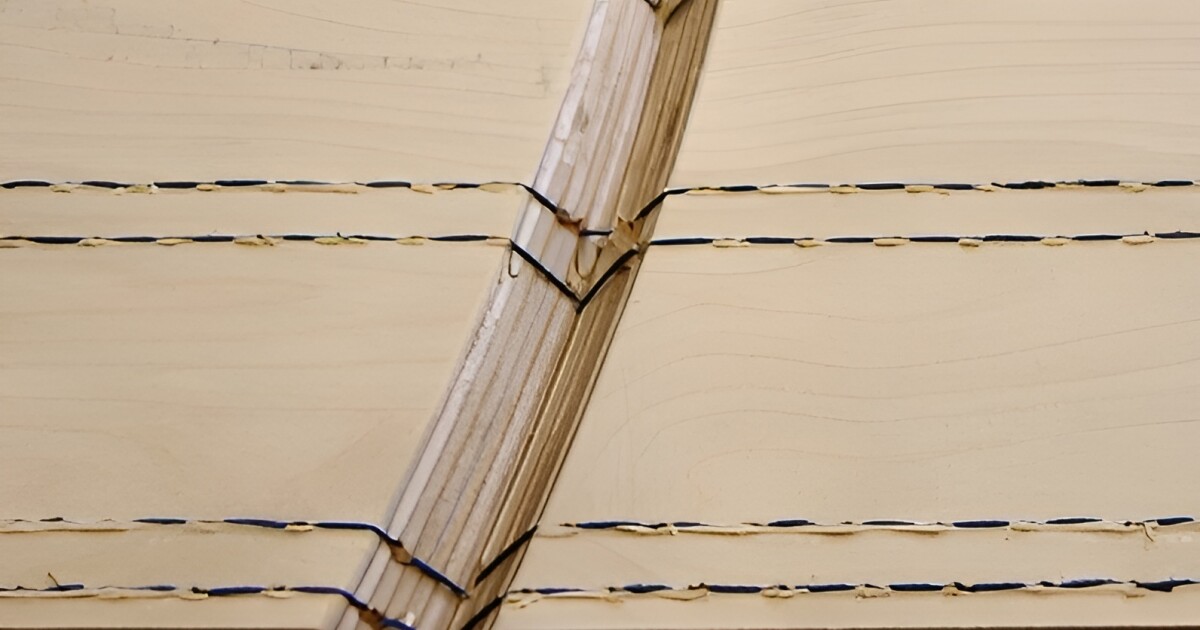
Some of the world’s best skis and snowboards are made from a combination of materials, including wood at the core for its strength, low weight, and shape retention. They’re usually bonded together with additional layers using adhesives – but what if we stitched them together instead?
Researchers at Austria’s Graz University of Technology explored this wild idea while thinking about ways to prevent layers of wood veneers from peeling off each other when they were forced apart with regular use.
It sounds unconventional, but they mean it literally. In fact, lead researcher Florian Feist described the benefits as being similar to strengthening concrete structures with steel rebar. “Just as the reinforcements in concrete absorb tensile forces, the seams in timber can take up critical forces. This has a particularly positive effect in the event of peeling loads and significantly delays the detachment of the laminate plies,” Feist said.
The team focused on creating a method of sewing wood veneers specifically to counteract delamination, i.e. wood layers peeling off. Interestingly, it uses roughly the same method as you’d apply to fabrics, and works on a standard industrial sewing machine.
W.E.I.Z.
What’s different – beyond the material in question – is the use of a triangular needle tip that avoids cutting through the wood fibers when threading through them, and nylon yarn that’s strong yet flexible.
The TU Graz team found it could stitch laminates up to 20mm thick, and achieve four times the load-bearing capacity (that would stand up to peeling forces perpendicular to the wood surface) than would be possible by gluing them together. The energy required to advance a crack through this stitched laminate was also shown to increase, by as much as 14 times more than with adhesive-bonded laminates.

W.E.I.Z.
This method allowed for a respectable top sewing speed of 8.2 ft (2.5 m) per minute – which could shave off a lot of production time when compared to gluing processes that require curing. It could accommodate connections with other materials as well. Plus, it can enable flexible wooden joints for creating novel products like foldable benches that don’t need traditional hinges.

W.E.I.Z.
This could spell a whole new level of durability and stability in snow sports equipment, as well as in automotive interiors, furniture, and even construction. I’d love to see products embrace the look of exposed stitching on wood, especially when there are flexible joints involved, like in the photo at the top of our story.
Source: TU Graz

