


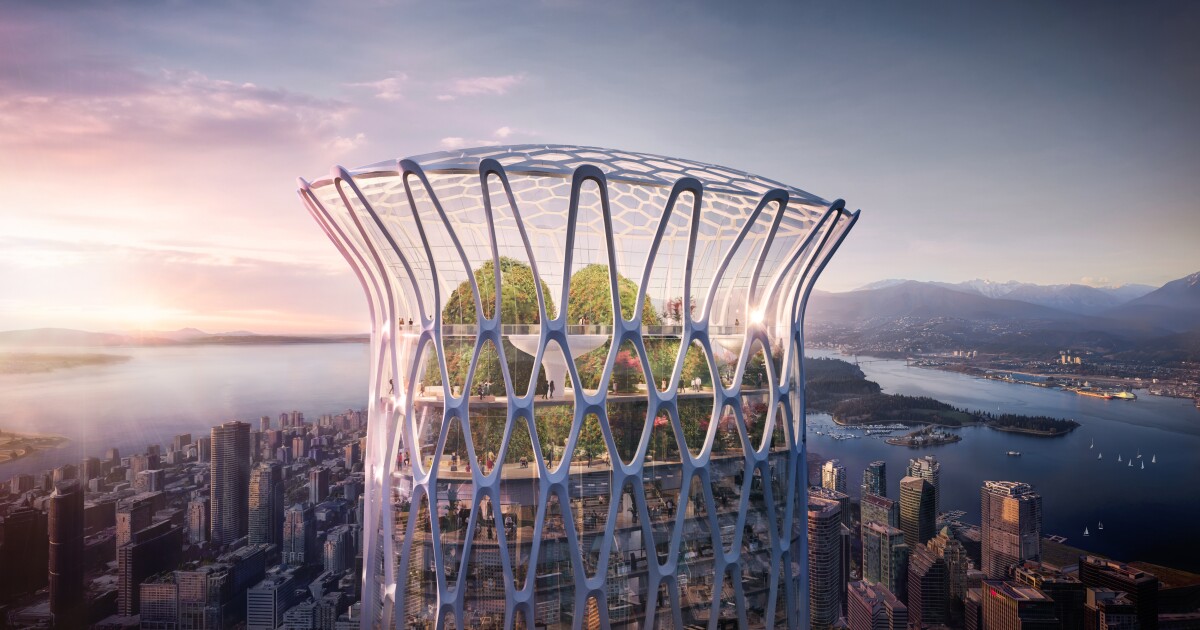
This remarkable skyscraper draws inspiration from the most unexpected of sources: sea sponges. The ambitious building will rise to a supertall height and will be topped by a publicly accessible tree-filled park.
The skyscraper is slated for Vancouver, Canada, and is part of the larger Georgia & Abbott development in the city by the Holborn Group. The development is designed by Henriquez Partners Architects and is divided into three main elements.
Holborn Group
The largest is 595 West Georgia Street, shown above. Set to become Vancouver’s first supertall and therefore its tallest building, the 1,033-ft (314.8-m) tower’s sea-sponge-inspired exterior will feature a diagrid exoskeleton. Like the Morpheus Hotel, this means its exterior framework will both envelop the building and form much of its supporting structure. Its interior will host a hotel, along with a restaurant and some conference facilities, and be topped by the rooftop terrace mentioned.
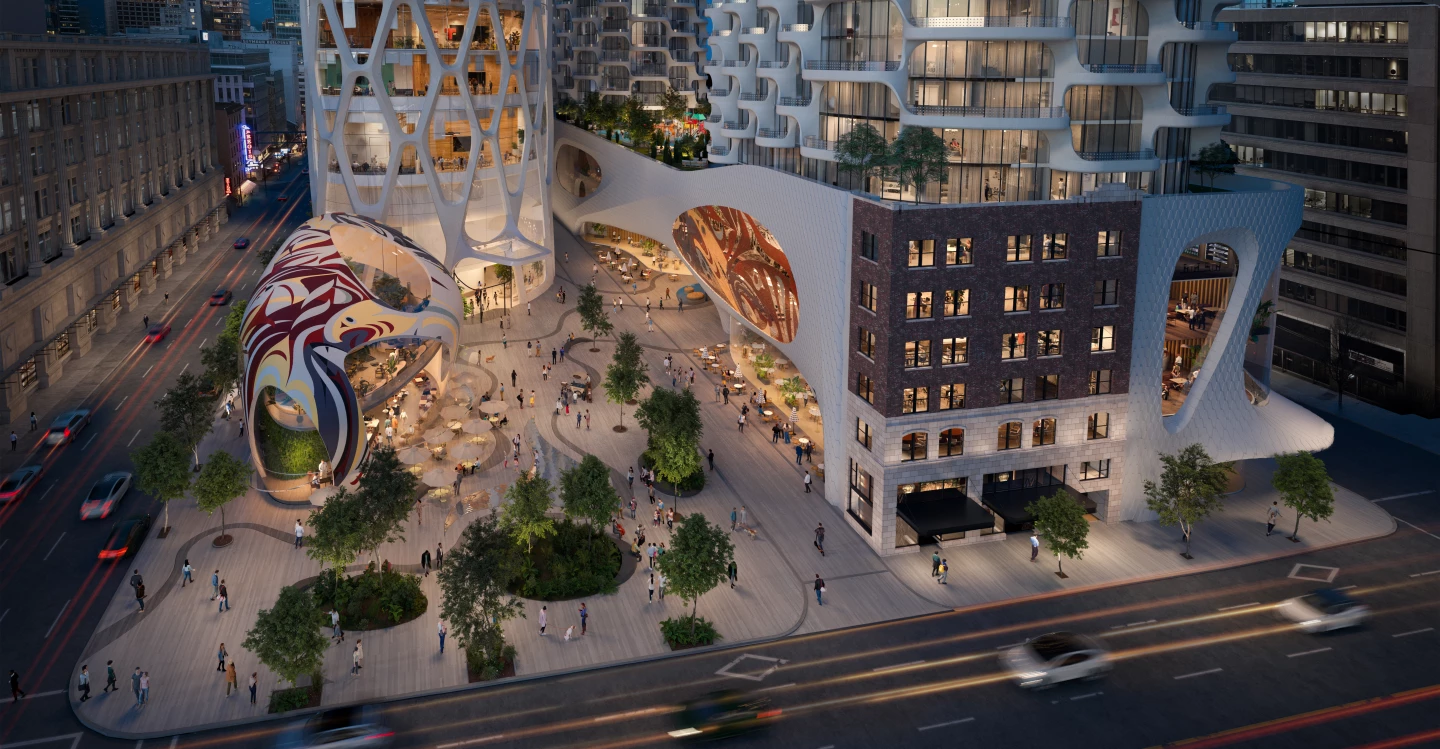
The neighboring 501 West Georgia Street consists of two buildings. The north tower will reach 783 ft (238 m) and will contain residential space, along with a shared rooftop amenity deck. Its southern counterpart, meanwhile, will be a little taller at 889 ft (270 m), with mixed-use residential space and another rooftop terrace. Finally, 388 Abbott Street will be a more modest 402-ft (122-m) tower that will contain social housing, plus an art gallery and daycare. There will also be multiple podium buildings and smaller structures.
“The architectural expression of the project tells a story that is unique to British Columbia and inspired by rare and ancient glass sea sponge reefs – living structures found off the BC coast that demonstrate strength and adaptability,” explains Henriquez Partners Architects. “This natural metaphor is expressed not only in distinct silhouettes and the sculptural form of its tallest tower, but in their environmental performance towards a net-zero carbon operation. Informed by the sea sponge’s structural ingenuity and ecological purpose, the towers offer a uniquely Vancouver expression of sustainability, beauty, and vertical urbanism.”
Holborn Group
Building plans have been submitted to city authorities and have received support with a view to going ahead, though there’s no word yet on when the skyscrapers are expected to be completed. The project comes amid growing interest in using sea sponges’ strength and durability as inspiration in construction.
Source: Henriquez Partners Architects

