


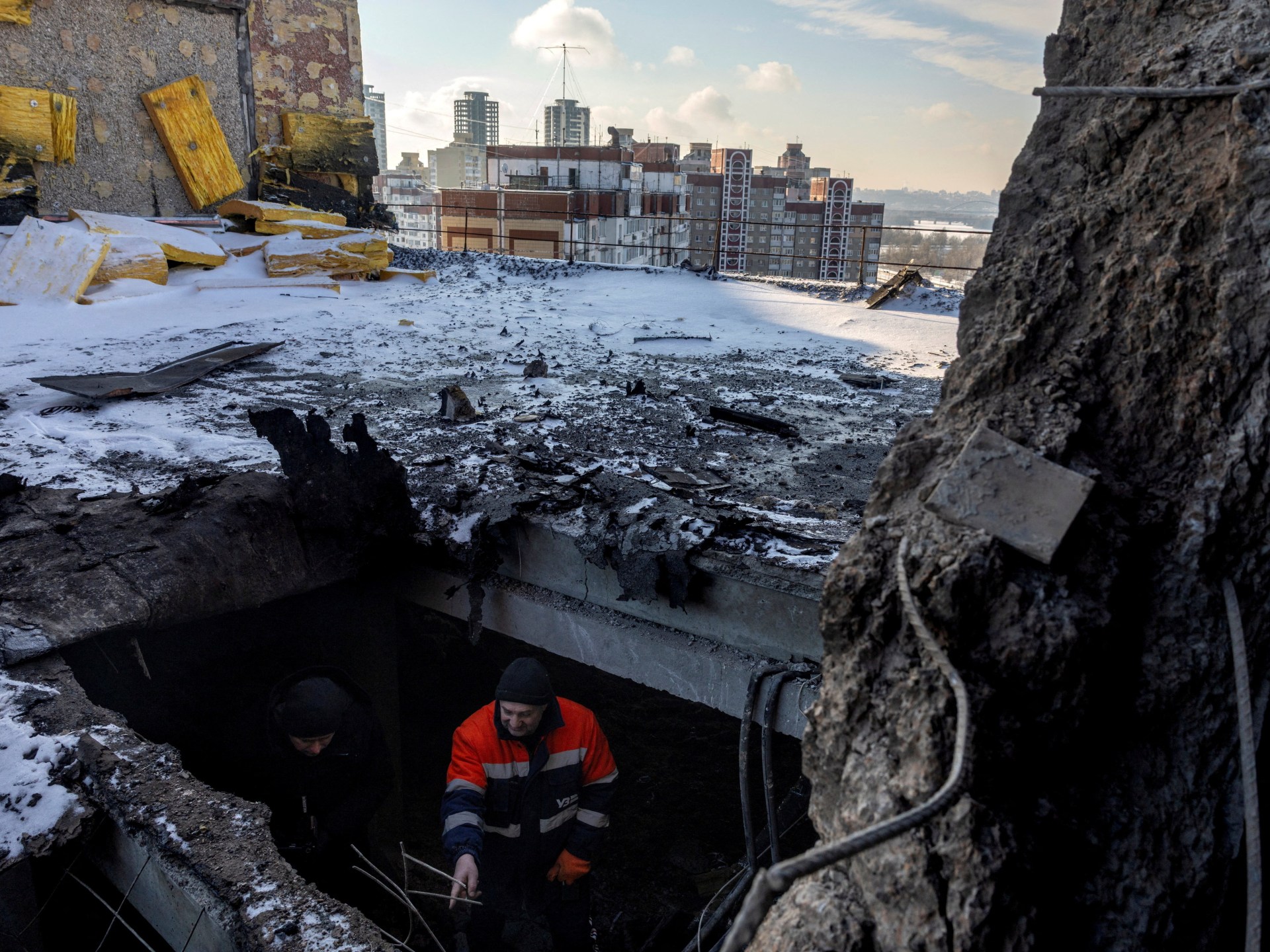
Ukraine struggles to restore heat, electricity as temperatures plummet to -19 degrees Celsius.
Published On 15 Jan 2026
Ukrainian President Volodymyr Zelenskyy has said that a state of emergency is being declared for Ukraine’s energy sector, as repeated Russian attacks have left thousands of homes without heat and electricity amid freezing winter conditions.
Zelenskyy’s announcement came as temperatures dropped to -19 degrees Celsius (-2.2 Fahrenheit) in Ukraine’s capital Kyiv, where hundreds of apartment buildings remain without heat following a massive Russian attack last week.
Recommended Stories
list of 4 itemsend of list
“The consequences of Russian strikes and deteriorating weather conditions are severe,” said Zelenskyy in a post on X late on Wednesday, adding that “repair crews, energy companies, municipal services, and the State Emergency Service of Ukraine continue to work around the clock to restore electricity and heating”.
Zelenskyy also said he had asked his government to review curfew restrictions during “this extremely cold weather” and that the country was working to increase its electricity imports to try to alleviate the dire situation.
In Ukraine’s capital Kyiv, 471 apartment buildings remained without heat on Wednesday, almost a week after a Russian attack left thousands of apartments without heat, electricity and water, according to city officials.

The attack, which began last Thursday night, prompted Kyiv’s Mayor Vitali Klitschko to urge people to leave the city, saying that “half of apartment buildings in Kyiv – nearly 6,000 – are currently without heating because the capital’s critical infrastructure was damaged by the enemy’s massive attack”.
Energy supply has been a frequent target during Russia’s war on Ukraine, with Moscow and Kyiv launching attacks on oil refineries, gas pipelines, pumping stations and nuclear and thermal power stations, which are powered by coal, oil and gas.
Russian-appointed local official Yevhen Balitsky said on Telegram on Wednesday that a Ukrainian attack had left more than 3,000 people without electricity in Russian-occupied areas of Zaporizhia.

Black Sea attacks
The frequent attacks on energy supply during Russia’s war with Ukraine have also expanded beyond both countries’ borders, including to oil tankers in the Black Sea.
In recent months, a number of oil tankers have come under attack from drones in the Black Sea, prompting concerns from neighbouring countries, including Turkiye and Kazakhstan.
On Tuesday, drones struck two oil tankers in the Black Sea, chartered by United States oil giant Chevron, according to the companies involved. The ships were sailing towards a terminal on the Russian coast, with the Russian Ministry of Foreign Affairs on Wednesday blaming the attacks on Ukraine, which had yet to publicly comment.
Kazakhstan’s Foreign Ministry said in a statement on Wednesday that three oil tankers were hit in the attack and that they were heading to a Caspian Pipeline Consortium (CPC) terminal, where an oil pipeline from the central Asian country ends.
The ministry urged the US and Europe to help secure the transport of oil.
“The increasing frequency of such incidents highlights the growing risks to the functioning of international energy infrastructure,” it said.

