


It’s a sad fact that antibiotics are constantly entering the environment through the wastewater stream, boosting the development of antibiotic-resistant bacteria. There could soon be a cheap new way of removing those antibiotics from the water, however, using plentiful pine bark.
Antibiotics enter the wastewater stream in the form of urine from patients who are taking the drugs, or simply even when patients dispose of unused medication by flushing it down the toilet.
Although sewage treatment plants can remove a certain amount of those antibiotics from the water, they can’t get them all. What’s left proceed on into the local waterways, where they ultimately end up in the water we drink and the fish that we eat. The same thing applies to other types of pharmaceuticals such as antidepressants, painkillers and blood-pressure-lowering drugs.
With this problem in mind, Mahdiyeh Mohammadzadeh and colleagues at Finland’s University of Oulu looked to the pine bark that is already available as a waste product from the forestry industry.
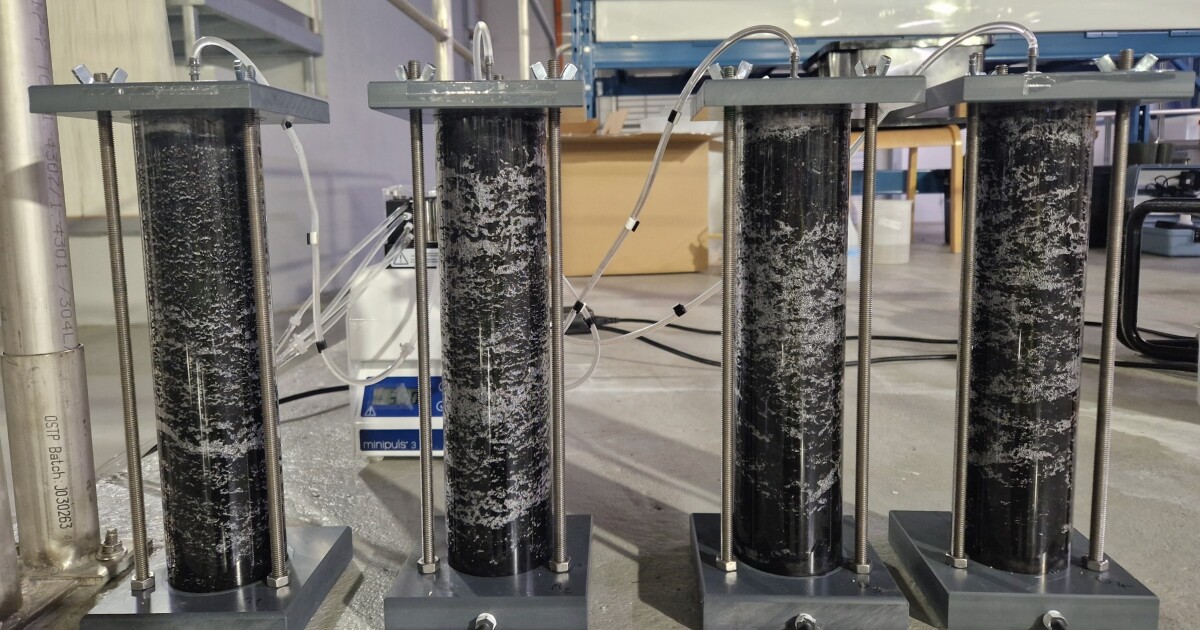
That bark contains polyphenolic compounds that bind with and degrade antibiotics and other pharmaceuticals. What’s more, when that bark is modified with inexpensive magnetite (iron oxide), it can be easily separated from the water for reuse after treatment.
Mahdiyeh Mohammadzadeh / University of Oulu
In a four-month pilot project, the modified pine bark was able to remove approximately 99.7% of the antibiotic trimethoprim from municipal wastewater, and about 93.7% of the antidepressant venlafaxine. It also proved to be highly effective on other commonly used pharmaceuticals, such as the painkiller ketoprofen and the blood pressure medicine losartan.
It should be noted that traditional activated charcoal is also quite an effective antibiotic-catching filtration medium, although it’s considerably more expensive than the pine bark. It’s also potentially less eco-friendly, as its production involves heating wood at high temperatures. By contrast, the bark – which comes from trees that have already been cut down for their wood anyways – simply has to get a shot of magnetite.
“I hope wastewater treatment plants and the forest sector will explore collaboration opportunities,” says Mohammadzadeh.
Source: University of Oulu

