


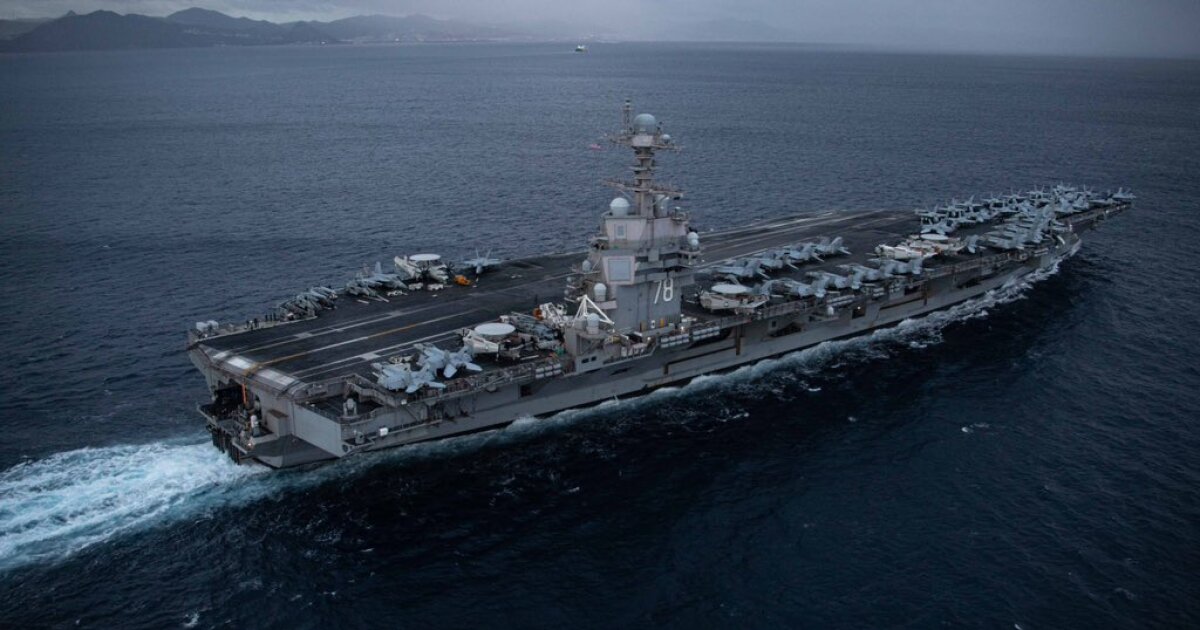
If you have a redundant nuclear aircraft carrier lying around, you can give HGP Intelligent Energy a call. The Texas-based developer wants to repurpose the nuclear reactors used to power carriers to generate electricity for onshore data centers.
AI promises to be the biggest thing in information technology since the internet told people they had mail. The problem is that the data centers needed to support AI systems are so hungry for electricity that they will account for up to 40% of power-demand growth in the US alone by 2035.
Because of this, tech companies are scrambling to find reliable, 24/7 sources of electricity to power and cool these centers, and that slams hard into the energy policies of many nations that assumed that demand would remain relatively level or even decline and that grids would have to accept a certain level of intermittency. The result is that these companies are looking for ways to secure independent power sources, including building or recommissioning nuclear power plants.
The tricky bit is that nuclear power plants are very expensive and slow to construct, and in much of the West the regulations controlling them are often deliberately restrictive. Even with the current US government’s renewed push for a nuclear renaissance, these are still major hurdles to overcome.
To get around this, HGP Intelligent Energy has submitted a proposal to the government as part of the White House’s Genesis Mission aimed at securing energy dominance and accelerating the construction of American AI infrastructure. Called the CoreHeld Project, the idea is to ditch the traditional nuclear power plant in favor of using the same reactors that power the latest Gerald R Ford aircraft carriers.
That doesn’t mean docking a carrier next to a data center and running a cable inside. Instead, the project would take two naval reactors and modify them for installation in a new shore-based plant, where they would provide up to 520 MW of constant power to the center, with the demo plant being built at Oak Ridge National Laboratory (ORNL) by 2029.
Early reports on CoreHeld claimed that the company wanted to use secondhand A4W reactors from retired Nimitz-class carriers or S6G/S8G units from submarines, but recruitment listings from HGP indicate that what’s really wanted is the dual A1B-class naval pressurized water reactors being built for the Ford-class. Since these supercarriers are only now being built and have a service life of half a century, HPG either wants new reactors or it will have to wait a very, very long time.
Cost is the primary motivator. The naval reactors can be set up for between US$1.8 billion and $2.1 billion, which is much cheaper than a conventional or modular reactor. They can also be built much faster because the naval reactors are a proven design with over 70 years of service behind them.
By using the latest design, HGP will have a much more advanced reactor with a simpler, more reliable design and layers of redundant, passive safety systems. The company could also, in the long term, benefit from plans for the next decade that could see modifications that would allow the reactors to operate for 50 years without refueling.
Another attraction is bypassing the maze of US regulations regarding nuclear power plants. Conventional plants come under the authority of the Nuclear Regulatory Commission (NRC) and applications alone can take up to 10 years and billions in legal fees to get approval. However, naval nuclear reactors come under the jurisdiction of the Department of Energy (DOE) and US Navy, which handle oversight and safety. HPG wants a hybrid path where the reactors remain under DOE and Navy control while the NRC expedites civilian licensing.
It’s an interesting idea, but CoreHeld has a number of problems that will need to be solved before it becomes practical. One of the biggest is that naval reactors are a very different breed from their civilian counterparts.
Civilian reactors have a very simple purpose. Their job is to sit in one spot and produce a reliable stream of electricity around the clock, with very little need to alter their output – and then only by a few percentage points. On the other hand, naval reactors are transportable and intended to be installed in warships. They need to throttle like the ship’s engines that they are, going from slow ahead to flank speed as the Captain commands. They are also built to be sealed inside their containment vessels and not even opened for refueling for about 25 years – and the new ones never need refueling at all.
What this means is that naval reactors don’t use the low-enriched uranium (LEU) fuel that civilian reactors burn that have less than 20% uranium. Instead, they use highly enriched uranium (HEU) fuel with 93% uranium. HEU is so enriched that it could be used to make a nuclear weapon, which runs up against some awkward non-proliferation treaties and legal requirements to actively defend such fuel against hijacking.
The fuel problem may be solved by 2030 as the current reactors are planned to be modified to use LEU fuel. But there is still the question of security. Naval reactor designs are highly classified, so the data center personnel would have to be barred from all access to the reactor while the reactor maintenance crew would need to have DOE Q-clearance or be veterans of the Naval Nuclear Propulsion Program.
“We already know how to do this safely and at scale, and we’re fortunate to have a solid base of investors and partners who share that vision,” said HGP Chief Executive Officer Gregory Forero in a statement.
Source: HPG Intelligent Energy

