


Nearly two years after the US Department of Justice and a group of state attorneys general sued Live Nation Entertainment, the case has finally reached a Manhattan courtroom.
Jury selection began Monday (March 2), with opening statements expected tomorrow.
The trial, expected to last five to six weeks, will test whether the world’s largest live entertainment company has illegally monopolized key parts of the concert industry — and whether the 2010 merger that united Live Nation and Ticketmaster should be unwound.
But the case arriving at trial looks substantially different from the one filed in May 2024. Court rulings have narrowed the government’s claims, the DOJ’s antitrust leadership has been thrown into turmoil, and Live Nation tried, and failed, to avoid a jury altogether.
Here are three things to know as the trial gets underway.
1. The government’s case has been narrowed — but its most potent claims survived
Judge Arun Subramanian trimmed the government’s case considerably in his February 18 summary judgment ruling. He dismissed the claim that Live Nation monopolizes the national concert promotion market and threw out the allegation that its conduct has resulted in higher ticket prices for fans.
But what survived may matter more than what didn’t. The jury will hear evidence on three core allegations: that Ticketmaster has monopolized primary ticketing at major concert venues through allegedly coercive, long-term exclusive contracts; that Live Nation illegally ‘ties’ access to its amphitheater network to its promotion services, effectively forcing artists who want to play Live Nation venues to hire Live Nation as their promoter; and that a specific ticketing agreement between Live Nation and Oak View Group is anticompetitive.
The judge found that the government “plausibly paints a grim picture for new entrants” and that Live Nation had “vastly overstated” the competitiveness of the ticketing market. On the tying claim, he wrote that “a reasonable jury could certainly find that artists were coerced into going with Live Nation as their promoter to get into its amphitheaters.”
Live Nation then launched a barrage of last-ditch motions: requesting reconsideration, seeking an interlocutory appeal, asking to bifurcate the trial, and challenging the states’ damages expert. As MBW reported, the DOJ called the delay bid a “desperate plea” and argued it was “statutorily barred.”
In a February 27 opinion (which you can read in full here), Judge Subramanian denied all four motions in a single order.
He was particularly pointed on reconsideration: Live Nation had raised legal arguments it failed to present during summary judgment, including a novel claim that tying requires formal market definition for the tied product.
The judge conducted a thorough analysis of the precedent and concluded it does not, dismissing the out-of-circuit cases Live Nation cited as providing “little-to-no reasoning” for their position.
2. The DOJ’s antitrust division is in turmoil — and Live Nation has been pushing for a settlement
The trial is proceeding against a backdrop of political turmoil at the Justice Department.
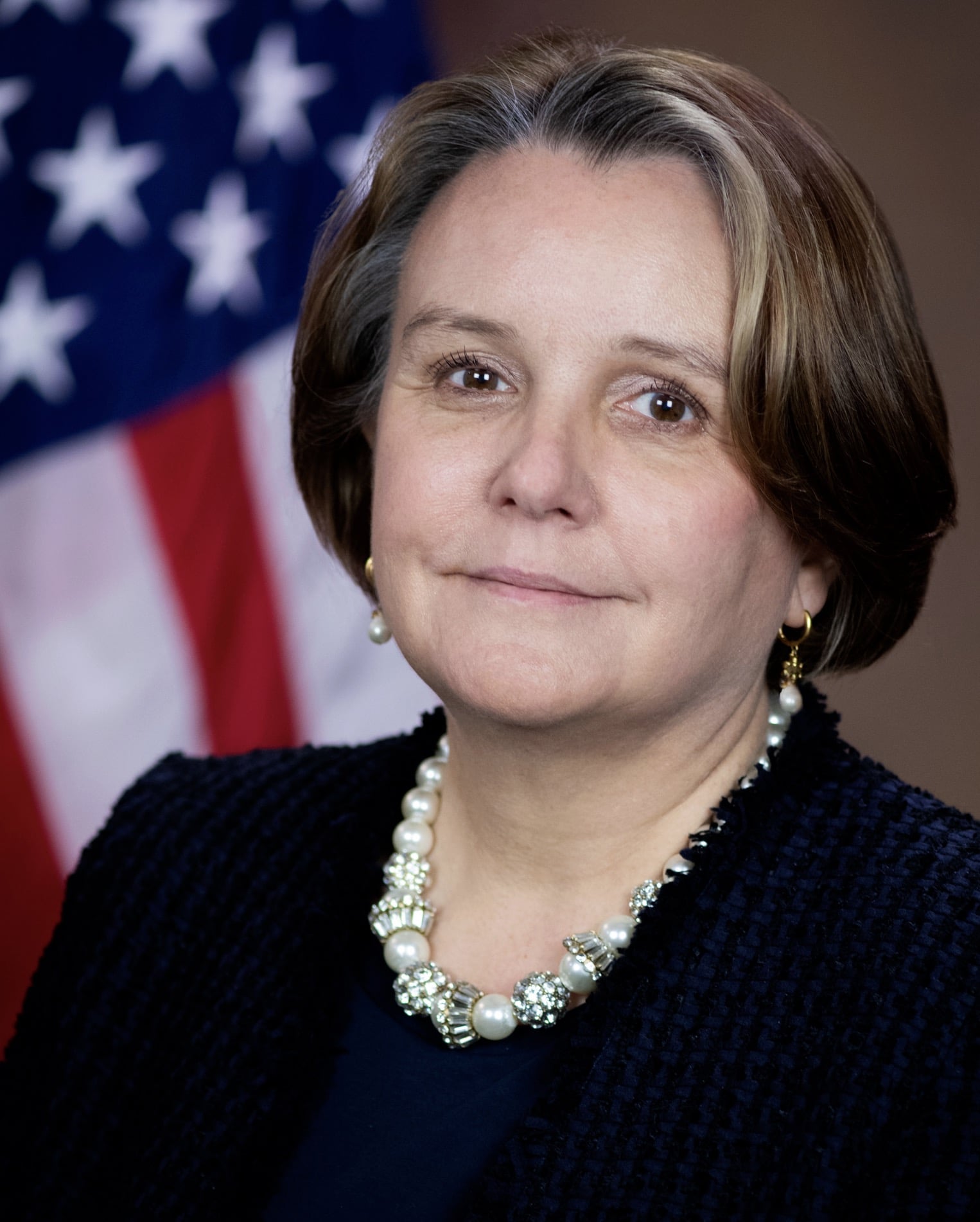
On February 12, Assistant Attorney General Gail Slater (pictured) — the head of the DOJ’s Antitrust Division — resigned after the White House reportedly requested her departure, less than a year into the role following a bipartisan Senate confirmation. Her top deputy, Mark Hamer, resigned shortly before that. Last week, one of the DOJ’s trial lawyers on the case disclosed that he too is leaving.
Bloomberg and Semafor reported in recent weeks that Live Nation has been attempting to negotiate a settlement for months, with discussions taking place with DOJ officials outside the Antitrust Division — reportedly over Slater’s objections. Those efforts have so far been rebuffed.
The political dynamics have drawn scrutiny. A group of seven Democratic senators led by Amy Klobuchar wrote to Attorney General Pam Bondi, warning that Live Nation may be “attempting to evade responsibility by convincing Justice Department leadership to settle the case on terms favorable to the company.”
Live Nation appointed Trump ally Ric Grenell to its board last year, and a Trump-aligned attorney who has advised the company celebrated Slater’s departure on X, writing: “Good riddance.”
The state attorneys general, largely insulated from these federal dynamics, have made clear they will press ahead.
California AG Rob Bonta issued a statement arguing that Live Nation “has manipulated the market and made itself untouchable by any competitor — not because it is better, but because it has created a monopoly.”
3. The DOJ wants to force a breakup, but that outcome is far from certain
Since the lawsuit was filed, the headline outcome has always been the potential forced separation of Live Nation and Ticketmaster — an unwinding of the 2010 merger that the government now seeks to reverse.
That remedy remains technically on the table, but its prospects have narrowed.
The dismissal of the concert promotion monopoly claim weakens the government’s narrative that Live Nation’s vertical integration across ticketing and promotion is itself the competitive problem. Live Nation’s EVP of Corporate and Regulatory Affairs, Dan Wall, seized on this in a since-deleted blog post titled ‘It’s Time to Move On.’ He argued that the dismissal of the concert promotion claims “undermines any serious argument for breaking up Live Nation and Ticketmaster” and “ends the narrative that concert promotion and ticketing are ‘mutually reinforcing monopolies’.”
But the vertical integration theory hasn’t disappeared entirely. The surviving tying claim, that Live Nation allegedly leverages its amphitheaters to coerce artists into its promotion services, still rests on the interplay between the company’s venue, promotion, and ticketing businesses. If the jury finds that this conduct is anticompetitive, a judge could still conclude that structural separation is the appropriate remedy.
Under the trial structure, the jury will determine liability and any damages owed to the states on behalf of consumers. If the government prevails, Judge Subramanian would then separately decide the remedy — including whether to order a breakup.
If Live Nation is found liable, the states are seeking financial compensation on behalf of fans who were allegedly overcharged. Their damages expert, Dr. Rosa Abrantes-Metz, has built a model using AXS, the next largest primary ticketing company, as a benchmark for what pricing might look like in a competitive market.
According to Judge Subramanian’s February 27 ruling, her analysis works in two steps: first, she calculates how much more Ticketmaster charges venues than AXS does, what she calls the ‘supracompetitive charge,’ then uses a tax-incidence model to estimate how much of that overcharge venues pass on to fans through higher ticket fees.
The February 27 ruling upheld the admissibility of her model, though the judge noted that the final calculation of total damages, accounting for purchaser residency, applicable statutes of limitations, and other variables, may be addressed in a post-trial proceeding rather than put to the jury.
The trial will feature testimony from a parade of music industry figures. Witness lists include Live Nation CEO Michael Rapino, Live Nation president Joe Berchtold, SeatGeek CEO Jack Groetzinger, AEG Presents CEO Jay Marciano, Roc Nation’s Desiree Perez, and Mumford & Sons’ Ben Lovett. Kid Rock — who told a Senate hearing in January that the Live Nation-Ticketmaster merger “has failed miserably” — is among the few performing artists cited in court filings, though he is currently working with Live Nation for his latest tour.
Whatever the outcome, the trial itself marks a significant moment, and its implications will extend well beyond ticketing, touching on how vertical integration, exclusive dealing, and market power are understood across the entertainment industry.
The question now is whether the government, despite its internal upheaval, can make its case stick.
Reservoir (Nasdaq: RSVR) is a publicly traded, global independent music company with operations across music publishing, recorded music, and artist management. Music Business Worldwide

