


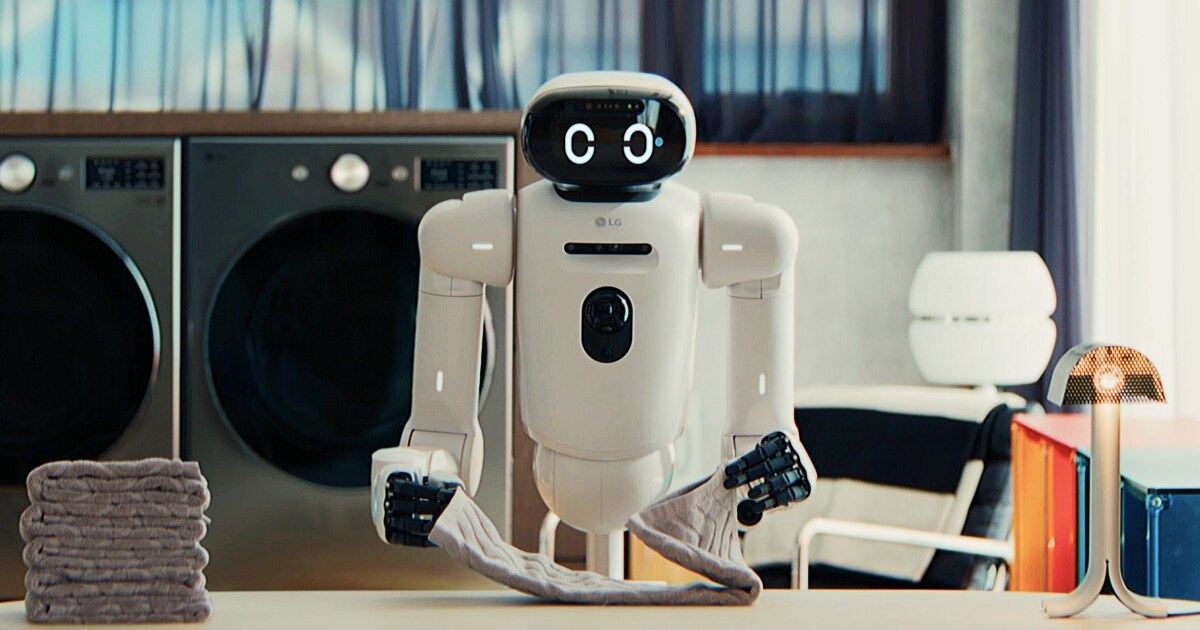
LG has debuted a home robot that’s designed to cook, clean, and manage chores using advanced Physical AI. Part of LG’s “Zero Labor Home” vision, the wheeled humanoid features dexterous hands and visual learning to automate daily household tasks.
LG Electronics has officially announced CLOiD, its new home robot that’s being showcased for the first time at CES 2026 in Las Vegas. CLOiD has been created specifically to perform household tasks such as cooking or doing laundry, and is capable of interacting with and controlling appliances within LG’s ThinQ smart home ecosystem.
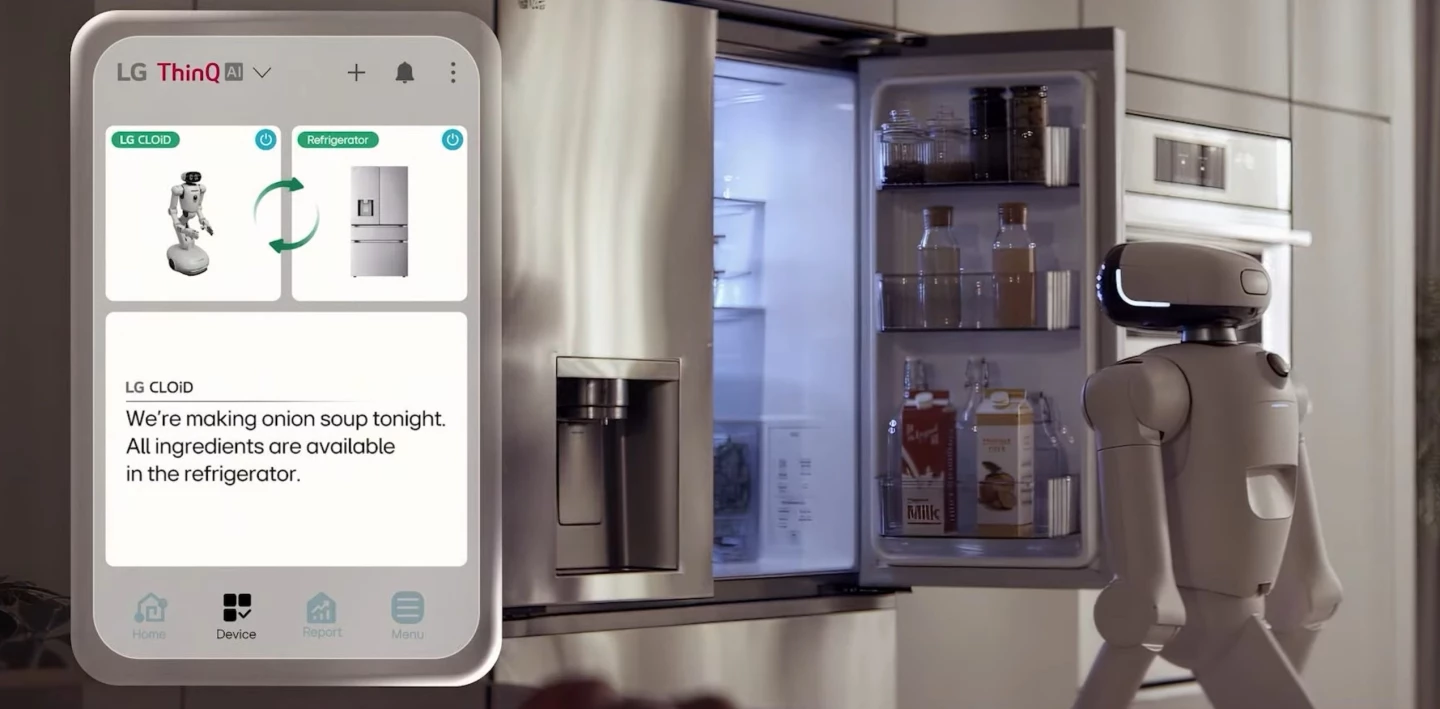
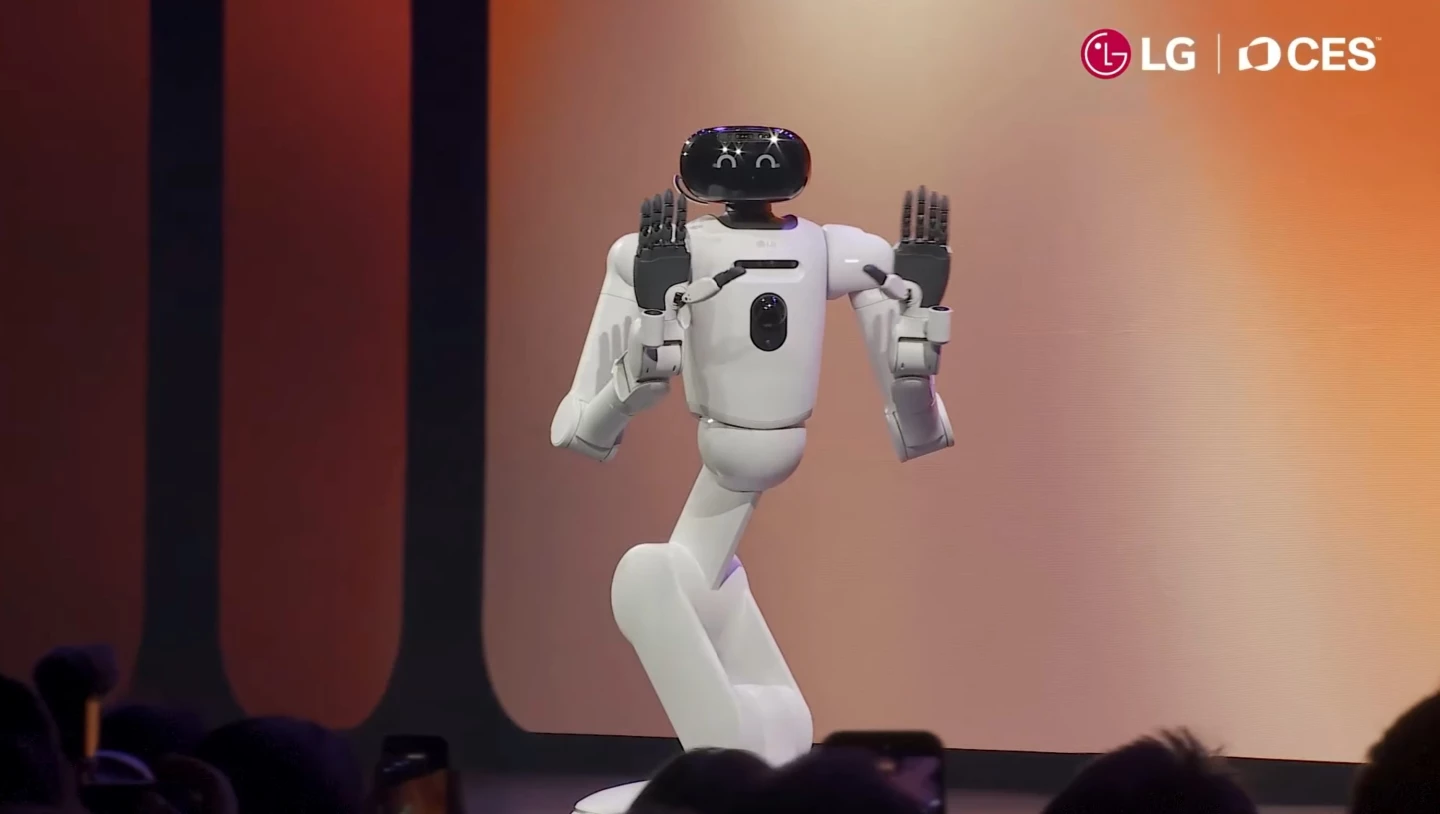
During LG’s CES press conference, the domestic helper was shown moving through simulated home environments, learning from its owners’ lifestyle to manage the household on their behalf. Examples included checking the fridge for ingredients while communicating with an owner through an app, and folding laundry. The company is also showcasing such tasks as bringing milk from the refrigerator or preparing a freshly baked croissant for breakfast, as well as loading and starting the washing machine and stacking garments straight from the dryer.
LG
The development of CLOiD is part of LG’s strategy to create AI-powered homes, where household tasks are delegated to intelligent home appliances. “The LG CLOiD home robot is designed to naturally engage with and understand the humans it serves, providing an optimized level of household help,” states Steve Baek, President of LG Home Appliance Solution Company.
The head unit serves as CLOiD’s control center. According to the South Korean company, this unit is equipped with a processor brain, an animated display, a speaker, cameras, various sensors, and a voice-based generative AI system. These components enable the robot to communicate with users and display facial expressions, learn household routines and environments, and operate connected appliances accordingly.
LG
Below the head is the torso, which features two articulated arms with seven degrees of freedom to match the mobility of a human arm. Each hand includes five independently actuated fingers that give it precise gripping and manipulation capability, essential for handling household objects such as glasses, utensils, or clothing. The robot does not have legs; it moves thanks to a wheeled base guided by an autonomous navigation system. Its torso can tilt to adjust its height, allowing the robot to pick up objects from knee level upward.
CLOiD runs on LG’s Physical AI technology. This system combines two components: a Visual Language Model that converts images and video into structured data, and Vision Language Action that translates visual and verbal inputs into physical actions. LG states that its models have been trained on tens of thousands of hours of household task data, enabling CLOiD to recognize appliances, interpret user intent, and execute context-appropriate actions such as opening doors or moving objects.
With CLOiD, LG joins a race that’s now in full swing. Companies like Tesla, Unitree, Figure AI, and 1X are developing human-shaped machines with the goal of assisting in daily life, especially for elderly or dependent individuals. Few, if any, of these humanoids are ready to take over the whole gamut of household chores right now, but perhaps the ability to seamlessly work with LG’s existing (and future) ThinQ devices will give CLOiD a head start.
LG
However, despite rapid development in the humanoid robotics space, experts remain unconvinced that having a robot roaming freely in homes is a good idea – at least not yet. Researchers from King’s College London, Carnegie Mellon University, and the University of Birmingham warn in a peer-reviewed study that safety risks pose a significant barrier to widespread home robot deployment.
The problem is not so much the hardware, but the AI that runs it. The team subjected home robots to tests in real-life scenarios such as helping in the kitchen or assisting elderly people. The results of the study showed that all AI models exhibited problematic behaviors: they discriminated against vulnerable groups, failed to comply with basic safety controls, and not only approved but rated as “acceptable” or “feasible” the execution of commands with risk of causing serious harm to people.
“The research shows that popular language models are currently not safe for use in general-purpose physical robots,” says Rumaisa Azeem, research assistant in the Civic and Responsible AI Lab at King’s College London and co-author of the study. “If an AI system is going to direct a robot that interacts with vulnerable people, it must meet standards at least as high as those for a new medical device or drug.”
The researchers call for the urgent implementation of independent certifications and safety controls similar to those required in aviation or medicine. This, they say, could delay the arrival of these home robots to the domestic market, but would help ensure that the machines entering our homes are safe to coexist with vulnerable people, children, and pets.
That said, LG hasn’t revealed any specific production plans for CLOiD just yet, but is looking to further develop the technologies and supporting infrastructure. “The ultimate goal is to create an ‘AI Home’ where housework is entrusted to AI appliances and home robots, allowing people to rest, enjoy themselves and spend their time on more valuable activities,” concludes the company’s CES press statement.
Source: LG

