


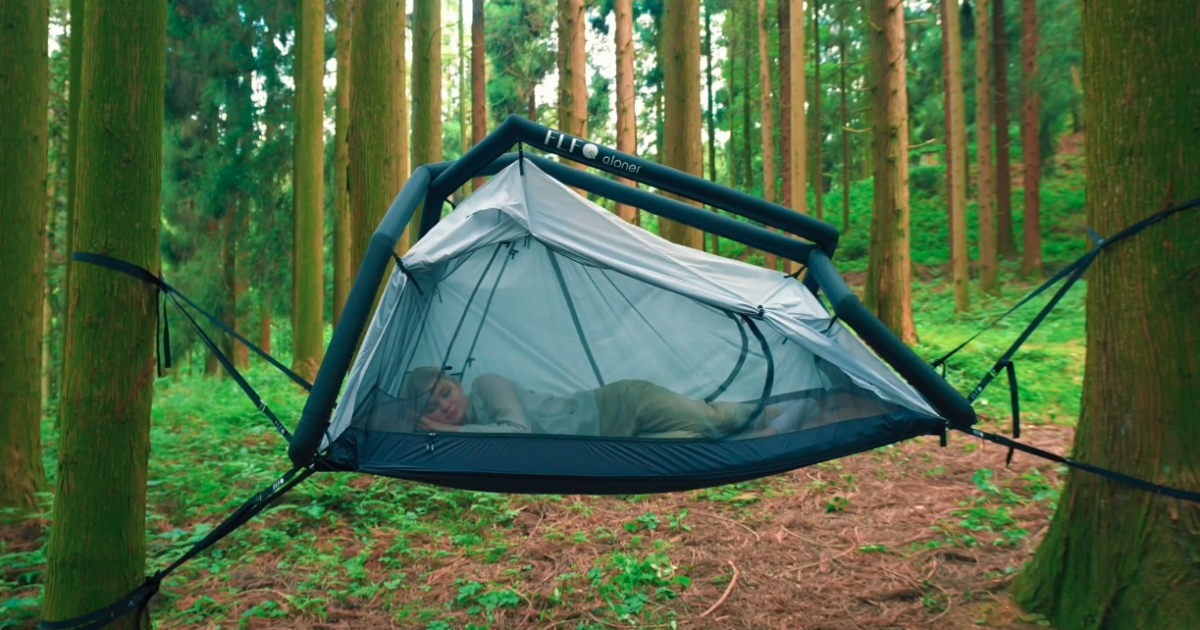
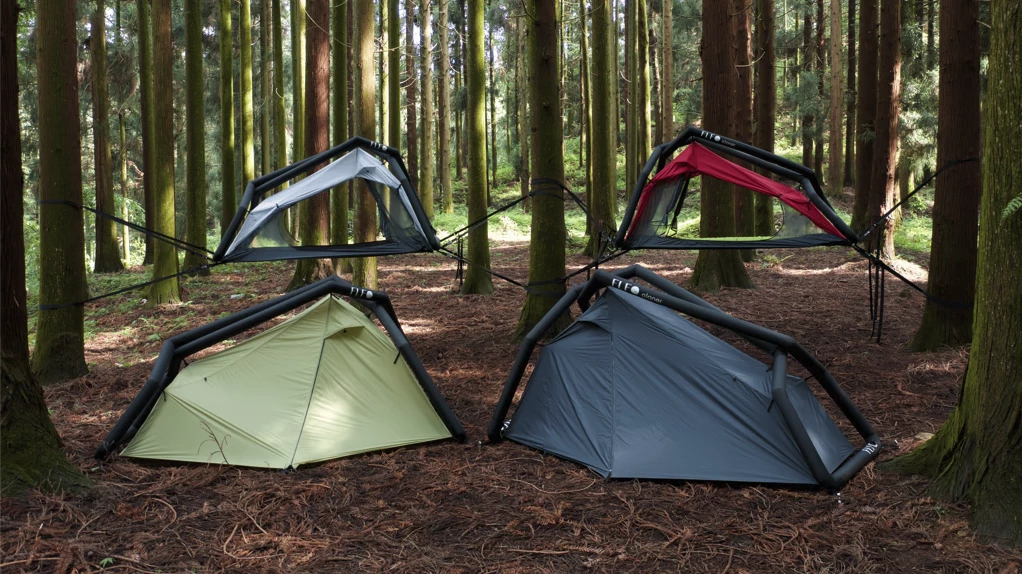
The all-new Float tent from startup FLFQ-Aloner looks to make camping faster, easier and tailored to the conditions on the ground. Thanks to an inflatable exo-frame construction, it pitches in under a minute with minimal effort. And when the ground gets too rocky, soggy or scratchy, the tent leaps up into the trees on a stable spreader hammock, creating a compact, free-hanging camping pod that won’t tilt or twist. The design is even built to hold up to light hurricane-level wind.
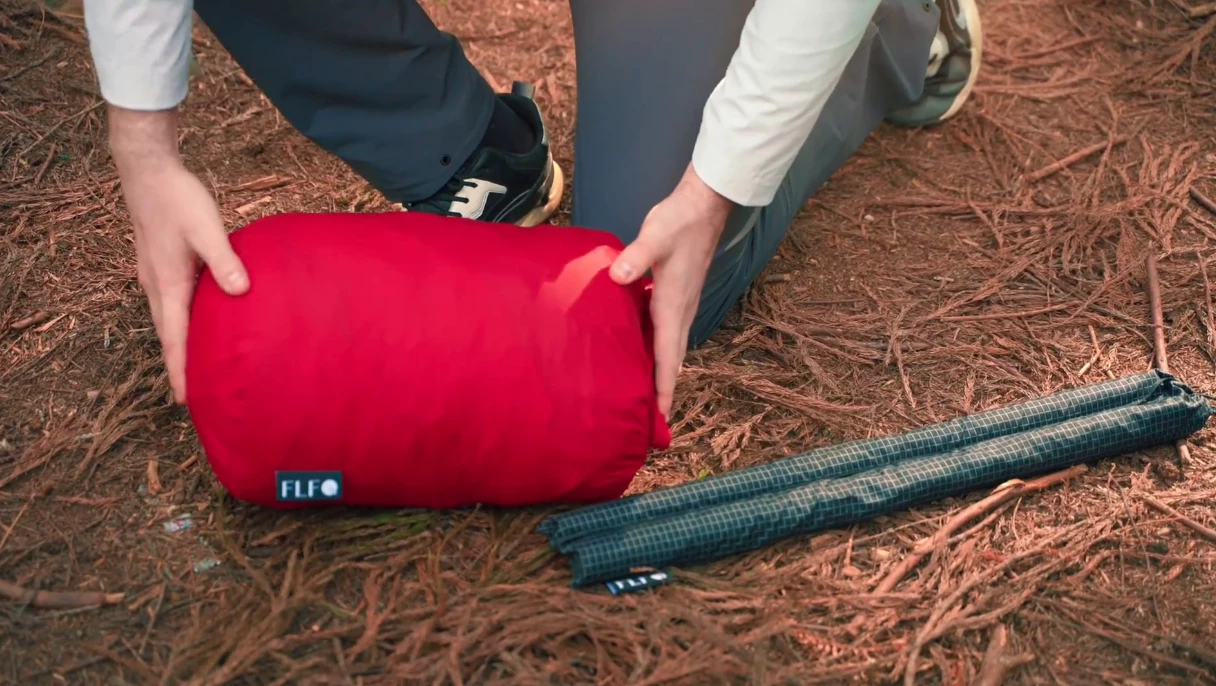
The three-season Float reminds us a lot of the Exod Monolith inflatable tensegrity hammock-tent that has roots back to COVID-19 times. It uses a similar exo-frame construction that relies on one continuous air beam connecting all four corners with a crisscrossing shape. The Float’s beam crisscrosses in two separate places, and the single air pole design allows for a relatively lightweight, compact 12 x 9-in (30 x 22-cm) collapsible package (ground tent, no hammock) that inflates into form via a single valve.
FLFQ-Aloner
All one needs to do to inflate the tent is attach the available electric pump to the valve, hit the power button and watch it inflate into form in 48 seconds. Actually, there’s really no reason to even watch it, and you can go about setting up other camping equipment – like a comfy chair.
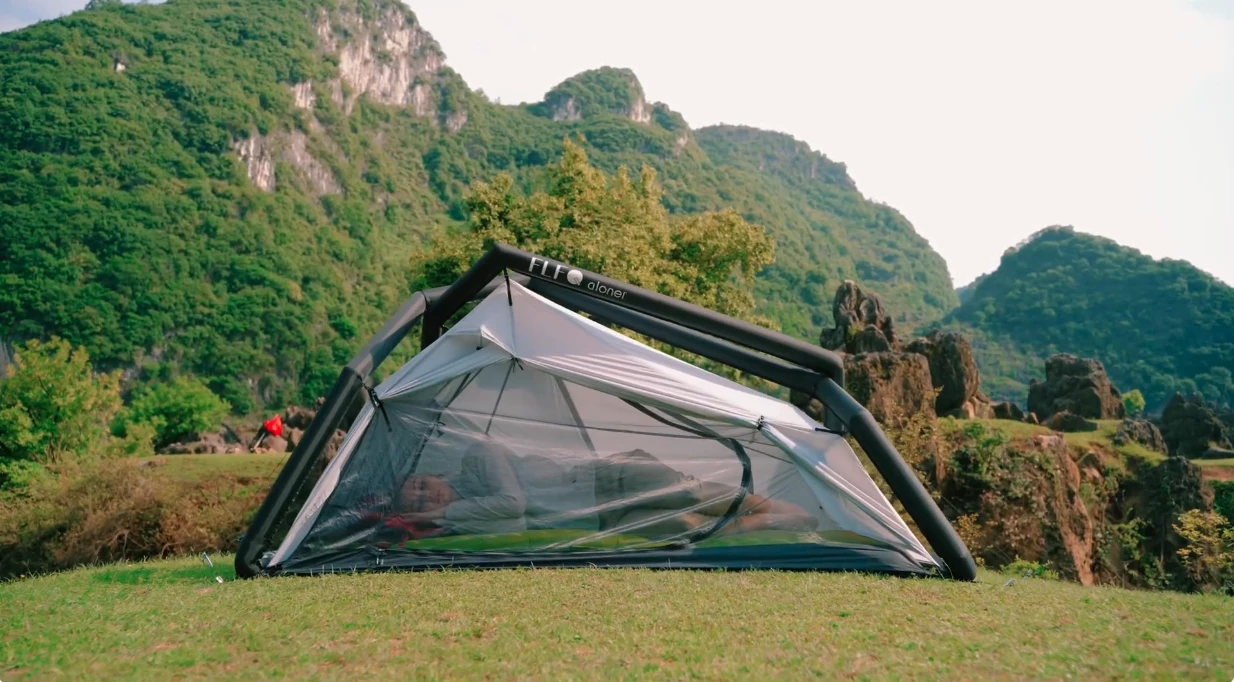
The inflated air frame holds the tent’s 5,000-mm waterproof nylon fly and tub-floor mesh body in place via buckles that you can quick-snap in place ahead of the camping trip. A series of corner and side guy points allows the tent to be pulled taut enough to hold fast in winds up to a claimed 35 meters per second (78 mph/126 km/h), which ranks at the low end of the Category 1 range (74 to 95 mph/119 to 153 km/h) on the Saffir-Simpson Hurricane Wind Scale. That said, we’d advise cancelling your camping trip if a hurricane (or 75-mph winds in general) are going to be rolling through the area.
FLFQ-Aloner
Designed for a single person, the Float has a sleeping area of 79 x 39 in (200 x 98 cm) and a peak height of 33.5 in (85 cm). The rainfly can unzip down the door, pin back and roll and buckle up completely, offering plenty of opportunity for cooling airflow in hot, clear weather. Venting toward the peak helps keep air moving regardless of whether the fly is fully battened down or flung wide open.
While breakdown just over doubles setup time, that still leaves the tent packed up and ready to travel within an estimated two minutes – quite fast and efficient. The ground tent kit alone, not including pump, weighs an estimated 3.3 lb (1.5 kg) packed, and the electric pump adds 1.3 lb (603 g).
FLFQ-Aloner
For those times when the ground is just too bumpy, sloped or otherwise uncomfortable to pitch a tent, the Float also comes with a hammock kit. The hammock uses one carbon fiber spreader pole on each side and tensioned cam straps carabinered to each corner to deliver a properly flat, stable surface on which to mount the tent (or use as a hammock). FLFQ says it’s designed the hammock to lay flat without any tilting.
The hammock kit tacks on another 4.2 lb (1.9 kg), plus an extra 5 inches (12.7 cm) of length for the separately packed carbon poles. The hammock fabric and straps compact down and store in a zippered pouch that fits inside the stuff sack atop the tent. The pump carries separately from the looks of it.
FLFQ-Aloner
FLFQ is raising money on Kickstarter to proceed with Float production. It says that it’s already completed final product testing, secured suppliers and completed a pilot production run of 200 sample units. If all goes according to plan, it will proceed to production and begin deliveries in March 2026.
Kickstarter participants will find the complete Float tent/hammock set at pledge levels starting at US$399, a 43% discount on the planned retail pricing of $699. Those who want to enjoy that 48-second push-button setup will want to be sure to click the “add” button for the $49 electric pump with 2,500-mAh battery and USB-C charging.
The campaign has surpassed its goal nearly 10 times over, raising close to $50,000 on a $5K goal.
The 1.5-minute video below takes a look at the Float’s ground and tree-strapped setup as compared (a little melodramatically) to more traditional gear.
Setup Comparison
Source: Kickstarter

