


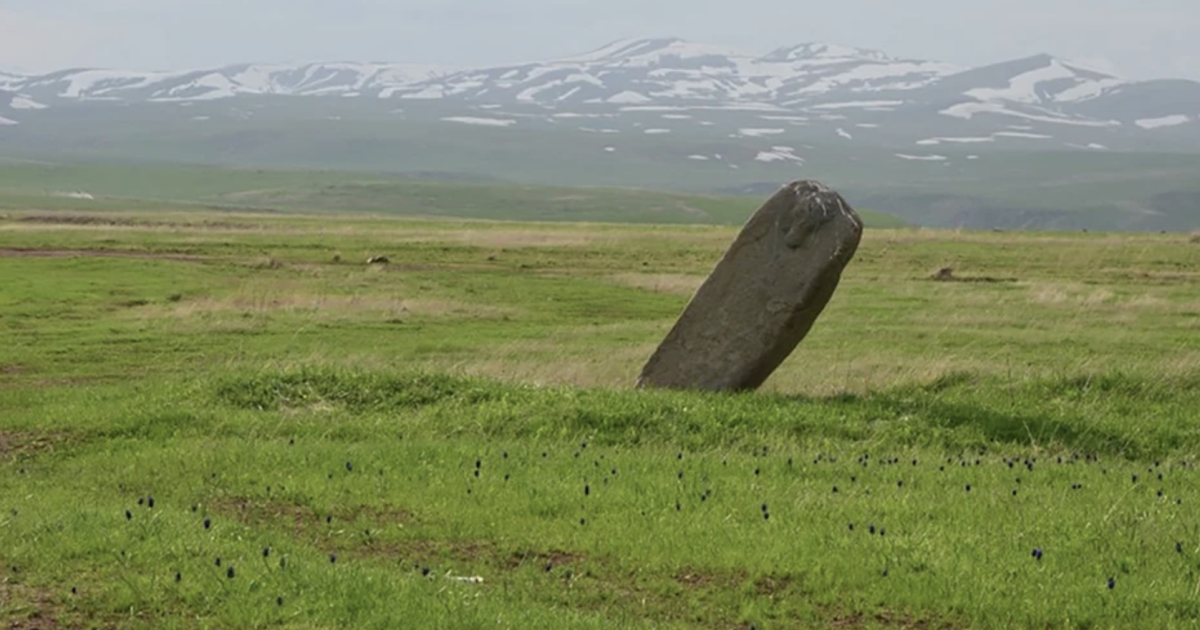
Archeologists say they have finally cracked the 6,000-year-old mystery of Armenia’s “dragon stones” – massive carved monoliths scattered across high-altitude volcanic slopes and pastures where no ancient settlements ever existed.
New research from Yerevan State University (YSU) and the Institute of Archaeology and Ethnography is the first large-scale statistical and spatial analysis of 115 known dragon stones – or vishaps – to argue that these monuments were not markers of territory or myth, but deliberately placed totems of an early “water cult” whose rituals were tied to melting snow streams, springs and the seasonal movement of herding groups through the mountains.
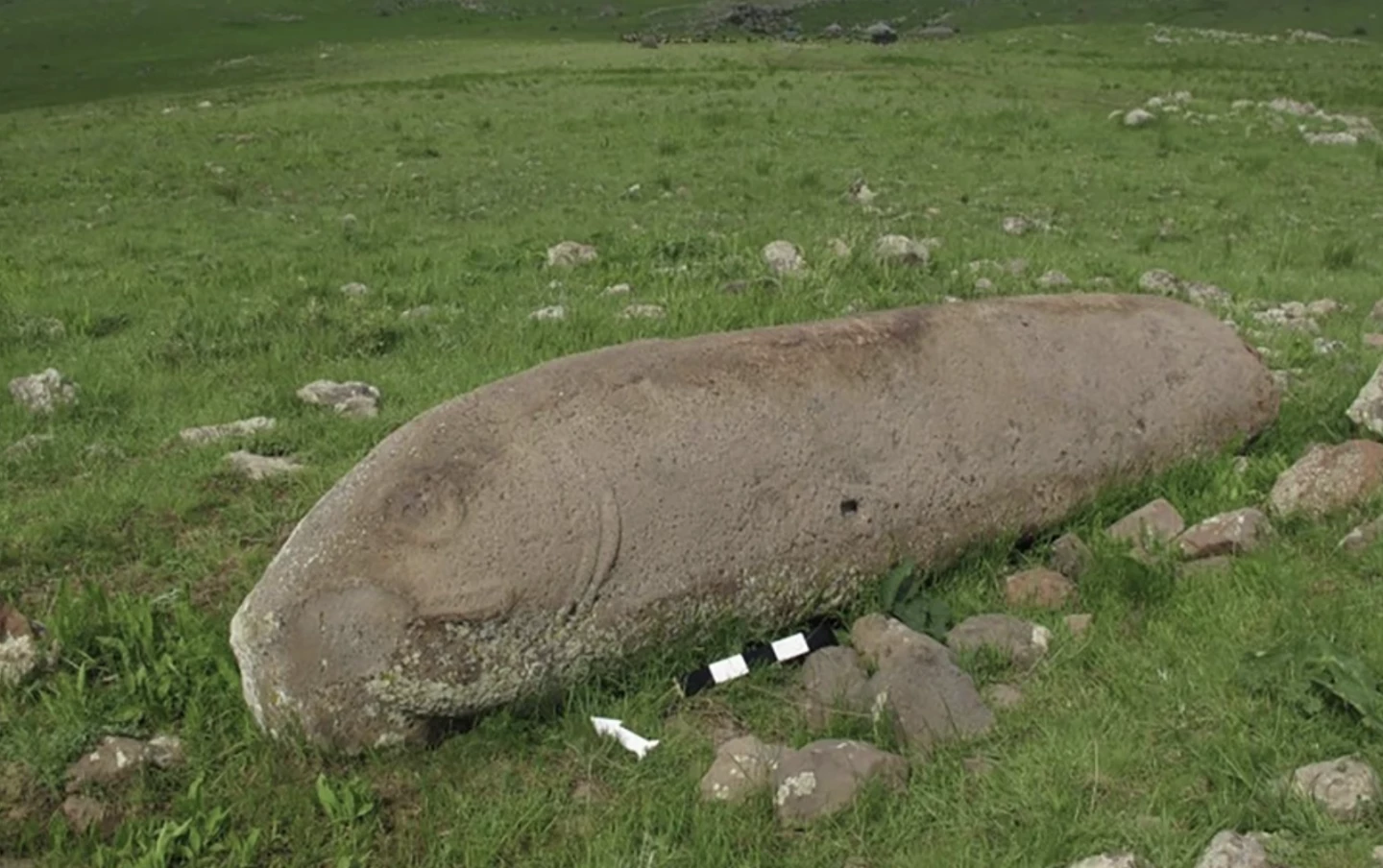
The dragon stones have been a topic of debate since scientists began studying them during the 20th century. Each one is carved and polished on all faces except the “tail” end, a consistent detail that implies they originally stood upright rather than lying horizontal as most do today. Some are shaped like stretched cattle hides, others like stylized fish (and some a mix of both) – and all would have required huge effort to gather, carve and haul across some of the most remote and challenging environments in Armenia. The puzzle then deepened when researchers realized that the stones consistently sit beside water sources – alpine springs, volcanic craters, prehistoric irrigation channels – as though placed to mark the exact points where it flows across the land.
“The majority of vishaps are either collapsed or placed horizontally on the ground,” the researchers noted. “However, all three typological groups of vishaps exhibit carving and polishing on all faces, with the ‘tail’ invariably left uncarved. This consistent feature strongly suggests that vishaps were originally positioned upright.”
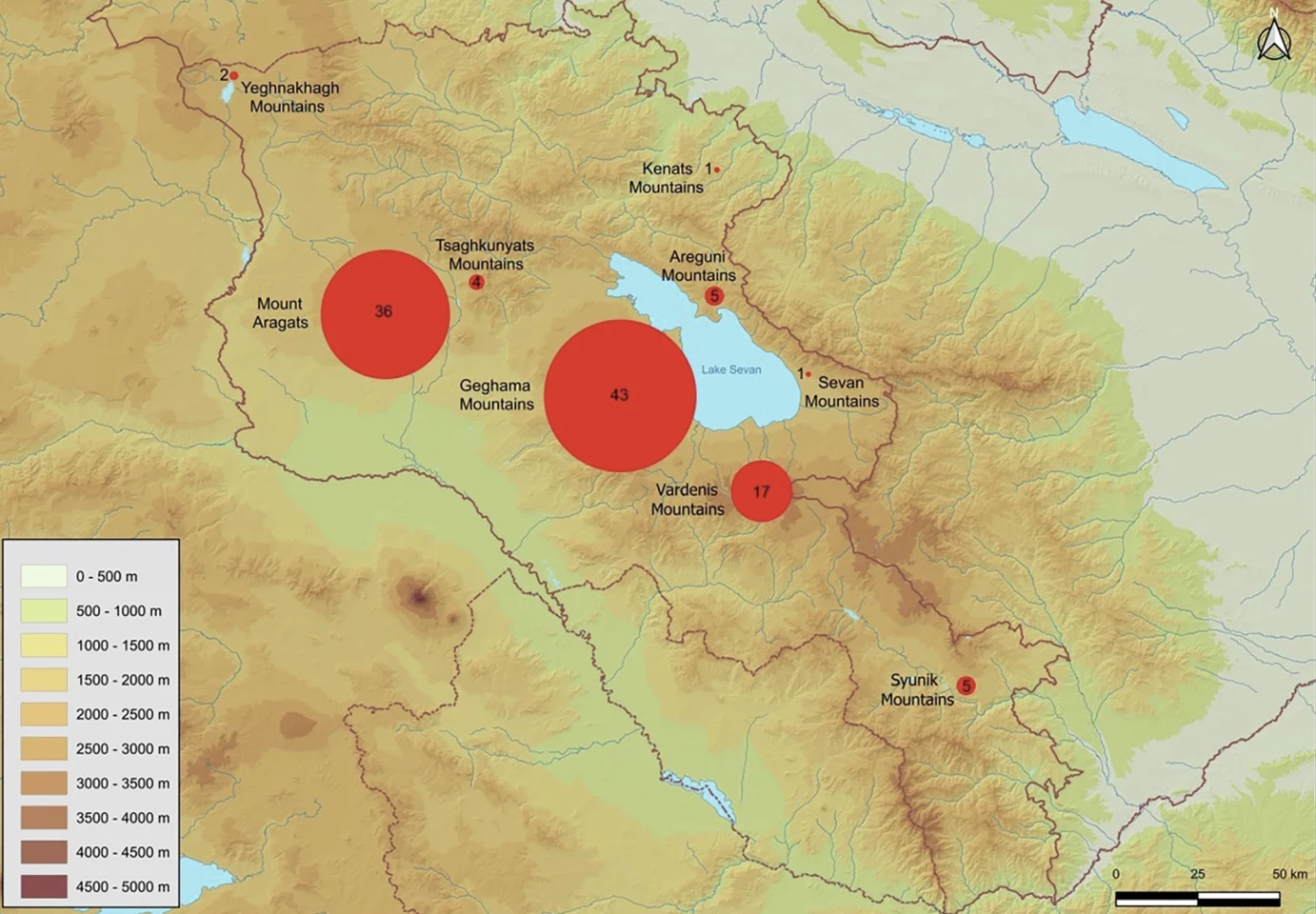
Using radiocarbon dating, elevation mapping, landscape associations and assessments of the stones’ size and typology, the researchers found that the vishaps were intentionally distributed between two distinct altitude bands, around 1,900 m (6,200 ft) and 2,700 m (8,900 ft). These zones correspond to different phases in the annual herding cycle and dramatically different environments. Instead of positioning the heaviest monuments in lower, more accessible areas, the ancient builders dragged these multi-ton stones high into the mountains where construction would have had to be intense and well coordinated in order to have the work done in the few weeks a year that the area is free of snow.
At the highest elevations – nearest to natural springs and where snow melts and runs down to valleys below – the stones are dominated by fish-shaped imagery. At lower elevations, where water was directed for agriculture, cow-hide-shaped stones are more common. And this is in line with the seasonal movement of people and livestock following water across the highlands.
In their analysis, the researchers argue that the stones’ placement and the immense effort required to move them indicate not just deliberate design, but a deeper ritual significance. The vishaps’ consistent ties to water sources, their polished surfaces and their precise placement in harsh alpine zones point to a widespread belief system in which water itself was sacred and required such totems of appreciation. Radiocarbon dating from the key archeological site of Tirinkatar on Mount Aragats place some stones as early as 4200-4000 BCE, suggesting that this water-focused ritual system emerged in the Chalcolithic period, long before megalithic traditions emerged across Europe (Stonehenge work began at least 1,000 years later).
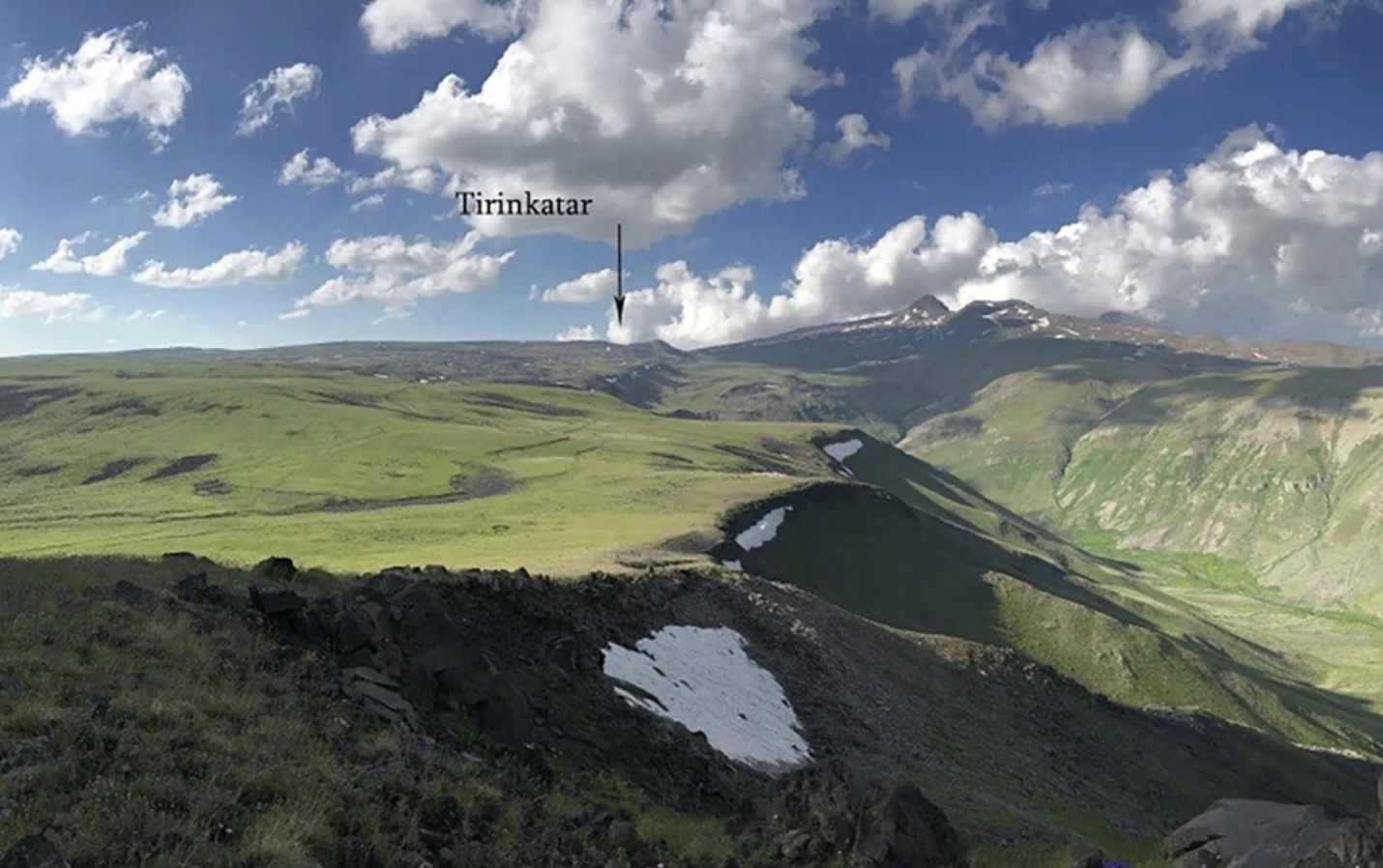
Separating the dragon stones further from the likes of Stonehenge, the researchers say that the vishaps are less about geometric alignment and much more to do with the behavior of water – and placing a carved monolith at a spring was an act of reverence and protection. And because the largest stones would have required a serious team effort, this kind of coordinated work and purposeful engineering was most likely carried out with strong communal or spiritual guidance.
“The first statistical analysis of their elevation distribution and size reveals that their construction was intentionally labor-intensive rather than arbitrary,” the researchers noted. “The findings support the hypothesis that vishaps were closely associated with an ancient water cult, as they are predominantly situated near water sources, including high-altitude springs and discovered prehistoric irrigation systems.
“The clustering of vishaps at distinct altitudes may correlate with seasonal migration patterns or pilgrimages, or both,” they observed.
This study presents the most persuasive argument yet for the origin story of these fascinating monuments, revealing that the dragon stones were neither random nor decorative but part of a prehistoric water cult whose objects of worship are still scattered across the Armenian alpine region.
“Their presence at high elevations suggests significant cultural motivations, likely tied to the ancient water cult, as vishaps are predominantly located near springs as well as are represented by fish forms,” the researchers wrote. “Human history reveals that usually the cults are indeed associated to significant efforts (labor) of their societies.
“These findings enhance our understanding of high-altitude archaeological sites and the social structures that shaped prehistoric communities,” they concluded.
Source: npj Heritage Science

