


 Macquarie University
One of Australia’s biggest cultural festivals has been left in disarray after a decision to disinvite a prominent Australian-Palestinian writer, triggering a massive backlash and mass exodus from fellow authors.
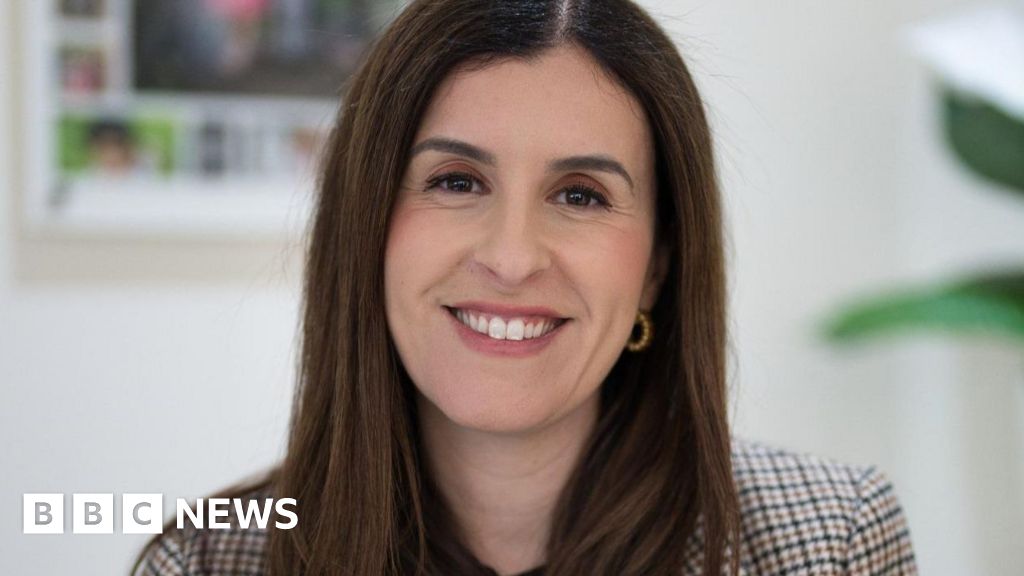
The board of the Adelaide Festival last week said Dr Randa Abdel-Fattah, a vocal critic of Israel, had been removed from its Writers’ Week lineup due to “sensitivities” after the shooting of 15 people – by gunmen allegedly inspired by the Islamic State militant group – at a Jewish festival at Bondi Beach in December.
Though the Adelaide Festival’s board said they “do not suggest in any way” that Abdel-Fattah had “any connection with the tragedy at Bondi”, they made the decision that it would not be “culturally sensitive” to include her “given her past statements”.
She called the decision to exclude her a “blatant and shameless act of anti-Palestinian racism and censorship” and the attempt to link her with the Bondi attack “despicable”.
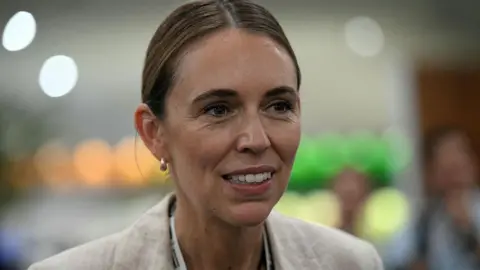
In the following days, dozens of other writers scheduled to appear withdrew from the festival. By Tuesday the list had jumped to 180, including former New Zealand Prime Minister Jacinda Ardern, British author Zadie Smith, beloved Australian writer Helen Garner and British-Australian novelist Kathy Lette.
Over the weekend, four members of the eight-member board, including the chair, resigned without detailing their reasons. And on Tuesday the director of the Writers’ Week – who had invited Abdel-Fattah – stood down too.
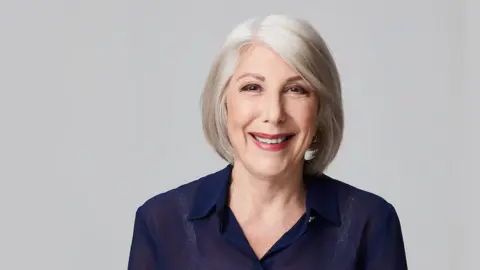
Louise Adler, the Jewish daughter of Holocaust survivors, said art had increasingly come under attack since the start of the Israel-Gaza war and that she could not “be party to silencing writers”.

 ABC
ABC“Writers and writing matters, even when they are presenting ideas that discomfort and challenge us,” she wrote in the Guardian Australia.
Hours later, the board put out a fresh statement, apologising to Abdel-Fattah for “how the decision was represented” and announcing that the Writers’ Week could “no longer go ahead”.
“We recognise and deeply regret the distress this decision has caused,” it wrote.
All remaining members of the Adelaide Festival board would step down bar one, it said, a move it hoped could “secure the success” of the festival this year “and beyond”.
The saga has now left the festival board-less just weeks out from its start late next month, has threatened to spark legal action, and has reignited discussions in Australia about freedom of expression.
Why has Randa Abdel-Fattah been criticised?
Abdel-Fattah, a novelist, lawyer and academic, had been invited to the festival to discuss her latest novel Discipline – which she describes as “a cautionary tale about the cost of silence and cowardice”.
She has previously been criticised for statements arguing that Zionists had “no claim or right to cultural safety” and a 2024 post on X in which she said “the goal is decolonisation and the end of this murderous Zionist colony”, a reference to Israel.
Controversies around her also include an image posted to her social media in the hours after the 7 October 2023 attack by Hamas on Israel, depicting a person parachuting with a Palestinian flag. Hamas fighters used paragliders to cross the high-tech security fence into Israel at the start of the attack, landing in civilian areas where many residents died.
About 1,200 people were killed in the attack. It triggered a massive Israeli military offensive on Gaza, which has killed more than 71,419 people since then, according to the Hamas-run health ministry.
Abdel-Fattah confirmed to Australian broadcaster ABC that she had posted the image, but said she had done so before the true extent of the attacks was known.
“At that point, I had no idea about the death toll, I had no idea about what was happening on the ground… Of course, I do not support the killing of civilians,” she told the ABC.
The academic has been the target of public campaigns before. Opposition politicians and some prominent Jewish Australians called for research funding awarded to Abdel-Fattah to be cancelled in 2024. After a letter from Education Minister Jason Clare, the funding was suspended while Abdel-Fattah was investigated over allegations she had bent the grant’s rules, though she was ultimately cleared last month.
 Getty Images
Norman Schueler, of the Jewish Community Council for South Australia, last week said his organisation had sent a letter to the Adelaide Festival board lobbying for Abdel-Fattah’s removal.
“It was a very wise move and it will improve the cohesiveness of the festival by not having her there,” he told the Adelaide Advertiser after her removal. Upon news of the growing walkout, he added: “I think for everyone who has dropped out that it’s rather pathetic because that means they agree with what Dr Fattah is on about… Namely, that Israel should not exist.”
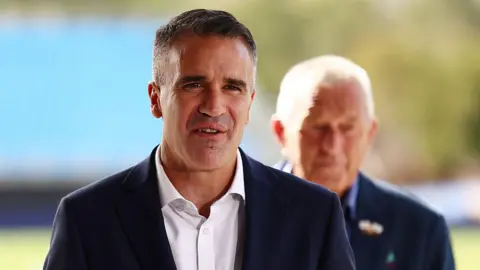
South Australian Premier Peter Malinauskus – whose government is a key backer of the festival – said that he “wholeheartedly” supported Abdel-Fattah’s exclusion and had “absolutely made clear to the board that I did not think it was wise” to invite her.
However, Malinauskus denied having played any role in the board’s decision, telling the ABC on Monday that, though he shared his opinion, he had not threatened to withdraw funding or sack anyone. He also denied that his position was influenced by Jewish lobby groups.
Adler said the board’s decision had been taken “despite my strongest opposition” and added: “In my view, boards composed of individuals with little experience in the arts, and blind to the moral implications of abandoning the principle of freedom of expression, have been unnerved by the pressure exerted by politicians calculating their electoral prospects and relentless, coordinated letter-writing campaigns.”
“The board’s statement cites community cohesion, an oft-referenced anxiety which should be treated with scepticism,” she said. “One doesn’t have to be a student of history to know that art in the service of ‘social cohesion’ is propaganda.”
After her appearance was cancelled, Abdel-Fattah said Australian arts and cultural institutions had displayed “utter contempt and inhumanity towards Palestinians”.
“The only Palestinians they will tolerate are silent and invisible ones.”
It isn’t the first time Abdel-Fattah has been at the centre of the derailment of a writers’ festival.
Two days before it was due to begin in August last year, Bendigo Writers Festival issued a code of conduct requiring speakers to “avoid language or topics that could be considered inflammatory, divisive, or disrespectful”.
A subsequent walkout – led by Abdel-Fattah and others over concerns it could prevent free discussion of the Israel-Gaza war – led to the cancellation of around a third of the programme.
Allegations of hypocrisy
However Abdel-Fattah has been accused of double standards, by sections of the media and Malinauskus, who claim that she had successfully demanded the exclusion of New York Times journalist Thomas Friedman from the Adelaide festival two years ago.
A letter sent by her and nine other academics to the board followed his publication of a column in which he compared players in the Middle East to members of the animal kingdom, including caterpillars, wasps and spiders.
“Call it what you like, after the correspondence from Dr Randa Abdel-Fattah, they removed a pro-Jewish Israeli speaker. Fast forward two years and I think it’s reasonable for the board to apply the same principle,” Malinauskus said.
Abdel-Fattah rejected the allegations of hypocrisy, saying in a statement to the BBC that Friedman’s article had “compared various Arab and Muslim nations and groups to insects and vermin requiring eradication at a time when talk of ‘human animals’ was being used to justify wholesale slaughter in Gaza”.
“In contrast, I was cancelled because my presence and identity as a Palestinian was deemed ‘culturally insensitive’ and linked to the Bondi atrocity,” her statement continued.
She also denied that Friedman had been removed at her behest. In a letter dated February 2024 and quoted by Australian media, the board wrote that cancelling a writer was an “extremely serious request” and that while Friedman had been scheduled to attend he would no longer take part due to “last-minute scheduling issues”.
“If he was in fact quietly cancelled, it only underscores the racism of cancelling me in such a brazen and publicly humiliating manner,” Abdel-Fattah said.
The BBC has contacted Friedman for comment.
What have other writers said?
 Getty Images
Adler said at least 180 writers had withdrawn from the festival, devastating its programme. Some said that while they did not necessarily agree with Abdel-Fattah, they defended her right to free speech.
Australian journalist Peter Greste, who was jailed in Egypt a decade ago in what human rights groups called a sham case, in an opinion piece for the Guardian Australia wrote that her exclusion meant “we are undermining our capacity to hold those difficult conversations” and “doing the work” of extremists for them.
Kathy Lette in an Instagram post argued that audiences should be trusted to “make up their minds about all speakers – me included. As authoritarianism rears its hideous head around the world, we need to defend these havens of free speech.”
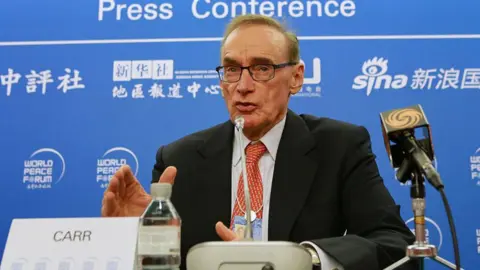
However, former Australian foreign minister Bob Carr, who has strongly criticised Israel’s assault on Gaza, said he supported Abdel-Fattah’s exclusion. He told the Guardian Australia he believed some of her previous statements had been counterproductive to the Palestinian cause and that given the circumstances after the Bondi attack the decision was not unreasonable.
“The Adelaide writers’ festival has supported hearing Palestinian voices, its record on this is unimpeachable,” Carr said.
He was one of the only festival speakers to publicly back the board.
 Getty Images
Former Greek finance minister Yanis Varoufakis posted a video on X in which he tore up his “precious” and “coveted” invitation to speak, claiming the festival had been “destroyed” by the “Zionist lobby”.
Award-winning First Nations poet Dr Evelyn Araluen said she was “so disappointed to witness yet another absurd and irrational capitulation to the demands of a genocidal foreign state from the Australian arts sector”.
“Erasing Palestinians from public life in Australia won’t prevent antisemitism,” she added.
ABC journalist and presenter Sarah Ferguson, who had been due to host conversations with Tina Brown and Jacinda Ardern – both now cancelled – said the festival had “created a place where debate flourished… including on our most difficult subjects” and that it “should be defended in our cultural life”.
What happens next?
In its latest statement, the board said: “This is not about identity or dissent but rather a continuing rapid shift in the national discourse around the breadth of freedom of expression in our nation following Australia’s worst terror attack in history.”
The focus would now turn to re-assembling the board, the statement said, and “ensuring a successful Adelaide Festival… which safeguards the long and rich cultural legacy of our state.”
It added that it is “committed to rebuilding trust with our artistic community”.
Abdel-Fattah has rejected the board’s apology as “disingenuous”. “It is clear that the board’s regret extends to how the message of my cancellation was conveyed, not the decision itself,” she wrote in a post on Instagram.
“The Bondi shooting does not mean I or anyone else has to stop advocating for an end to the illegal occupation and systematic extermination of my people – that is an obscene and absurd demand,” she added.
Her lawyer has sent a letter to the board demanding to know which of her past statements were used to justify the decision to uninvite her, and has told the BBC the writer is yet to decide whether to take any legal action.
Signing off her statement on Tuesday, Abdel-Fattah said she was “exhausted”. “Please remember that the genocide of Palestinians continues and that all of this is a smokescreen. I am not the story. Palestine is.”

